
Verklempt Meaning: Definition, Origin, Pronunciation, & Usage
Have you ever heard someone say they felt verklempt and wondered what they meant? If so, you’re not alone. Many people search for the verklempt meaning or ask, “What does verklempt mean?” after coming across the word in a conversation, book, movie, or online.
Simply put, verklempt describes the feeling of being overcome with emotion, often to the point where speaking becomes difficult. It can express joy, gratitude, nostalgia, sadness, or any other deep emotional reaction.
Originally a Yiddish word, it has become a well-known part of modern English vocabulary, especially in informal speech. In this guide, you’ll learn the meaning of verklempt, its pronunciation, origin, usage, sentence examples, synonyms, and the difference between verklempt and similar words so you can use it with confidence.
Quick Answer
Verklempt means being overcome with emotion, often so deeply that you find it hard to speak or express yourself. The word comes from Yiddish and is now commonly used in English to describe feelings of joy, gratitude, nostalgia, sadness, or other strong emotions. If you’re wondering, “What does verklempt mean?”, it simply refers to becoming emotionally moved or choked up during a meaningful moment.
What Does “Verklempt” Mean?
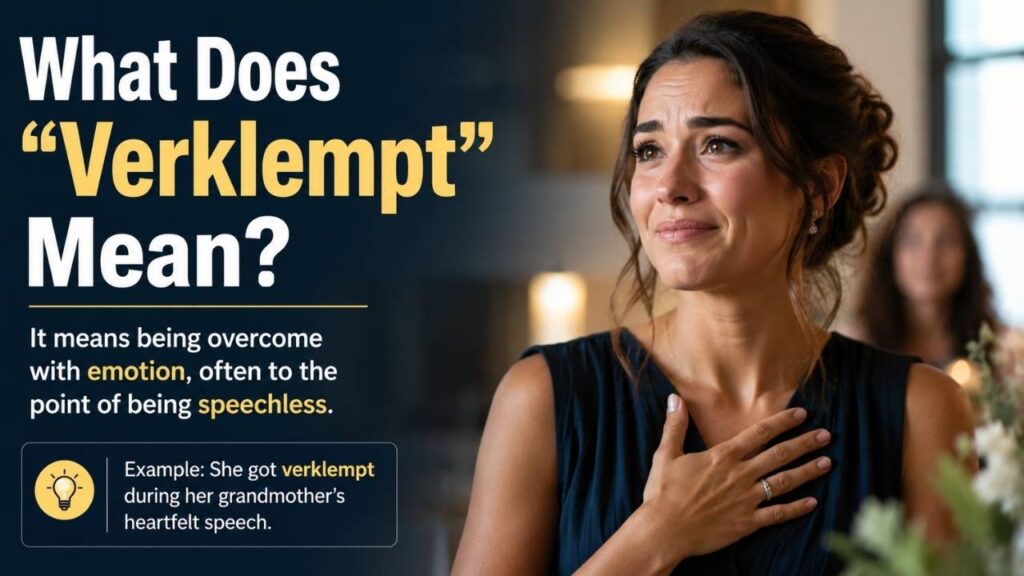
Verklempt is an adjective used to describe someone who is overcome with emotion, often to the point where they cannot speak clearly. The verklempt meaning goes beyond simply feeling emotional. It suggests that your feelings are so strong that they leave you speechless, choked up, or struggling to find the right words.
The emotion can come from happiness, gratitude, love, sadness, or even pride. Many people search for the meaning of verklempt after hearing it in TV shows, books, or conversations. Although it is a Yiddish loanword, it has become a familiar part of modern English. Learning the verklempt meaning in English helps you describe emotional moments in a more vivid and natural way.
Verklempt at a Glance
If you want a quick overview, here’s what you should know about verklempt. It is an adjective that means being overwhelmed with emotion, often so much that speaking becomes difficult. The word comes from Yiddish but is commonly used in informal English.
It is usually pronounced as ver-KLEMPT and often appears in conversations, stories, and speeches that describe heartfelt moments. People use it when someone feels deeply touched by joy, gratitude, nostalgia, or sadness.
If you enjoy learning about word meanings and correct English usage, you may also like our guide on Lifetime vs. Life Time, which explains another commonly confused expression and helps improve your vocabulary and grammar skills.
How to Pronounce Verklempt
Many English learners wonder how to pronounce verklempt because it looks unfamiliar. The correct pronunciation is ver-KLEMPT, with the stress on the second syllable. A simple phonetic spelling is vur-KLEMPT.
Since the word comes from Yiddish, some people pronounce it differently, but the most common English pronunciation follows this pattern. Saying it aloud a few times can help you remember it.
You can also listen to native speakers if you want to improve your confidence. Learning the correct pronunciation makes it easier to use the word naturally in conversations. Just as pronunciation matters, understanding the correct form of words and expressions is important for clear communication and stronger English writing.
Origin and Etymology of Verklempt
The word verklempt comes from Yiddish, a language historically spoken by many Ashkenazi Jewish communities. Its original meaning was linked to feeling overcome, tight, or emotionally affected. Over time, English speakers adopted the word because it describes a feeling that is difficult to express with a single English word.
Today, verklempt is a well-known Yiddish loanword in American English, especially in informal conversations. Understanding the origin of verklempt also helps you appreciate how languages borrow useful words from one another.
If you enjoy learning about modern words and how meanings change over time, you may find our article on Toxicated Meaning equally interesting, as it explores another popular word with evolving usage.
When Should You Use Verklempt?
You should use verklempt when someone feels deeply emotional and finds it hard to speak because of those feelings. It fits moments such as weddings, graduations, family reunions, retirement speeches, or heartfelt thank-you messages.
The word is mostly used in informal English, although it sometimes appears in books, magazines, or television shows. Avoid using it for small emotions or everyday disappointment because it describes a much stronger emotional reaction. If someone is simply happy or sad, verklempt may not be the best choice.
Choosing the right word is important in English. In the same way, understanding the difference between expressions like Made It Home Safe vs. Made It Home Safely helps you communicate more naturally and accurately.
What Emotion Does Verklempt Describe?
The verklempt meaning is closely connected with strong emotional reactions rather than one specific feeling. A person may feel verklempt because of overwhelming joy, deep gratitude, touching memories, pride, love, or even sadness.
For example, parents often become verklempt while watching their child graduate or get married. Someone may also feel choked up while receiving unexpected kindness or hearing a heartfelt speech. The word describes the moment when emotions become so powerful that finding the right words becomes difficult.
Unlike simply feeling emotional, being verklempt suggests a deeper and more visible emotional response. This makes it a useful word when describing meaningful experiences that leave a lasting impression.
How to Use Verklempt Correctly
Using verklempt correctly is simple once you understand its meaning. Since it is an adjective, it usually follows verbs such as feel, become, look, or seem. For example, you can say, “She became verklempt during her retirement speech” or “He looked verklempt after hearing the surprise announcement.”
The word works best in situations involving strong emotions, not ordinary feelings. It is also considered informal, so it is more common in conversations, blogs, and personal writing than in formal business documents. Learning how to use verklempt correctly improves your vocabulary and helps you describe emotional moments with greater clarity and confidence.
Verklempt in Sentences (20+ Examples)
The best way to understand the verklempt meaning is by seeing it in real sentences. Here are some natural examples:
She became verklempt while thanking her parents. The coach looked verklempt after the team won the championship. I was too verklempt to finish my speech. Everyone felt verklempt during the farewell ceremony.
He grew verklempt when he saw old family photos. The surprise reunion left her completely verklempt. His heartfelt words made the audience verklempt. They became verklempt while celebrating their anniversary. The bride’s father was visibly verklempt. The emotional tribute left many people verklempt.
These examples show that the word is commonly used for moments filled with joy, gratitude, love, nostalgia, or sadness.
Verklempt vs. Similar Words
Although verklempt, overwhelmed, choked up, speechless, and sentimental all describe emotions, they are not exactly the same. Verklempt specifically means being overcome with emotion to the point where speaking becomes difficult.
Overwhelmed can describe emotional feelings, but it may also refer to stress or having too much to do. Choked up usually focuses on struggling to speak because of tears or strong feelings.
Speechless simply means having no words, which may or may not involve emotion. Sentimental describes warm or affectionate feelings but does not suggest losing the ability to speak. Knowing these differences helps you choose the most accurate word for every situation.
Synonyms and Antonyms of Verklempt
Several words have a meaning similar to verklempt, although each carries a slightly different feeling. Common synonyms include overwhelmed, choked up, moved, touched, speechless, emotional, sentimental, and deeply affected. These words can often be used in similar situations, depending on the context.
On the other hand, antonyms include calm, composed, unemotional, indifferent, and unmoved. While these words express the opposite feeling, they do not describe someone experiencing a powerful emotional moment.
Expanding your vocabulary with related words makes your writing more natural and expressive. It also helps you understand emotional language more clearly when reading books, articles, or everyday conversations.
Common Mistakes People Make
Many learners understand the meaning of verklempt, but they still make a few common mistakes. One mistake is using the word for small emotions, such as feeling slightly happy or mildly disappointed. Verklempt should be saved for strong emotional moments.
Another mistake is treating it as a verb instead of an adjective. Instead of saying, “She verklempt,” you should say, “She became verklempt.” Some people also believe the word only describes sadness, but it can express joy, gratitude, love, or pride as well.
Just as choosing the correct word matters, understanding grammar is equally important. For example, our guide on Made It Home Safe vs. Made It Home Safely explains another common English usage question.
Interesting Facts About the Word “Verklempt”
Although verklempt comes from Yiddish, it became much more popular after appearing in American television and comedy. Over the years, writers, speakers, and entertainers have used the word to describe touching moments in a memorable way.
Today, many English speakers recognize it even if they do not know its exact origin. One interesting fact is that there is no perfect one-word English replacement that captures the same emotional meaning. That is one reason the word continues to be used.
Like many borrowed words, verklempt adds color and personality to everyday language. Its journey from Yiddish into modern English shows how languages grow by adopting useful and expressive vocabulary from different cultures
FAQs
Is verklempt a real English word?
Yes. Although it comes from Yiddish, it is widely recognized in modern English dictionaries.
Is verklempt positive or negative?
It can describe both. People become verklempt because of joy, gratitude, love, nostalgia, or sadness.
Can I use verklempt in formal writing?
It is mainly an informal word, so it works best in conversations, blogs, and creative writing.
How do you pronounce verklempt?
The common English pronunciation is ver-KLEMPT.
What is another word for verklempt?
Similar words include choked up, overwhelmed, moved, speechless, and deeply touched.
Conclusion
Understanding the verklempt meaning helps you describe emotional moments with greater accuracy and feeling. Whether someone is overcome with emotion during a wedding, graduation, family reunion, or heartfelt speech, verklempt is a perfect word to express that experience.
Knowing its origin, pronunciation, usage, and synonyms allows you to use it confidently in everyday English. Since it is a Yiddish loanword, it also reminds us how different languages enrich English vocabulary.
If you enjoy learning about interesting words and common English expressions, you can also explore our guides on Lifetime vs. Life Time and Toxicated Meaning to continue building your vocabulary and improve your understanding of modern English usage.