
At the Weekend vs On the Weekend: What’s the Difference?
Have you ever wondered whether you should say “at the weekend” vs “on the weekend”? If so, you’re not alone. Many English learners, students, and even fluent speakers are unsure which phrase is correct. The good news is that both expressions are grammatically correct, but they are used in different varieties of English.
In British English, people usually say “at the weekend,” while in American English, “on the weekend” is the more natural choice. Understanding this small grammar difference can help you sound more confident in both spoken English and written English.
In this guide, you’ll learn the difference between “at the weekend” and “on the weekend,” when to use each one, common grammar mistakes to avoid, and plenty of clear example sentences to help you choose the right expression every time.
Quick Answer
Both “at the weekend” and “on the weekend” are correct. The difference depends on the variety of English you use. British English prefers “at the weekend,” while American English commonly uses “on the weekend.” They have the same meaning and refer to time during the weekend, so choose the expression that matches your audience or the regional style you are writing in.
At the Weekend vs. On the Weekend: The Main Difference at a Glance
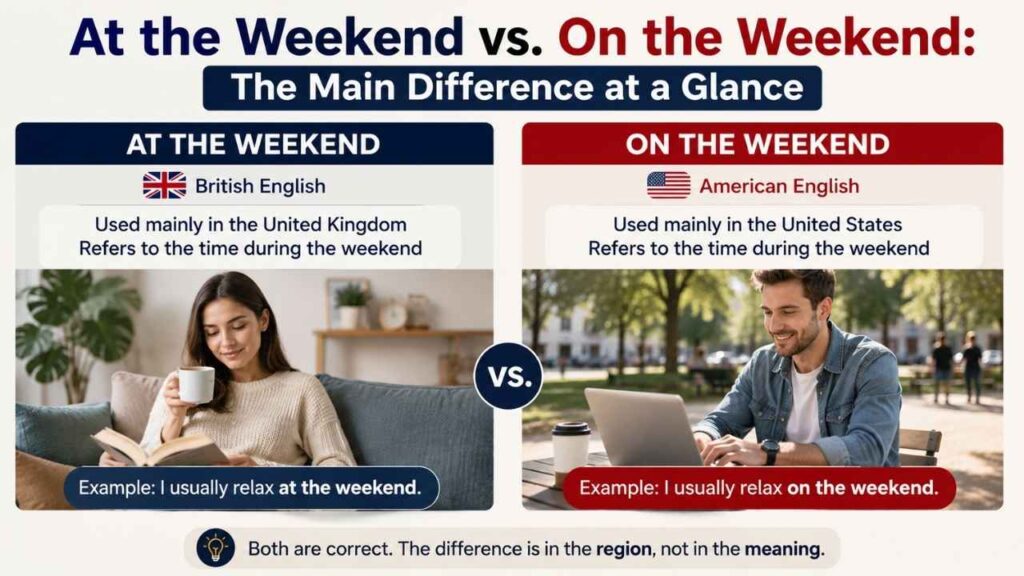
The main difference between “at the weekend” and “on the weekend” is regional usage, not grammar. Both phrases are grammatically correct and have the same meaning. They both refer to the time during the weekend, but different English-speaking countries prefer different expressions.
British English usually uses “at the weekend,” while American English prefers “on the weekend.” If you are writing for a UK audience, “at the weekend” will sound more natural. If your readers are in the United States, “on the weekend” is the better choice.
Understanding these weekend prepositions will help you communicate more naturally in both spoken English and written English, especially when writing emails, articles, or everyday conversations.
What Does “At the Weekend” Mean?
“At the weekend” is a common expression in British English. It means during the weekend, usually referring to Saturday and Sunday. People in the United Kingdom often use this phrase when talking about plans, activities, or routines.
For example, someone might say, “We usually visit our grandparents at the weekend.” The meaning is exactly the same as “on the weekend” in American English. If you are learning English grammar, it is useful to know which phrase fits your audience.
Small differences like this appear in many language topics, just as there are regional differences in Restroom vs Bathroom vs Washroom. Learning these expressions helps you understand English usage and sound more like a native speaker.
What Does “On the Weekend” Mean?
“On the weekend” is the expression most commonly used in American English. It also means during the weekend and is used when talking about plans, hobbies, work, or free time. For example, “I like to relax on the weekend” sounds natural to most American speakers. Although the preposition is different, the meaning is the same as “at the weekend.”
The choice depends on the regional variety of English rather than a grammar rule. As you improve your English vocabulary, you’ll notice that many words and phrases change from one country to another. This is similar to learning What Is Verbiage, where understanding usage and context is just as important as knowing the definition.
British English vs. American English: Which Phrase Is Preferred?
The preferred phrase depends on where your audience is from. In British English, people almost always say “at the weekend.” In American English, “on the weekend” is much more common. Neither expression is wrong because both follow the language rules used in their regions.
If you are writing for an international audience, choose the version that matches your readers and stay consistent throughout your writing. This simple change can make your English writing sound more natural and professional. Many language differences work the same way.
For example, understanding an idiom like Dark Horse also requires knowing its meaning and how native speakers use it in everyday conversations instead of translating the words literally.
Why Do British and American English Use Different Prepositions?
The difference comes from the way British English and American English developed over time. As the language changed in different countries, speakers naturally began using different prepositions with certain time expressions.
In the UK, people became used to saying “at the weekend,” while in the US, “on the weekend” became the standard expression. Today, both forms are accepted and understood by native speakers. There is no grammar rule that makes one correct and the other incorrect.
Instead, they reflect regional English and long-standing language habits. If you know who your audience is, choosing the right phrase becomes easy. This small difference is part of the rich variety found in the English language around the world.
When Should You Use “At the Weekend”?
Use “at the weekend” when you are writing or speaking in British English or for readers in the United Kingdom. It is the natural choice in everyday conversations, emails, school writing, and many UK publications.
If you are following British grammar, this phrase will sound more familiar to native speakers. For example, you can say, “We’re visiting our friends at the weekend,” or “I usually play football at the weekend.”
If your audience is mainly British, staying with “at the weekend” throughout your writing makes your English usage more consistent. Although “on the weekend” has the same meaning, it is less common in the UK and may sound slightly unusual to British readers.
When Should You Use “On the Weekend”?
Choose “on the weekend” when writing for an American English audience. It is the expression most people in the United States use when talking about plans, free time, or regular activities.
You might hear sentences like, “We usually go hiking on the weekend,” or “She works on the weekend.” These examples sound natural to American speakers. If your readers are in the US, using “on the weekend” helps your English writing match their everyday language.
Since both phrases are grammatically correct, the best choice depends on your audience. Staying consistent with one regional style makes your content clearer and easier to understand.
Other Common Weekend Expressions Explained
Besides “at the weekend” and “on the weekend,” there are several other weekend expressions you should know. “Over the weekend” means something happens at some point during the weekend. “During the weekend” has a similar meaning but sounds a little more formal.
“This weekend,” “last weekend,” and “next weekend” refer to specific weekends and do not need a preposition. You can also say “every weekend” to describe a regular habit, while “on weekends” and “at weekends” talk about repeated actions in American English and British English.
Learning these time expressions will help you sound more natural and make your spoken English and written English more accurate.
Common Mistakes and How to Avoid Them
One common mistake is thinking that only one phrase is correct. In reality, both “at the weekend” and “on the weekend” are correct. Another mistake is mixing British English and American English in the same piece of writing. For example, writing “at the weekend” in one paragraph and “on the weekend” in another can confuse readers.
It is better to choose one style and use it consistently. Some learners also use the wrong preposition because they translate directly from their own language. Instead, learn these English expressions as complete phrases. Reading books, articles, and listening to native speakers can help you understand correct English and avoid common grammar mistakes.
Real-Life Example Sentences
The easiest way to remember the difference is to see both phrases in real sentences. In British English, you could say, “We usually travel at the weekend,” “She studies at the weekend,” or “They stayed home at the weekend.”
In American English, you would naturally hear, “We usually travel on the weekend,” “She studies on the weekend,” or “They stayed home on the weekend.” Notice that the meaning does not change. Only the preposition is different.
Reading and practicing these example sentences will improve your English grammar, build your confidence, and help you choose the correct weekend expression in everyday conversations and writing.
Which Expression Should You Use? (Simple Decision Guide)
If you are still unsure which phrase to choose, keep this simple rule in mind. Use “at the weekend” if you are writing for a British English audience. Use “on the weekend” if your readers are more familiar with American English. If you are taking an English exam, follow the style your teacher or test requires.
For blogs, business writing, or websites, match the language to your target audience and stay consistent. The most important thing is not which phrase you choose, but whether you use it correctly throughout your writing. Both expressions are accepted, easy to understand, and commonly used by native speakers in their own regions.
FAQs
Is it correct to say “at the weekend” or “on the weekend”?
Yes. Both expressions are grammatically correct. The choice depends on whether you are using British English or American English.
Which phrase is used in British English?
People in the UK usually say “at the weekend.”
Which phrase is more common in American English?
In the United States, “on the weekend” is the natural and more common expression.
Can I use both expressions interchangeably?
Yes, because they have the same meaning. However, it is best to choose the one that matches your audience and use it consistently throughout your writing.
Conclusion
There is no single correct answer to the “at the weekend vs. on the weekend” debate because both phrases are correct. The real difference is regional English usage. British English prefers “at the weekend,” while American English uses “on the weekend.” Since the meaning is the same, your choice should depend on who you are writing or speaking to.
By understanding this small grammar difference, using the right weekend expression, and staying consistent, you can make your English writing sound more natural and professional. Remember, good communication is not about choosing one phrase over the other—it is about choosing the one that best fits your audience.