
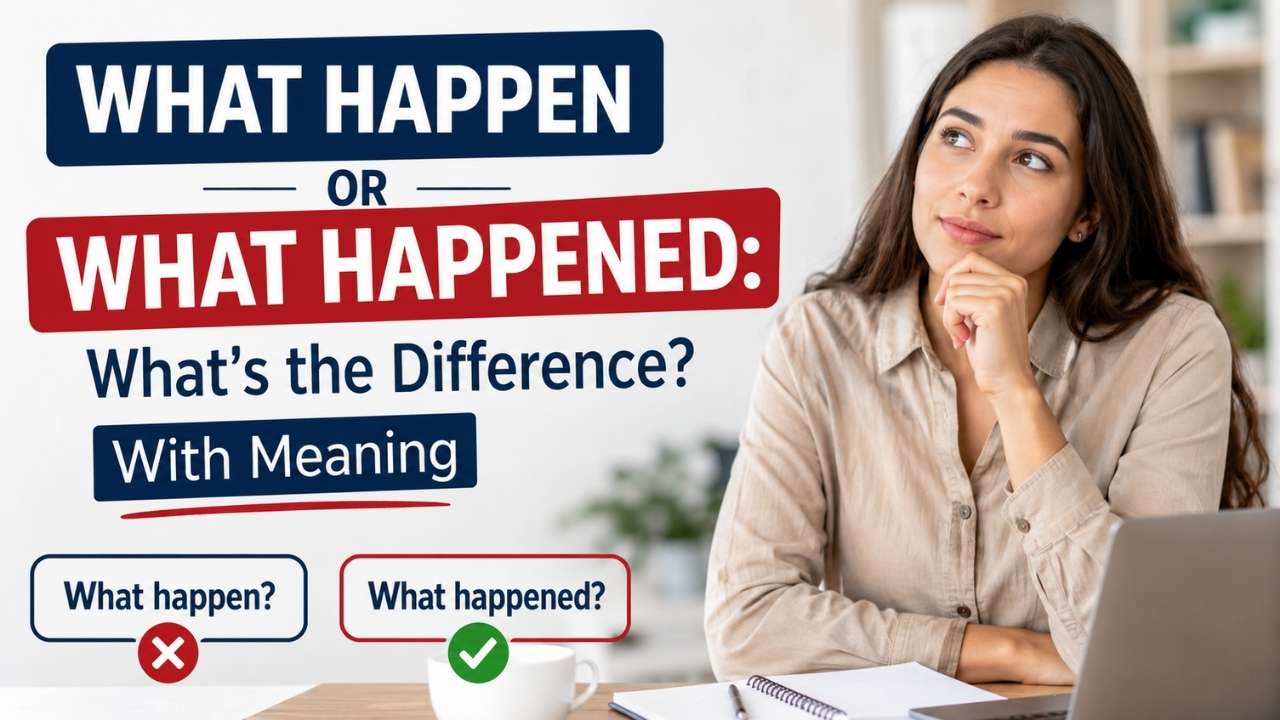
What Happen or What Happened: What’s the Difference?
Have you ever wondered whether “What happen” or “What happened” is the correct phrase? You’re not alone. Many English learners, students, and even fluent speakers get confused because both expressions look similar. However, they are not used in the same way.
In most everyday conversations and writing, “What happened” is the grammatically correct choice when asking about a past event. On the other hand, “What happen” is usually incorrect unless it follows a helping verb in a different sentence structure. Understanding this small difference can help you avoid common English mistakes, improve your English grammar, and communicate with more confidence.
In this guide, you’ll learn the difference between what happen vs. what happened, the grammar rules behind each phrase, when to use them correctly, and plenty of clear examples to make everything easy to understand.
Quick Answer
“What happened” is the correct phrase when you’re asking about something that took place in the past. In contrast, “What happen” is generally grammatically incorrect when used on its own. However, it can be correct when it follows a helping verb, such as in “What did happen?” or “What will happen?” If you’re talking about a completed event, always use “What happened?”
Why “What Happened” Is Usually Correct
When you ask “What happened?”, you’re asking about an event that has already finished. Since the action took place in the past, the verb changes from happen to happened. This follows a basic English grammar rule called the simple past tense.
Native speakers use “What happened?” every day when they want to know why something went wrong, why someone looks upset, or what took place earlier.
For example, if your friend looks worried, you might ask, “What happened?” This sounds natural and correct. Using “What happen?” in the same situation would sound incomplete because there is no helping verb before the base verb happen.
Can “What Happen” Ever Be Correct?
Yes, “What happen” can be correct, but not by itself. It must come after a helping verb or another word that requires the base form of the verb. For example, you can say, “What did happen?”, “What will happen?”, or “What could happen?” In each sentence, the helping verb tells the main verb to stay in its original form, which is happen.
This grammar rule is very common in English and applies to many other verbs as well. Without a helping verb, saying “What happen?” is considered a grammar mistake. Understanding this rule makes it much easier to know when to use happen and when to use happened correctly.
The Grammar Rule Behind “Happen” and “Happened”
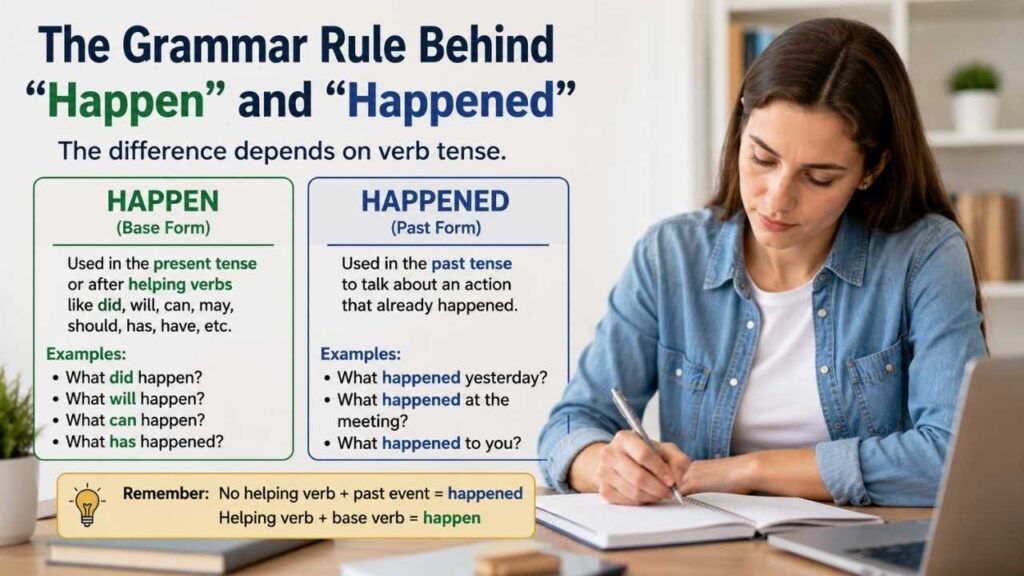
The difference between happen and happened depends on verb tense. Happen is the base form of the verb and is used in the present tense or after helping verbs like did, will, can, and should. Happened is the past tense form and describes an action or event that has already finished.
This is why “What happened?” is the correct question when talking about the past. A simple way to remember the rule is this: if there is no helping verb and you’re asking about a past event, always use happened. Learning small grammar rules like this can improve both your writing and your everyday conversations.
What Happen vs. What Happened: Side-by-Side Comparison Table
The easiest way to understand what happen vs. what happened is to compare them directly. While the two phrases look almost the same, they are used in different situations. “What happened?” asks about something that already took place, while “What happen” only works after a helping verb. Here’s a quick comparison:
| Phrase | Correct? | When to Use It |
| What happened? | ✅ Yes | Asking about a completed event |
| What happen? | ❌ No | Incorrect on its own |
| What did happen? | ✅ Yes | Used for emphasis or clarification |
| What will happen? | ✅ Yes | Asking about the future |
If you enjoy learning these small but important grammar differences, you might also like our comparison of Thank You Very Much vs Thank You So Much, which explains when each expression sounds most natural.
When to Use “What Happened” (With Everyday Examples)
Use “What happened” whenever you want to ask about something that has already taken place. Since the action is finished, the past tense form happened is the correct choice. Native English speakers use this question in both casual and formal conversations.
You might ask a friend, “What happened at school today?” or say, “What happened to your phone?” after noticing it is broken. You can also ask, “What happened yesterday?” or “What happened at the meeting?”
All of these examples refer to completed events. If you’re talking about something that already occurred, “What happened?” is the natural and grammatically correct expression to use.
When to Use “What Happen” (Rare Exceptions Explained)
Although “What happen” is usually incorrect on its own, there are a few situations where the base verb happen is correct. This happens when it follows a helping verb or a modal verb. For example, you can say, “What did happen?”, “What will happen?”, “What can happen?”, or “What should happen?”
In each sentence, the helping verb tells the main verb to stay in its base form. This grammar rule applies to many English verbs, not just happen. If there is no helping verb before it, avoid writing or saying “What happen?” because it sounds incomplete and is considered a common English grammar mistake.
Common Mistakes English Learners Make
Many English learners confuse happen and happened because both words have the same meaning but different grammar. One of the most common mistakes is writing “What happen yesterday?” instead of “What happened yesterday?”
Another mistake is saying “What did happened?” The correct sentence is “What did happen?” because the helping verb did already shows the past tense, so the main verb stays in its base form.
Learning this simple rule will help you avoid many grammar mistakes. Whenever you’re unsure, ask yourself whether you’re talking about a past event and whether a helping verb is already in the sentence.
“What Did Happen” vs. “What Happened”
Both “What did happen?” and “What happened?” are correct, but they are used differently. “What happened?” is the normal way to ask about a past event. It sounds natural in everyday conversations and is the expression people use most often. “What did happen?” is usually used to add emphasis or show surprise.
For example, if someone gives an unclear answer, you might ask, “No, what did happen?” to get more details. Even though both questions refer to the past, they have slightly different purposes. Knowing when to use each one will make your spoken English and written English sound more natural and confident.
Similar Expressions You Should Know
Learning similar expressions can help you understand how the verb happen changes with different verb tenses. For example, “What happens?” asks about something that happens regularly or generally. “What is happening?” refers to something taking place right now. “What has happened?” connects a past event with the present, while “What will happen?” asks about the future.
Each sentence follows a different grammar rule, but they all come from the same base verb. Understanding these forms will improve your English grammar and make it easier to choose the correct expression in everyday conversations, school assignments, emails, and other types of writing.
How Native English Speakers Naturally Use These Expressions
Native English speakers usually choose the expression that best matches the time of the event. If something has already happened, they naturally ask, “What happened?” If they are talking about the future, they say, “What will happen?” When discussing something happening at the moment, they ask, “What is happening?”
These expressions sound natural because they follow standard English grammar rules. Listening to movies, TV shows, podcasts, or everyday conversations is a great way to notice how these phrases are used. The more examples you hear, the easier it becomes to use happen and happened correctly without stopping to think about the grammar every time.
Practice Sentences: Choose the Correct Phrase
Test your understanding by choosing the correct phrase in each sentence.
- ______ to your car yesterday?
- ✅ What happened
- What will ______ if it rains tomorrow?
- ✅ happen
- Can you tell me what ______ at the meeting?
- ✅ happened
- What did ______ after everyone left?
- ✅ happen
- ______ to your keys? I can’t find them.
- ✅ What happened
If you answered these correctly, you’re already becoming more confident with happen vs. happened. Practicing with real examples is one of the best ways to remember English grammar rules and avoid common grammar mistakes in the future.
FAQs
Is “What happen” grammatically correct?
No. “What happen” is generally incorrect unless it comes after a helping verb such as did, will, or can.
Why is “What happened” correct?
Because happened is the simple past tense form of the verb happen, making it correct for asking about completed events.
Can I say “What did happened?”
No. The correct sentence is “What did happen?” because the helping verb did requires the main verb to stay in its base form.
When should I use “What happened?”
Use “What happened?” whenever you are asking about something that has already taken place.
Conclusion
The difference between what happen and what happened is simple once you know the grammar rule. Use “What happened?” when asking about a past event because it uses the correct past tense verb. Use “What happen” only after a helping verb, such as in “What did happen?” or “What will happen?”
Remember this easy tip: No helping verb + past event = “What happened.” Helping verb + base verb = “What happen.” Keeping this rule in mind will help you avoid common English mistakes, improve your spoken and written English, and use these expressions with confidence in any situation.