
Whether It Be vs Whether It Is: What’s the Difference With Example
Many English learners and writers wonder whether they should use “whether it be” or “whether it is.” At first glance, these two expressions seem almost identical. They often appear in similar sentences and convey nearly the same idea. Because of this, many people assume that one phrase is correct while the other is incorrect.
However, the truth is more interesting. Both Whether It Be vs Whether It Is are grammatically correct. The difference lies in their grammatical mood, level of formality, and how speakers use them in different situations. Understanding this distinction can help you choose the most natural expression for your writing.
In this guide, you’ll learn the difference between whether it be and whether it is, discover when each phrase works best, and see plenty of sentence examples. We’ll also explore the subjunctive mood, the indicative mood, common grammar mistakes, and modern English usage so you can write with greater confidence.
Quick Answer
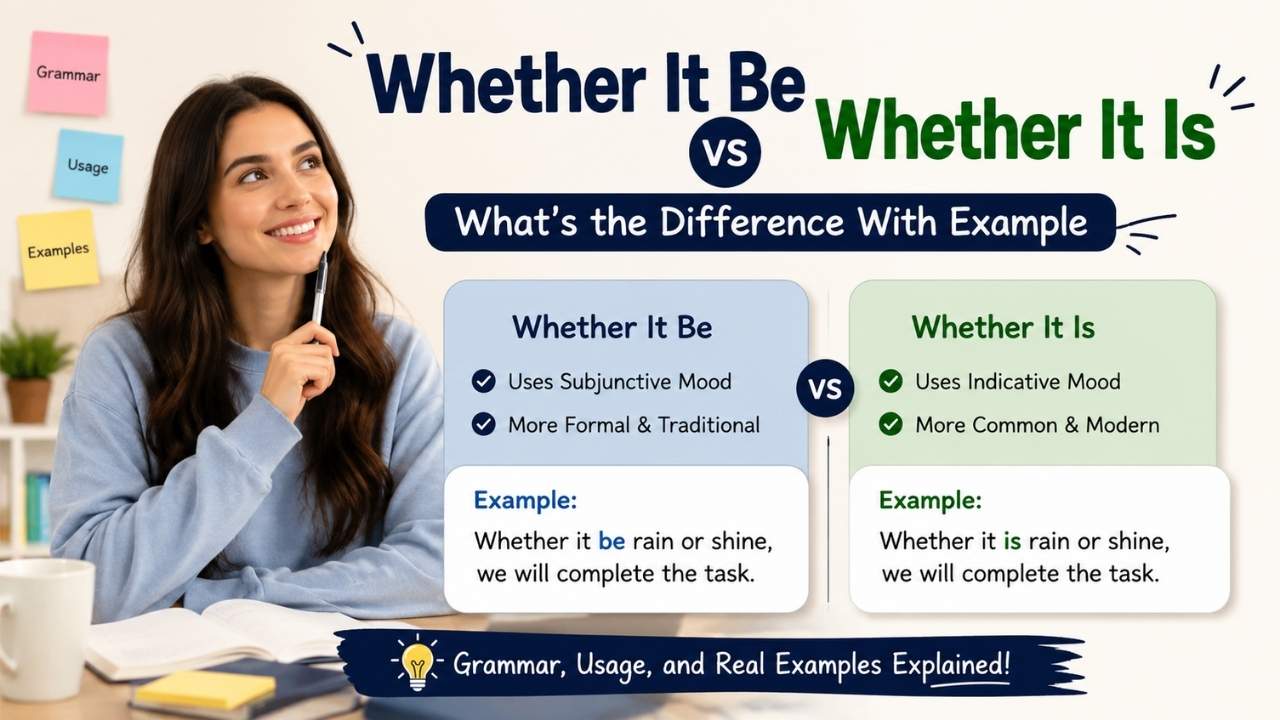
Both “whether it be” and “whether it is” are correct English expressions. The main difference is that whether it be uses the subjunctive mood, while whether it is uses the indicative mood.
Generally, whether it be sounds more formal and often appears in academic, literary, or professional writing. In contrast, whether it is sounds more natural in everyday English and modern communication.
For example:
- Whether it be rain or sunshine, we will continue the event.
- Whether it is raining or sunny, we will continue the event.
Although both sentences express a similar meaning, the first sounds more formal because it uses a subjunctive verb form, while the second reflects standard modern English usage.
If you’re unsure which expression to choose, whether it is is usually the safer and more common option for everyday writing. However, whether it be remains a perfectly correct choice when you want a more formal tone.
Is It “Whether It Be” or “Whether It Is”?
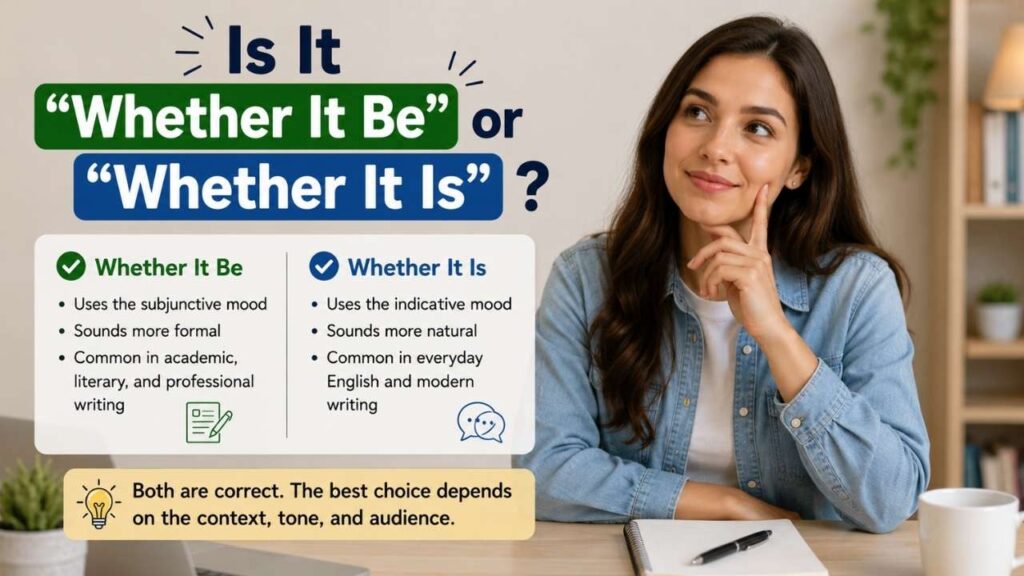
Many people ask, “Is whether it be grammatically correct?” or “Should I use whether it be or whether it is?” The simple answer is that both expressions are correct. However, they belong to different parts of English grammar and create slightly different tones.
Whether it be uses the subjunctive mood, which often expresses possibility, uncertainty, or a situation that may happen. On the other hand, whether it is uses the indicative mood, which sounds more direct and natural in everyday English.
In modern English, most writers and speakers prefer whether it is because it feels simpler and more familiar. However, you may still see whether it be in formal writing, speeches, academic work, and literature.
So, when deciding between whether it be vs whether it is, remember that both are correct. The best choice depends on the context, audience, and tone you want to create.
What Does “Whether It Be” Mean?
The phrase whether it be introduces different possibilities or situations. It often appears when a writer wants to discuss something that may happen without focusing on a specific fact.
Because it uses the subjunctive mood, this expression sounds more formal than everyday speech. Many people associate it with academic writing, legal documents, professional communication, and literary works.
For example:
- Whether it be rain or snow, the game will continue.
- Whether it be a small project or a large one, we will help.
In both examples, the speaker talks about possible situations rather than confirmed facts.
Although some people think whether it be sounds old-fashioned, it remains grammatically correct and still appears in modern writing. If you want a polished or formal tone, this phrase can be a good choice. Understanding the whether it be meaning helps you use it more confidently and accurately.
What Does “Whether It Is” Mean?
The phrase whether it is introduces alternatives, conditions, or situations in a straightforward way. Unlike whether it be, it uses the indicative mood, which is the most common grammatical mood in English.
Most native speakers use whether it is naturally in everyday conversation, emails, articles, and business communication. Because it sounds clear and familiar, many writers prefer it in modern English.
For example:
- Whether it is sunny or cloudy, we will go outside.
- Whether it is a big task or a small one, she completes it well.
These examples focus on real situations without adding a formal tone.
If you compare whether it be vs whether it is, you will notice that the second option feels more natural in daily communication. That is why whether it is appears more often in modern writing and speech than its subjunctive counterpart.
Whether It Be vs Whether It Is: Key Differences
Both expressions share a similar meaning, but they differ in grammar, tone, and usage. Understanding these differences makes it easier to choose the right phrase.
| Feature | Whether It Be | Whether It Is |
| Grammatical Mood | Subjunctive Mood | Indicative Mood |
| Tone | Formal | Neutral |
| Common Usage | Academic and literary writing | Everyday English |
| Frequency | Less common | More common |
| Style | Traditional | Modern |
The biggest difference between whether it be and whether it is involves formality. Whether it be often appears in formal contexts, while whether it is fits casual and professional communication.
Neither expression is wrong. Instead, they represent different writing styles and language usage choices. Knowing these usage differences helps you select the phrase that best matches your audience and purpose.
Understanding the Difference Between the Subjunctive and Indicative Mood
To fully understand whether it be vs whether it is, you need to know the difference between the subjunctive mood and the indicative mood.
The indicative mood describes facts, statements, and real situations. Most English sentences use this mood because it feels natural and direct.
Example:
- Whether it is difficult or easy, we will finish the task.
The subjunctive mood expresses possibilities, wishes, suggestions, or uncertain situations.
Example:
- Whether it be difficult or easy, we will finish the task.
The meaning stays almost the same, but the tone changes. The subjunctive form sounds more formal and traditional.
Many learners find grammatical moods confusing because they rarely think about them while speaking. However, understanding this grammar rule helps explain why both expressions are correct and why each one works in different contexts.
When Should You Use “Whether It Be”?
You should use whether it be when you want a more formal or polished tone. This phrase works well in academic papers, professional writing, speeches, and literary works.
For example, a writer may say:
- Whether it be research, teaching, or training, education plays an important role.
This sentence sounds formal and carefully written. The phrase helps create a sense of professionalism.
You can also use whether it be when discussing several possibilities without focusing on one specific outcome. Because the phrase uses a subjunctive verb, it often highlights uncertainty or potential situations.
Although modern writers do not use it as often as before, it remains valuable in formal English. If your audience expects professional language, whether it be can improve the overall tone of your writing without changing the meaning of the sentence.
When Should You Use “Whether It Is”?
You should use whether it is in most everyday situations. It sounds natural, clear, and easy to understand, making it the preferred choice for modern communication.
You can use this phrase in emails, blog posts, conversations, business documents, and online content. Because it relies on the indicative mood, readers usually process it more quickly than the subjunctive form.
For example:
- Whether it is your first visit or your tenth, you are always welcome.
- Whether it is morning or evening, the store remains open.
These sentences sound friendly and direct.
If you are unsure which expression to choose, whether it is is usually the safer option. Most native speakers use it regularly, and it fits nearly every writing style. For this reason, it remains the most common choice in modern English usage and everyday communication.
Can “Whether It Be” and “Whether It Is” Be Used Interchangeably?
In many situations, yes. Both phrases often communicate the same basic idea, which is why people frequently use them interchangeably.
Consider these examples:
- Whether it be summer or winter, we enjoy traveling.
- Whether it is summer or winter, we enjoy traveling.
Both sentences are correct and easy to understand. The main difference is the tone. The first sentence sounds more formal, while the second feels more natural and conversational.
However, some writers prefer whether it be in formal contexts because it follows traditional grammar patterns. Others choose whether it is because it matches modern usage.
When comparing whether it be or whether it is, focus on your audience. If you want a formal style, choose the first option. If you want a simple and natural tone, choose the second.
Which Expression Is More Common Today?
In today’s English, whether it is is much more common than whether it be. You will hear it in conversations, read it in articles, and see it in business communication.
Most people prefer simpler language, and whether it is fits that preference perfectly. It sounds natural and does not draw attention to itself.
In contrast, whether it be appears less frequently. You will usually find it in formal writing, speeches, literature, and academic texts. While it remains grammatically correct, many modern writers avoid it because it can sound more traditional.
This does not mean the phrase is outdated. It still has a place in professional and literary contexts. However, if your goal is clear and modern communication, whether it is will often feel more appropriate and familiar to readers today.
Common Mistakes to Avoid
One common mistake is assuming that whether it be is incorrect. In reality, both expressions are grammatically correct and accepted in English grammar.
Another mistake involves using a highly formal phrase in a casual setting. For example, whether it be may sound unnatural in a friendly email or everyday conversation.
Some writers also believe that one phrase must always replace the other. This is not true. The best choice depends on the tone, audience, and purpose of your writing.
Finally, avoid focusing only on grammar rules. Think about readability and style as well. In many cases, whether it is improves clarity because readers encounter it more often.
By understanding these common grammar mistakes, you can choose the right expression and write with greater confidence and accuracy.
FAQs
Is “Whether It Be” Grammatically Correct?
Yes, whether it be is grammatically correct. It uses the subjunctive mood, which English speakers often use to express possibility, uncertainty, or hypothetical situations. Although it sounds more formal than whether it is, it remains a valid part of English grammar.
Is “Whether It Is” More Common Than “Whether It Be”?
Yes, whether it is is more common in modern English. People frequently use it in conversations, emails, articles, and business writing because it sounds natural and easy to understand.
Can “Whether It Be” and “Whether It Is” Be Used Interchangeably?
In many situations, yes. Both phrases often express the same idea. However, whether it be creates a more formal tone, while whether it is feels more conversational and modern.
Why Does “Whether It Be” Sound More Formal?
The phrase whether it be uses the subjunctive mood, which appears less often in everyday speech. Because writers commonly use it in academic, literary, and professional contexts, many readers associate it with formal English.
Which Expression Should I Use in Modern Writing?
For most situations, whether it is is the better choice because it sounds natural and clear. However, if you want a more formal or traditional style, whether it be can work just as well.
Conclusion
When comparing whether it be vs whether it is, the most important thing to remember is that both expressions are correct. The difference is not about right or wrong. Instead, it comes down to grammar, tone, and usage.
Whether it be uses the subjunctive mood and usually appears in formal, academic, literary, or professional writing. It often helps create a polished and traditional tone. In contrast, whether it is uses the indicative mood and sounds more natural in everyday English. That is why it appears more frequently in modern communication.
If you want a simple rule to follow, choose whether it is for most situations because it is clear, familiar, and widely accepted. However, use whether it be when you need a more formal style or wish to emphasize a range of possibilities.
Ultimately, understanding the difference between whether it be and whether it is allows you to choose the expression that best fits your audience, purpose, and writing style.