
Similar to or Similarly to: Which One Is Correct? Meaning, Example
Many English learners and writers often get confused about “similar to” and “similarly to” because both expressions describe a connection between two things. However, they do not work in the same way. Understanding the difference between Similar to or Similarly to helps you write clearer and more accurate sentences.
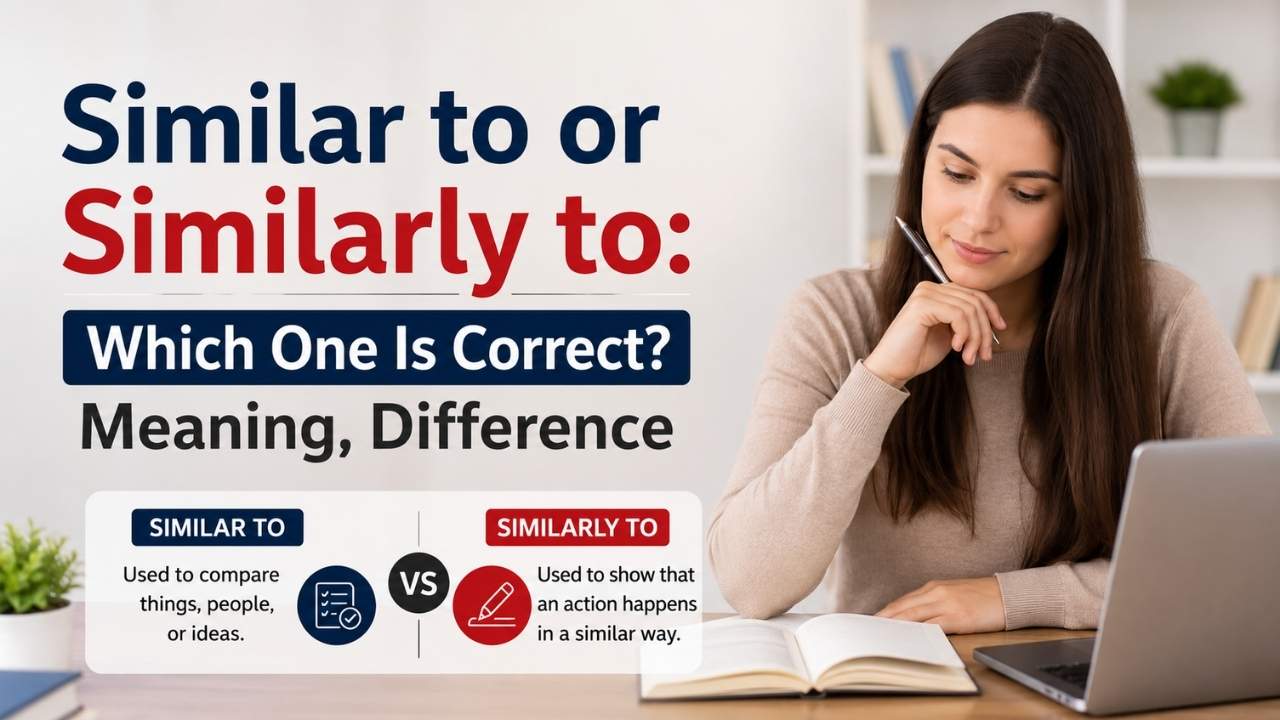
The short answer is simple: “similar to” describes things, people, ideas, or situations that share common qualities, while “similarly to” describes an action or process that happens in a comparable way. Although these phrases look alike, they have different grammar roles and meanings.
In this guide, we will explain similar to or similarly to which is correct, explore their meanings, discuss their proper usage, and provide clear examples. By the end, you will know exactly when to use each phrase.
Quick Answer
“Similar to” and “similarly to” have different uses. Use “similar to” when comparing things, people, or ideas that share qualities. Use “similarly to” when describing an action or process that happens in a comparable way. In most everyday situations, “similar to” is more common, while “similarly to” is used less often.
What Does “Similar To” Mean?
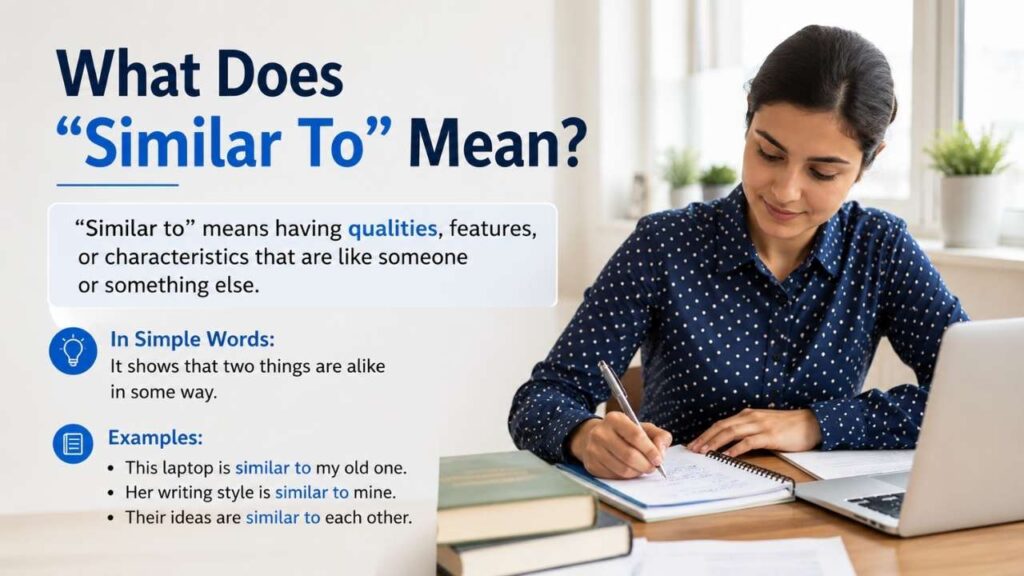
“Similar to” meaning refers to having qualities, features, or characteristics that are close to something else. It shows that two things are not exactly the same but share important similarities.
The phrase similar to definition is simple: something has a resemblance or connection with another thing. It is one of the most common comparison phrases in English.
“Similar to” usually follows a linking verb such as is, are, looks, seems, or appears.
Examples:
- Her writing style is similar to mine.
- This movie is similar to the one we watched yesterday.
- Their ideas are similar to each other.
In these sentences, similar to describes the qualities of a person, object, or idea. It does not describe an action. This is why using it as an adverb can create a grammar mistake.
How to Use “Similar To” Correctly
Learning the correct similar to usage becomes easier when you understand its sentence pattern.
The basic structure is:
Subject + linking verb + similar to + noun/pronoun
Examples:
- This design is similar to the original version.
- Your answer is similar to mine.
- The new product looks similar to the older model.
You can use similar to when comparing:
- People
- Objects
- Ideas
- Methods
- Situations
For example, you can say:
- John’s personality is similar to his brother’s.
- This method is similar to the traditional approach.
A common mistake is using similar to describe an action. For example:
❌ The two machines work similar to each other.
✅ The two machines work similarly to each other.
Remember, similar to describes a thing, while similarly describes an action.
What Does “Similarly To” Mean?
The similarly meaning focuses on doing something in a way that resembles another action or process. Unlike similar to, which describes a condition or quality, similarly to explains the manner in which something happens.
The similarly to definition can be explained as: “in a way that is comparable to something else.”
Examples:
- The new system operates similarly to the previous system.
- She responded similarly to her teacher.
- The company expanded similarly to its competitors.
In each example, the phrase describes an action or process.
However, “similarly to” is less common in everyday English. Many native speakers prefer using “similarly” or “in a similar way to” because these forms often sound more natural.
Example:
- The machine works similarly to the old model.
- The machine works in a similar way to the old model.
Both sentences are correct and clear.
How to Use “Similarly To” Correctly
Understanding similarly to usage requires knowing that it modifies verbs, not nouns. It explains how an action happens rather than describing what something is.
The common structure is:
Subject + verb + similarly to + noun/pronoun
Examples:
- This engine performs similarly to the previous model.
- The students reacted similarly to their classmates.
- The new app functions similarly to the older version.
When writing formal content, academic papers, or professional documents, you should use similarly carefully. Although “similarly to” is grammatically correct, some readers may find it less natural.
For smoother writing, you can often replace it with:
- similarly
- in a similar way to
- in the same manner as
Choosing the right phrase improves clarity and makes your writing sound more natural.
Similar to vs Similarly to: Main Differences
The difference between similar to and similarly to mainly comes from their grammar roles and what they describe.
| Similar To | Similarly To |
| Works as an adjective phrase | Works as an adverbial phrase |
| Describes people, things, or ideas | Describes actions or processes |
| Shows resemblance | Shows similar behavior or manner |
| More common in everyday English | Less common but correct |
Examples:
Similar to:
- This painting is similar to that one.
The phrase describes the painting.
Similarly to:
- The artist worked similarly to other professionals.
The phrase describes the action of working.
Understanding this difference between similar and similarly prevents common grammar errors. Instead of choosing based only on appearance, consider whether you are describing a thing or an action.
Examples of Similar To in Sentences
Using similar to examples helps you understand how this phrase works naturally.
Everyday Examples:
- My new phone is similar to my previous phone.
- This restaurant’s menu is similar to the one downtown.
- Her voice is similar to her sister’s voice.
Academic Examples:
- The results are similar to previous studies.
- This theory is similar to another scientific explanation.
Workplace Examples:
- Our marketing strategy is similar to our competitor’s strategy.
- The new system is similar to the old system.
In all these examples, similar to compares two things that share characteristics. It does not explain an action. This is why it remains one of the most commonly used comparison phrases in English.
Examples of Similarly To in Sentences
Looking at similarly examples makes it easier to understand when this phrase fits naturally.
Examples:
- The new device works similarly to the previous model.
- The two teams performed similarly to each other during the competition.
- The company developed similarly to other successful businesses.
You can also use a simpler form:
- The two machines work similarly.
- The students reacted similarly.
These examples show that similarly focuses on the way an action happens.
When you describe behavior, movement, performance, or processes, use similarly rather than similar.
Correct:
✅ The two systems operate similarly.
Incorrect:
❌ The two systems operate similar.
Common Mistakes With Similar and Similarly
Many writers confuse similar and similarly because they have related meanings. However, they belong to different grammar categories.
Mistake 1: Using “similar” as an adverb
Incorrect:
❌ The two products perform similar.
Correct:
✅ The two products perform similarly.
Why?
Because “perform” is an action, so it needs an adverb.
Mistake 2: Using “similarly” to describe nouns
Incorrect:
❌ Her dress is similarly to mine.
Correct:
✅ Her dress is similar to mine.
Why?
Because “dress” is a thing being compared, so use the adjective phrase similar to.
Mistake 3: Assuming both phrases are interchangeable
Although they have related meanings, similar to and similarly to cannot always replace each other. Their grammar roles are different.
Learning these rules helps you avoid common grammar mistakes and improve your correct English usage.
Is “Similarly To” Grammatically Correct?
Yes, “similarly to” is grammatically correct, but it is not always the most natural choice. Many English speakers prefer shorter alternatives such as “similarly” or “in a similar way to.”
For example:
Correct:
✅ The program works similarly to the previous version.
Also correct:
✅ The program works in a similar way to the previous version.
However:
Incorrect:
❌ The program is similarly to the previous version.
The phrase depends on the sentence structure. Use similar to when describing a noun and use similarly to when describing an action
FAQs
Is “similar to” or “similarly to” correct?
Both are correct, but they have different uses. “Similar to” compares things, while “similarly to” describes actions or processes.
What is the difference between similar and similarly?
Similar is an adjective that describes a thing, while similarly is an adverb that explains how an action happens.
Can I use “similar to” and “similarly to” interchangeably?
No. They have related meanings but different grammar roles, so they cannot always replace each other.
Is “similarly to” grammatically correct?
Yes, “similarly to” is grammatically correct, but many speakers prefer “similarly” or “in a similar way to.”
When should I use “similar to”?
Use “similar to” when two people, objects, ideas, or situations share common features.
When should I use “similarly to”?
Use “similarly to” when explaining that an action happens in a way comparable to something else.
Which phrase is more common: “similar to” or “similarly to”?
“Similar to” is much more common in everyday English because it is frequently used for comparisons.
Conclusion
The answer to “similar to or similarly to which is correct?” depends on your sentence.
Use “similar to” when you describe a person, object, idea, or situation that shares qualities with something else.
Example:
- This book is similar to that book.
Use “similarly to” when you describe an action or process that happens in a comparable way.
Example:
- This machine works similarly to the older model.
The easiest way to remember the difference is:
Similar to = what something is like.
Similarly to = how something happens.
Once you understand this simple rule, you can use both expressions confidently in everyday conversations, academic writing, and professional communication.