
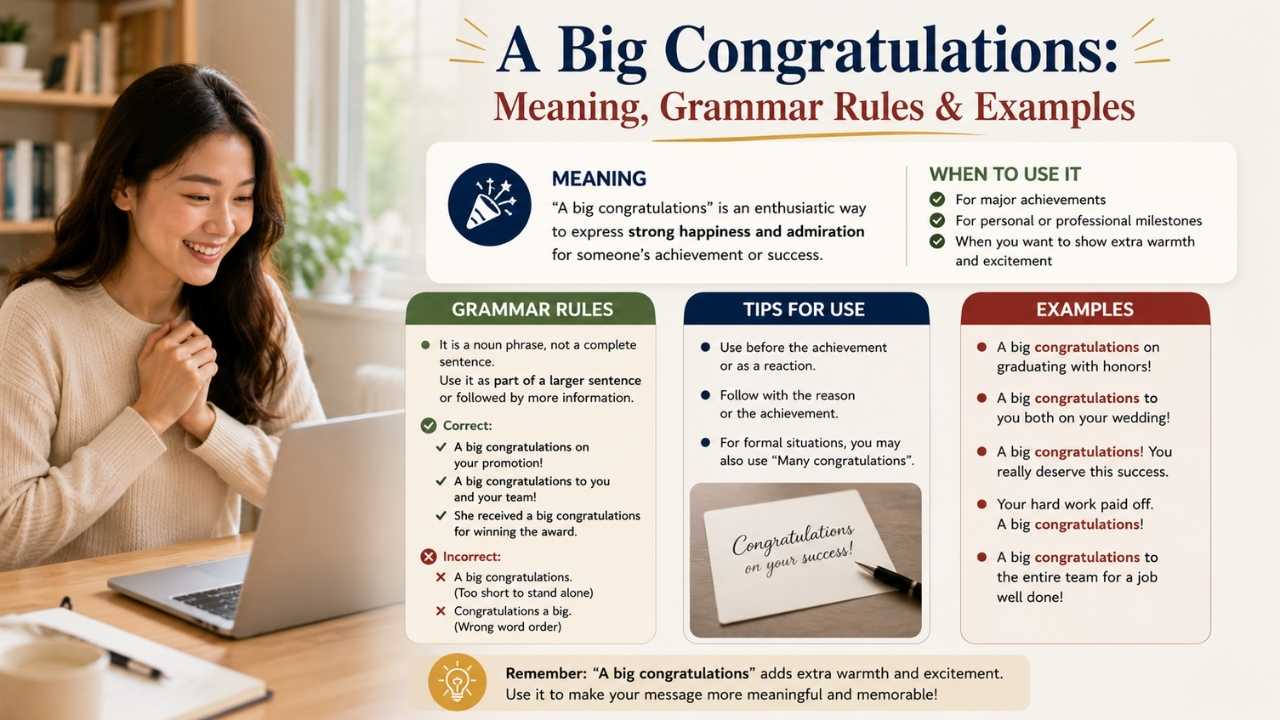
A Big Congratulations: Meaning, Grammar Rules & Examples
When someone achieves something special, we often want to express our happiness and appreciation with the right words. The phrase “a big congratulations” is one expression people use to celebrate someone’s success, achievement, or important milestone. However, many English learners and writers often wonder, “Is a big congratulations correct?” and whether this phrase follows standard grammar rules.
The phrase sounds natural to many speakers, but it also creates confusion because “congratulations” usually appears as a plural noun. Understanding the meaning, grammar, and correct usage of this expression can help you communicate more confidently.
In this article, we will explain a big congratulations meaning, explore whether it is grammatically correct, compare it with big congratulations, and provide practical examples. You will also learn better alternatives and ways to congratulate someone in different situations.
Quick answer
“A big congratulations” means expressing strong happiness, praise, or appreciation for someone’s achievement or success. The phrase is understandable and commonly used, especially in announcements and celebration messages. However, “big congratulations” often sounds more natural in everyday English. Both expressions work, but the best choice depends on the situation and the tone of your message.
What Does “A Big Congratulations” Mean?
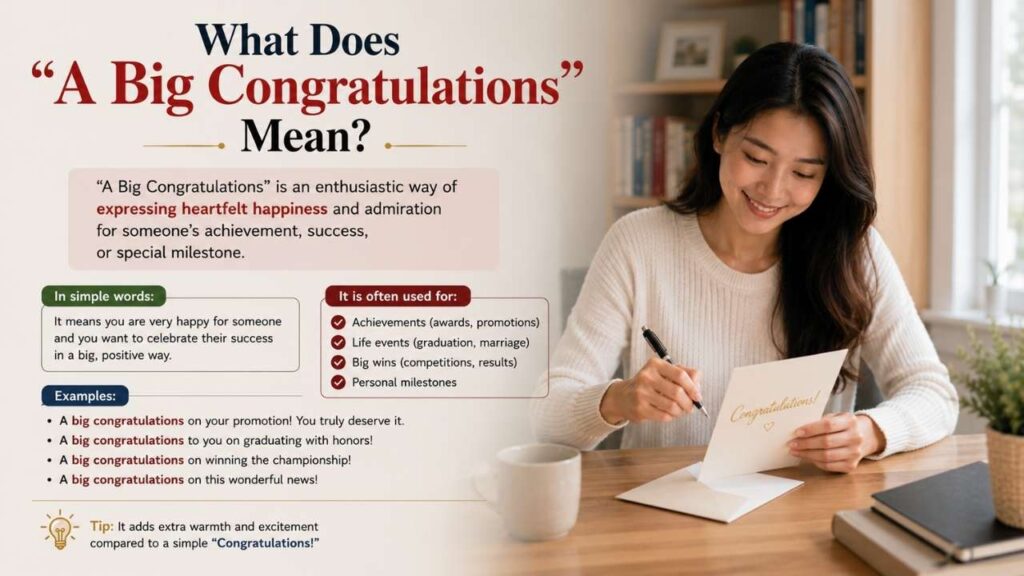
The phrase “a big congratulations” means a strong expression of happiness, praise, or approval for someone’s achievement, success, or special moment. When you add the word “big,” you increase the feeling behind the message. It shows that you feel especially happy and want to recognize someone’s effort.
People often use this phrase when someone reaches an important goal, such as getting a promotion, graduating, winning an award, starting a new journey, or completing a difficult task. For example, saying “A big congratulations to Sarah on her graduation” shows more excitement than simply saying “Congratulations.”
The a big congratulations meaning is not limited to one situation. You can use it in personal conversations, professional announcements, social media posts, and celebration messages. Although some people question the grammar of this phrase, most readers understand the positive meaning behind it.
Is “A Big Congratulations” Grammatically Correct?
Many people ask, “Is a big congratulations correct?” because the phrase places the article “a” before the word “congratulations.” Traditionally, “congratulations” works as a plural noun and usually appears without an article. For example, we normally say, “Congratulations on your success,” rather than “A congratulations on your success.”
However, modern English often uses “a big congratulations” as a complete expression, especially in announcements and informal writing. The word “big” changes the structure by turning the phrase into a specific expression of praise.
Both of these examples are understandable:
- A big congratulations to everyone who completed the project.
- Big congratulations to everyone who completed the project.
While “big congratulations” sounds slightly more natural in everyday English, “a big congratulations” is acceptable when you want to emphasize a particular celebration or announcement.
Why Do We Say “Congratulations” Instead of “Congratulation”?
The word “congratulations” often confuses English learners because it appears in the plural form. Many people wonder why we say “congratulations” instead of “congratulation.”
The reason is that the word developed as an expression of good wishes and praise. When you say “Congratulations!”, you are not referring to one single congratulation. Instead, you are offering your happiness, approval, and positive feelings toward someone’s achievement.
For example:
✅ Congratulations on your new job!
✅ Congratulations on winning the competition!
These sentences express appreciation for someone’s success.
The singular form “congratulation” exists, but native speakers rarely use it in everyday communication. Saying “a congratulation” usually sounds unnatural. This is why common expressions include “many congratulations,” “heartfelt congratulations,” or “big congratulations.”
Understanding this difference helps writers avoid common mistakes and use congratulations correctly in professional and personal messages.
“Big Congratulations” vs “A Big Congratulations”: Which One Is Better?
The difference between “big congratulations” and “a big congratulations” is mainly about natural usage and context. Both phrases communicate happiness and appreciation, but native speakers often prefer one depending on the situation.
“Big congratulations” is the more common and natural choice in everyday English. People frequently use it in conversations, comments, and social media posts.
Examples:
- Big congratulations on your amazing achievement!
- Big congratulations to the entire team!
On the other hand, “a big congratulations” often appears in announcements or more structured messages.
Examples:
- A big congratulations to our winners for their outstanding performance.
- A big congratulations to everyone who contributed to this success.
If you want a simple and natural phrase, choose “big congratulations.” If you are making a public announcement or writing a warm message, “a big congratulations” can work well.
How to Use “A Big Congratulations” in a Sentence
You can use “a big congratulations” in many situations where you want to recognize someone’s effort or success. The phrase works best when you mention the person, achievement, or reason for celebration.
Professional situations:
- A big congratulations to Emma on her well-deserved promotion.
- A big congratulations to our team for completing this challenging project.
Academic situations:
- A big congratulations to all students who graduated this year.
- A big congratulations on achieving excellent exam results.
Personal situations:
- A big congratulations on your new home.
- A big congratulations on reaching this important goal.
Social media situations:
- A big congratulations to the happy couple! Wishing you a lifetime of happiness.
When using this phrase, focus on adding a personal touch. Mentioning the achievement makes the message feel more meaningful and sincere.
Examples of “A Big Congratulations” Messages
A thoughtful congratulations message should recognize someone’s effort and make them feel appreciated. You can adjust your message depending on the relationship and occasion.
Short messages:
- A big congratulations on your incredible achievement!
- A big congratulations! You truly deserve this success.
Professional messages:
- A big congratulations on your promotion. Your dedication and hard work have truly paid off.
- A big congratulations to the team for achieving this important milestone.
Messages for friends:
- A big congratulations, my friend! I am so happy to see you achieve your dream.
- A big congratulations on your success. Keep reaching for greater heights.
Graduation messages:
- A big congratulations on your graduation. Your hard work has finally brought great results.
These examples show how you can use the phrase naturally while adding warmth and personality.
Better Alternatives to Say “A Big Congratulations”
Although “a big congratulations” is understandable, you may want to use other expressions depending on the situation. Different phrases can make your message sound more natural, emotional, or professional.
Formal alternatives:
- Please accept my heartfelt congratulations on your achievement.
- Warmest congratulations on your remarkable success.
- Congratulations on this well-deserved accomplishment.
Friendly alternatives:
- Huge congratulations!
- Massive congratulations!
- Well done!
- You did an amazing job!
Professional alternatives:
- Congratulations on reaching this important milestone.
- Your success is truly inspiring. Congratulations on this achievement.
Using different ways to say congratulations helps you create messages that match the occasion. A formal workplace message may need a different tone than a casual message to a friend.
Common Mistakes When Using Congratulations
Many English learners make small mistakes when writing congratulations messages. Learning these common errors can help you communicate more naturally.
Mistake 1: Using “congratulation” alone
❌ Congratulation on your success.
✅ Congratulations on your success.
The plural form is the standard expression.
Mistake 2: Using the wrong preposition
❌ Congratulations for your achievement.
✅ Congratulations on your achievement.
We usually use “on” after congratulations.
Mistake 3: Overusing formal expressions
A message does not always need complicated words. Simple phrases like “Big congratulations!” or “Congratulations on your success!” often sound more genuine.
Avoiding these mistakes will help you write clearer and more natural congratulatory messages.
FAQs
Is “a big congratulations” grammatically correct?
Yes, “a big congratulations” is understandable and commonly used, especially in announcements. However, “big congratulations” often sounds more natural in everyday English.
Should I say “big congratulations” or “a big congratulations”?
Both phrases work, but “big congratulations” is generally more common. Use “a big congratulations” when you want to highlight a specific celebration or announcement.
Can I use “a big congratulations to you”?
Yes, you can use “a big congratulations to you” in friendly or informal messages. For example: “A big congratulations to you on your new achievement!”
What is another way to say big congratulations?
You can say “huge congratulations,” “massive congratulations,” “heartfelt congratulations,” or “well done.”
Is “congratulation” singular correct?
The word exists, but people rarely use it alone. In most situations, use “congratulations” instead.
Conclusion
The phrase “a big congratulations” expresses strong happiness and appreciation for someone’s achievement. While some people question its grammar because “congratulations” is usually plural, the phrase remains understandable and widely used, especially in announcements and celebration messages.
For everyday communication, “big congratulations” often sounds more natural. However, “a big congratulations” can still work when you want to add emphasis and recognize someone’s success in a warm way.
Whether you are writing a professional message, a social media post, or a personal note, choosing the right congratulatory phrase helps you express genuine support. Understanding the meaning, grammar, and alternatives allows you to use these expressions with confidence.