
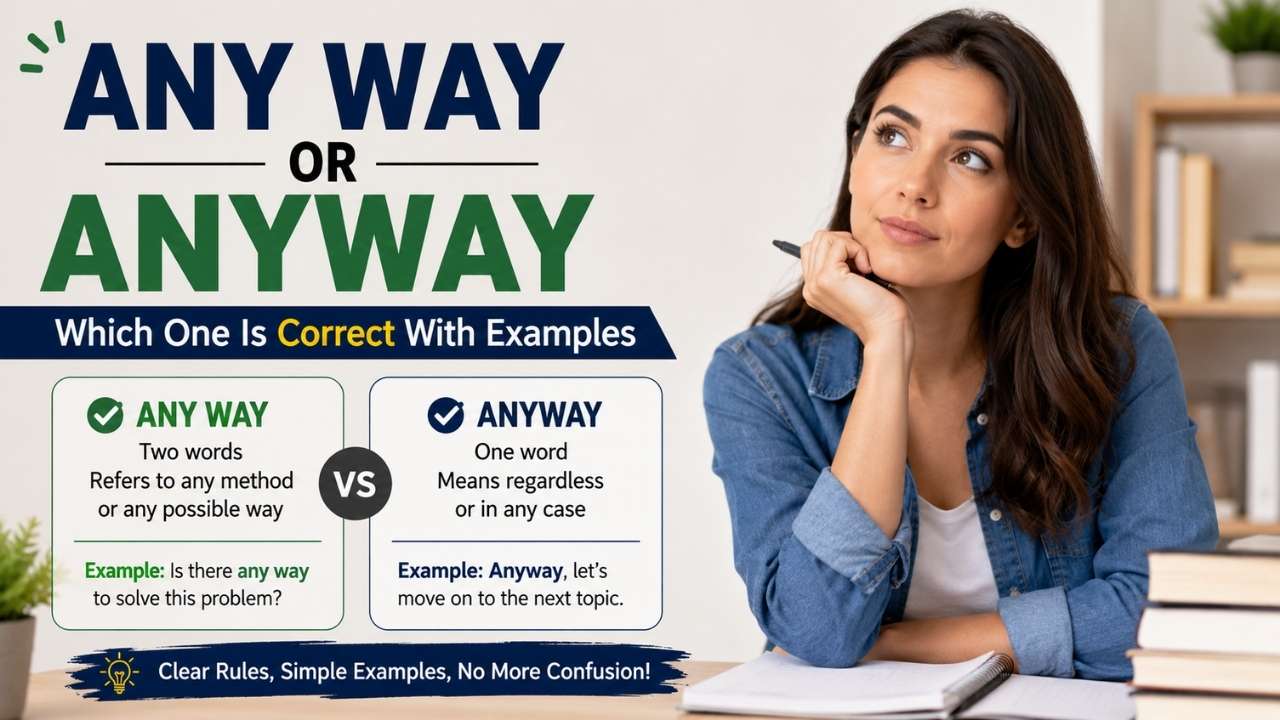
Any Way or Anyway Which One Is Correct With Examples
Choosing between any way or anyway can be confusing because they look and sound almost the same. However, they have different meanings and are used in different situations. Understanding the difference between any way and anyway will help you write more clearly and avoid common grammar mistakes.
In simple terms, anyway is a single-word adverb that usually means “regardless” or “in any case,” while any way is a two-word phrase that refers to any method or manner of doing something. You may also wonder whether anyways is correct or how these words are used in American English and formal writing.
In this guide, you’ll learn the grammar rules, meanings, practical sentence examples, common mistakes, and easy memory tips so you can confidently choose the correct word in every situation.
Quick Answer
The difference between any way and anyway is simple. Anyway is a one-word adverb meaning “regardless,” “in any case,” or “nevertheless.” Any way is a two-word phrase that means “any method” or “any possible manner.” Anyways is an informal variation that is common in casual speech but is generally avoided in formal, academic, and professional writing.
Any Way vs. Anyway: The Main Difference at a Glance
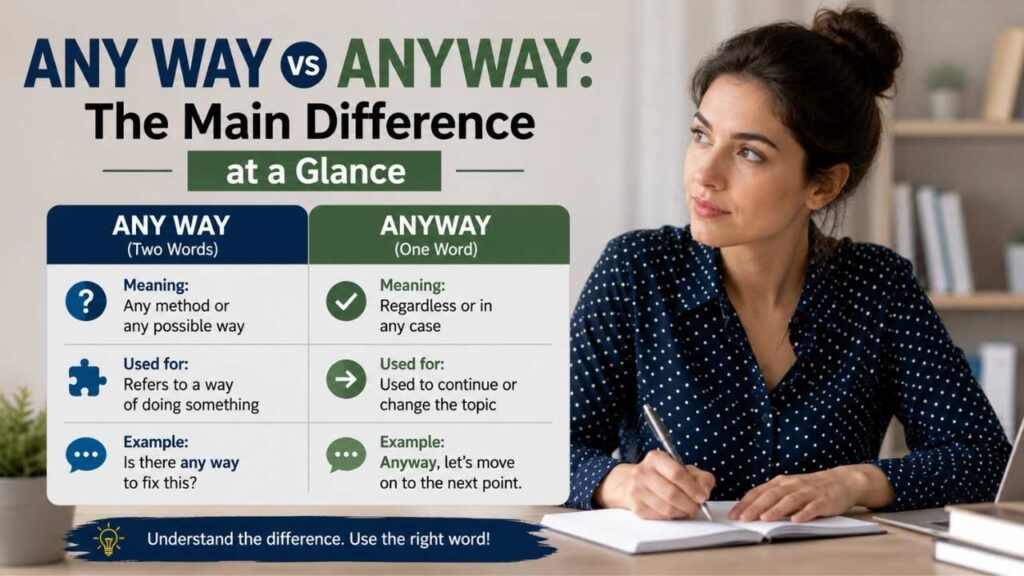
Many people wonder, “What is the difference between any way and anyway?” The answer is simple. Anyway is a one-word adverb that means “regardless,” “in any case,” or “nevertheless.” You use it to continue a conversation or change the subject.
Any way, on the other hand, is a two-word phrase that means “any method” or “any possible manner.” It refers to the way something can be done. Although they sound alike, they are not interchangeable because they have different meanings and grammar roles.
Learning this grammar difference will improve your English writing and help you avoid common mistakes. If you enjoy learning similar word pairs, you may also like our guide on Hear vs Here, another commonly confused pair.
| Feature | Anyway | Any Way |
| Part of Speech | Adverb | Phrase (Determiner + Noun) |
| Meaning | Regardless, in any case | Any method or manner |
| Used For | Continuing or changing a thought | Referring to a possible method |
| Example | Anyway, let’s begin. | Is there any way to fix it? |
What Does “Anyway” Mean?
Anyway is a one-word adverb that helps connect ideas in a sentence. It often means “regardless,” “in any case,” or “despite what was said before.” Native speakers frequently use it to return to the main topic, end a discussion, or introduce a new point.
Because it works as an adverb, anyway should always be written as one word. It is common in both spoken and written American English, although it is more natural in casual conversation than in very formal writing.
Learning the meaning of anyway makes your writing smoother and easier to understand. If you often confuse similar expressions, our article on Someday vs Some Day explains another pair of words that look alike but have different meanings.
Examples:
- Anyway, let’s continue the meeting.
- I didn’t like the movie, but I watched it anyway.
- Anyway, what are your weekend plans?
What Does “Any Way” Mean?
Any way is a two-word phrase that means “any method,” “any possible way,” or “any manner.” Unlike anyway, it refers to how something can happen or be done. The word any describes the noun way, so they remain separate words.
You will often see any way in questions, negative sentences, and situations where someone is looking for a solution. Understanding the meaning of any way helps you choose the correct expression and write with confidence. This small grammar rule makes a big difference in correct English usage and improves your overall writing accuracy.
Examples:
- Is there any way to solve this problem?
- We couldn’t find any way to contact her.
- Do you know any way to save more money?
When Should You Use “Anyway”?
Use anyway whenever you want to mean “regardless,” “in any case,” or when you need a smooth transition between ideas. It is commonly used in conversations, emails, articles, and everyday writing. Anyway can introduce a new topic, return to the main discussion, or show that something happened despite another situation.
Since it is an adverb, remember that it is always written as one word. This is the correct choice in most situations where you are not talking about a method or manner.
If you have ever wondered when to use anyway, think about whether you could replace it with “regardless.” If the sentence still makes sense, anyway is probably the right word. For another useful grammar guide, read Is It Correct to Say Most Recent.
Examples:
- It was raining, but we went hiking anyway.
- Anyway, let’s get back to work.
- She wasn’t invited, but she came anyway.
When Should You Use “Any Way”?
Use any way when you are talking about a method, choice, or possible solution. The phrase always refers to how something can be done rather than connecting ideas in a sentence. You will often find it after words like is there, do you know, find, or think of. A simple trick is to replace way with method.
If the sentence still sounds natural, then any way is the correct choice. This easy test helps you avoid confusing any way with anyway. Learning when to use any way will make your grammar stronger and help you write more clearly in both personal and professional situations.
Examples:
- Is there any way to finish this today?
- We need to find any way to reduce costs.
- Can you think of any way to improve this plan?
Is “Anyways” a Real Word?
Yes, anyways is a real word, but it is considered informal. It appears mainly in casual conversations and some regional varieties of American English. Although many people say anyways in everyday speech, most grammar experts recommend using anyway in formal writing, academic writing, and business communication.
If you are writing an essay, report, email, or professional document, anyway is the safer and more widely accepted choice. Knowing the difference between anyway, any way, and anyways helps you choose the right expression for every situation. In casual speech, anyways may sound natural, but in polished writing, anyway is almost always the better option.
Examples:
- Informal: Anyways, I’ll see you tomorrow.
- Formal: Anyway, let’s continue with the presentation.
- Correct: Is there any way to change the schedule?
Common Mistakes People Make
Many writers mix up anyway and any way because they sound the same. The most common mistake is using anyway when talking about a method or using any way when the meaning is “regardless.” Another mistake is using anyways in formal or academic writing, where anyway is the better choice.
A simple check can help: if you can replace the word with “regardless,” use anyway. If you mean “any method” or “any possible way,” use any way. Learning these grammar rules will improve your English grammar, make your writing clearer, and help you avoid common grammar mistakes in everyday communication.
| Incorrect | Correct |
| Is there anyway to fix it? | Is there any way to fix it? |
| Any way, let’s begin. | Anyway, let’s begin. |
| Anyways, thank you for coming. (Formal writing) | Anyway, thank you for coming. |
Any Way vs. Anyway in American and British English
The good news is that the difference between any way and anyway is the same in both American English and British English. In both varieties, anyway is the correct adverb meaning “in any case” or “regardless,” while any way refers to any method or manner.
The main difference is that anyways is heard more often in casual American speech than in British English. However, style guides in both regions recommend using anyway in formal writing, business writing, and academic writing. No matter which form of English you use, following this rule will help you write naturally and correctly.
Easy Memory Trick to Never Confuse Them Again
A quick memory trick can help you remember the difference between any way and anyway forever. Ask yourself this question: “Am I talking about a method?” If the answer is yes, choose any way because it means any method or any possible manner. If the answer is no, and you mean “regardless,” “in any case,” or you are changing the subject, choose anyway.
Another useful tip is to replace way with method. If the sentence still makes sense, any way is correct. If it does not, use anyway. This simple trick works in almost every situation and makes choosing the correct word much easier.
Real-Life Examples in Different Writing Situations
Seeing these words in context makes them much easier to understand. In a business email, you might write, “Anyway, I’ll send the report this afternoon.” In everyday conversation, someone could say, “I was tired, but I went anyway.” When asking for help, you would write, “Is there any way to recover the lost file?”
In an academic paper, anyway is acceptable when it fits the sentence naturally, while anyways should usually be avoided. These examples show that anyway connects ideas, while any way refers to a possible solution or method. Choosing the correct expression makes your writing sound more professional and easier to understand.
Mini Practice Quiz
Test your understanding by choosing the correct answer.
1. Is there _____ to finish the project today?
a) anyway
b) any way
2. It was cold, but we went outside _____.
a) anyway
b) any way
3. _____, let’s move on to the next topic.
a) Anyway
b) Any way
4. Can you think of _____ to solve this problem?
a) anyway
b) any way
5. Which word is better for formal writing?
Answer: Anyway
If you answered all five correctly, you now know when to use anyway and when to use any way with confidence.
FAQs
Is “anyway” one word?
Yes. Anyway is always written as one word when it means “regardless” or “in any case.”
Is “any way” two words?
Yes. Any way is always two words because it means any method or any possible manner.
Can “anyway” and “any way” be used interchangeably?
No. They have different meanings and different grammar roles, so they cannot replace each other.
Is “anyways” grammatically correct?
Anyways is a real but informal word. It is acceptable in casual speech but should usually be avoided in formal, academic, and professional writing.
How can I remember the difference?
If you mean a method, use any way. If you mean “regardless,” use anyway.
Conclusion
The difference between any way and anyway is easy to remember once you know their meanings. Anyway is a one-word adverb that means “regardless” or “in any case,” while any way is a two-word phrase that means any method or any possible manner.
Although anyways is common in casual conversation, anyway is the better choice for formal writing, business communication, and academic work.
When you’re unsure, ask yourself whether you’re talking about a method or continuing an idea. With this simple rule, regular practice, and the examples in this guide, you’ll be able to choose the correct word confidently and write clear, natural English every time.