

Dialog vs Dialogue: What’s the Difference & Which Should You Use
When it comes to dialog vs dialogue, many writers stop and wonder: Which spelling is correct? Is dialog wrong? Or is dialogue just the British version? The truth is simple — both words are correct, but they are used in different contexts. The main difference between dialog and dialogue comes down to spelling, region, and usage.
In most cases, dialogue is the standard spelling in literature and academic writing, while dialog appears more often in American English and technical terms like a dialog box.
If you’ve ever searched for “dialog or dialogue which is correct” or “what is the difference between dialog and dialogue,” this guide will give you a clear, practical answer. Let’s break it down in simple terms so you can choose the right spelling with confidence.
Quick Answer
The short answer is simple. Both “dialog” and “dialogue” are correct, but they are used in different situations. The main difference between dialog and dialogue is spelling and context. Dialogue is the traditional spelling and is more common in books, essays, and formal writing. Dialog is a shorter spelling often used in American English and in technical terms like a dialog box in software.
If you are asking, “Which is correct: dialog or dialogue?” the safest choice for most writing is dialogue. It is more widely accepted around the world. However, in programming or user interface design, dialog is common and correct. So the right choice depends on where and how you use the word.
What Does “Dialogue” Mean?
The word dialogue refers to a conversation between two or more people. In books and plays, dialogue shows what characters say to each other. It helps readers understand feelings, ideas, and conflict. For example:
The dialogue between the two friends felt honest and emotional.
In grammar terms, the dialogue meaning is simple — spoken words shared between people. This spelling is used in both American and British English, but it is more common in formal and academic writing. If you are writing an essay, story, or research paper, dialogue is usually the correct spelling. When people search for dialogue definition or dialogue examples, they are often learning how to use it properly in writing.
What Does “Dialog” Mean?
The word dialog has the same basic meaning as dialogue — a conversation between people. However, its usage is slightly different. In modern English, dialog appears more often in technical and computing contexts. For example, you may see the term dialog box meaning in software guides. A dialog box is a small window that asks for user input.
In regular writing, dialog is less common than dialogue. Some dictionaries accept it as a simplified American spelling. If you are wondering, “Is dialog correct spelling?” the answer is yes — but it is not the preferred form in most formal writing. The dialog definition is similar to dialogue, yet context decides which version you should use.
Dialog vs Dialogue: Side‑by‑Side Comparison Table
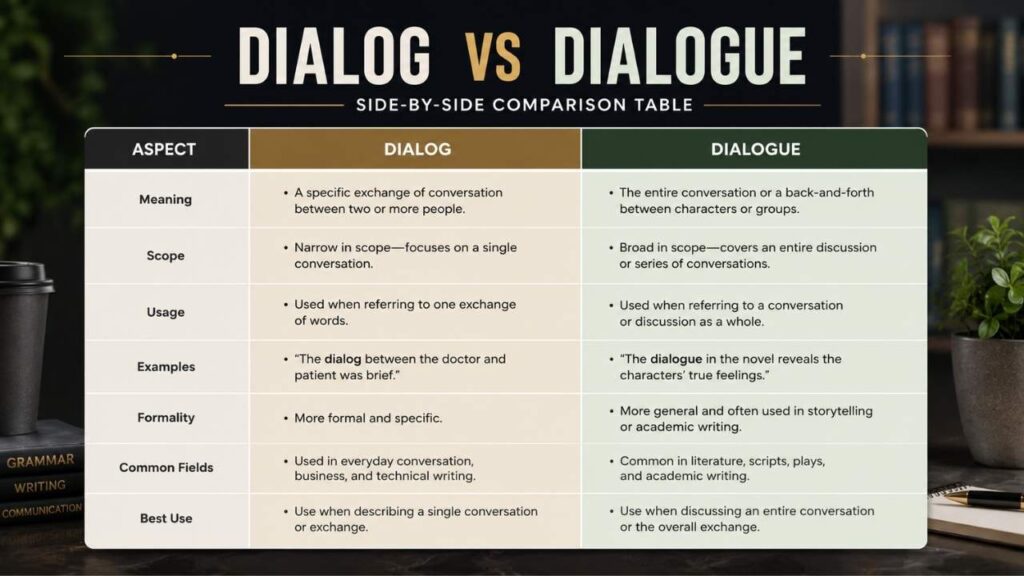
Understanding dialog vs dialogue difference becomes easier when you compare them directly.
| Feature | Dialog | Dialogue |
| Spelling Style | Shortened form | Traditional form |
| Common Region | American English | American & British English |
| Writing Type | Technical, software | Literature, academic |
| Formal Use | Less common | More accepted |
| Example | Dialog box | Dialogue in a novel |
When people search for “dialog vs dialogue examples in sentences”, they usually want clear guidance like this. The biggest difference is not meaning but usage. In creative or formal writing, dialogue is safer. In programming or UI design, dialog is widely used.
Is “Dialog” Grammatically Correct?
Yes, dialog is grammatically correct, but it is less common in general writing. Many people ask, “Is dialog wrong?” The answer is no. It appears in dictionaries and is accepted as a valid spelling. However, it is mostly used in American English and technical fields.
If you are writing a story, article, or school paper, teachers usually prefer dialogue. That is why many writers avoid the shorter form. The debate around dialog or dialogue is similar to other spelling questions like Hear vs Here or Someday vs Some Day, where usage and context matter. Just like asking, “Is It Correct to Say Most Recent?”, choosing the right word depends on clarity and situation.
American vs British English: Spelling Differences Explained
The difference between dialog and dialogue is also linked to regional spelling. In British English, “dialogue” is the only accepted spelling. In American English, both forms exist, but dialogue is still more common in everyday writing.
This spelling change connects to the history of simplified American spelling. In the past, language reformers wanted shorter and easier words. That is why American English has forms like “color” instead of “colour.” Some believe dialog followed that same pattern. When people search for dialog vs dialogue American vs British, they want to know which version fits their region. If you write for an international audience, using dialogue is usually the safest and clearest choice.
Why Do Computers Use “Dialog Box” Instead of “Dialogue Box”?
If you use a computer often, you have probably seen the term dialog box. In software and web design, the shorter spelling dialog is preferred. This is why we see phrases like modal dialog box, dialog window, or even the HTML <dialog> element in programming. Developers like shorter words because they are faster to type and easier to display in code.
When people search for why do computers use dialog instead of dialogue, the answer is simple: it became a technical standard. In user interface design, a UI dialog is a small window that asks users to confirm or enter information. In this field, using dialogue box would look unusual. So in technology, dialog is the correct and accepted term.
Which Spelling Should You Use in Academic Writing?
If you are writing an essay, research paper, or thesis, you should almost always use dialogue. Most academic style guides, including APA and Chicago style, follow traditional spelling. This makes dialogue the safer and more formal choice.
Students often ask, “Dialogue vs dialog in academic writing — which is correct?” The answer is clear: use dialogue. The shorter spelling may look informal or technical. In academic and professional settings, consistency is important. If your paper uses British or American spelling, stay consistent throughout.
When in doubt, choose dialogue for school work. It is more common in published books, journals, and formal documents, which makes it the better option for serious writing.
Dialogue in Fiction vs Dialog in Technical Writing
In fiction writing, the word dialogue is standard. Novelists, scriptwriters, and playwrights use dialogue to show conversations between characters. Strong dialogue brings stories to life and makes scenes feel real. That is why you will rarely see the shorter spelling in novels.
In contrast, dialog in programming or technical writing is common. User manuals often mention a dialog box meaning, explaining how a window appears on screen. This shows how context changes usage.
If you are writing a story, choose dialogue. If you are describing software or coding, dialog is correct. The difference between dialog and dialogue is not about meaning but about where the word appears.
Are Dialog and Dialogue Interchangeable?
Many people wonder, “Are dialog and dialogue interchangeable?” In meaning, yes — both refer to a conversation. However, in practice, they are not always interchangeable. Usage depends on context and audience.
For general writing, books, and articles, dialogue is preferred. For software, computing, and interface design, dialog is standard. If you mix them in the same document, it may look unprofessional. Consistency matters.
When people search for which spelling is more common, the answer is clear: dialogue is far more widely used in literature and formal writing. So while both spellings are correct, you should choose carefully based on your purpose and readers.
Etymology: Where Do the Words Come From?
The word dialogue comes from the Greek word dialogos, which means conversation. It later entered Latin and French before becoming part of English. Over time, spelling changes created shorter forms like dialog.
Some spelling reforms in American English encouraged simpler words. This may explain why dialog appeared as a shorter version. When people search for the origin of the word dialogue or etymology of dialog, they are often curious about this history.
Even though the spelling changed in some regions, the meaning stayed the same. Both forms share the same roots. Understanding this history helps explain why both spellings exist today.
Frequency of Usage: Which Is More Common Today?
If you look at books, articles, and online content, dialogue is much more common than dialog. In global English usage, dialogue appears far more often, especially in literature and academic writing.
The shorter spelling appears mainly in technical documents and computing guides. This answers the question, “Which spelling is more common?” For most writing purposes, dialogue is the dominant form.
So if you are unsure and want the safest option, choose dialogue. It is widely recognized and accepted in both American and British English. The spelling dialog remains correct, but its use is more limited to specific fields like software and programming.
Common Mistakes to Avoid
One common mistake is using dialog in a formal essay. In most cases, teachers expect dialogue. Another mistake is mixing both spellings in the same document. This creates confusion and looks careless.
Some writers also believe dialog is grammatically incorrect, which is not true. It is correct, but only in certain contexts. If you are writing technical content about a dialog box, the shorter form is accurate.
To avoid errors, decide your audience first. For creative and academic writing, use dialogue. For computing topics, use dialog. Staying consistent will make your writing clear and professional.
Examples in Sentences
Here are simple dialog vs dialogue examples in sentences to make the difference clear:
- The dialogue between the characters made the story emotional.
- The teacher asked students to write a short dialogue in class.
- A dialog box appeared on the screen asking for my password.
- The software displayed a warning dialog before closing.
These examples show that meaning stays the same, but context changes spelling. When writing stories or essays, choose dialogue. When discussing computers or programming, use dialog.
FAQs
Is dialog wrong?
No, it is correct but mostly used in technical contexts.
Is dialogue more formal than dialog?
Yes, dialogue is more common in formal and academic writing.
Why is dialog used in programming?
Because it became a standard term in software design.
Which spelling should students use?
Students should use dialogue in essays and research papers.
What is the difference between dialog and dialogue?
The main difference is spelling and usage. Dialogue is common in writing, while dialog appears in computing.
Conclusion
In the end, the debate around dialog vs dialogue is not about right or wrong — it is about context and usage. Both spellings are correct, and both share the same meaning: a conversation between people. The real difference between dialog and dialogue lies in where you use them.
For stories, essays, and academic work, dialogue is the safer and more widely accepted spelling. It appears more often in books and formal writing. On the other hand, dialog is common in technology, especially in terms like dialog box or programming guides.
If you are ever unsure which spelling to choose, think about your audience and purpose. When in doubt, use dialogue for general writing. Choosing the correct form will make your work clear, professional, and consistent.