
Hasn’t vs Haven’t: What’s the Difference and When to Use Each?
Many English learners feel confused about hasn’t vs haven’t because both words look similar and appear in everyday conversation. However, these English contractions follow different grammar rules. Understanding the difference between hasn’t and haven’t becomes easier when you learn subject-verb agreement and know which subjects take singular or plural verbs.
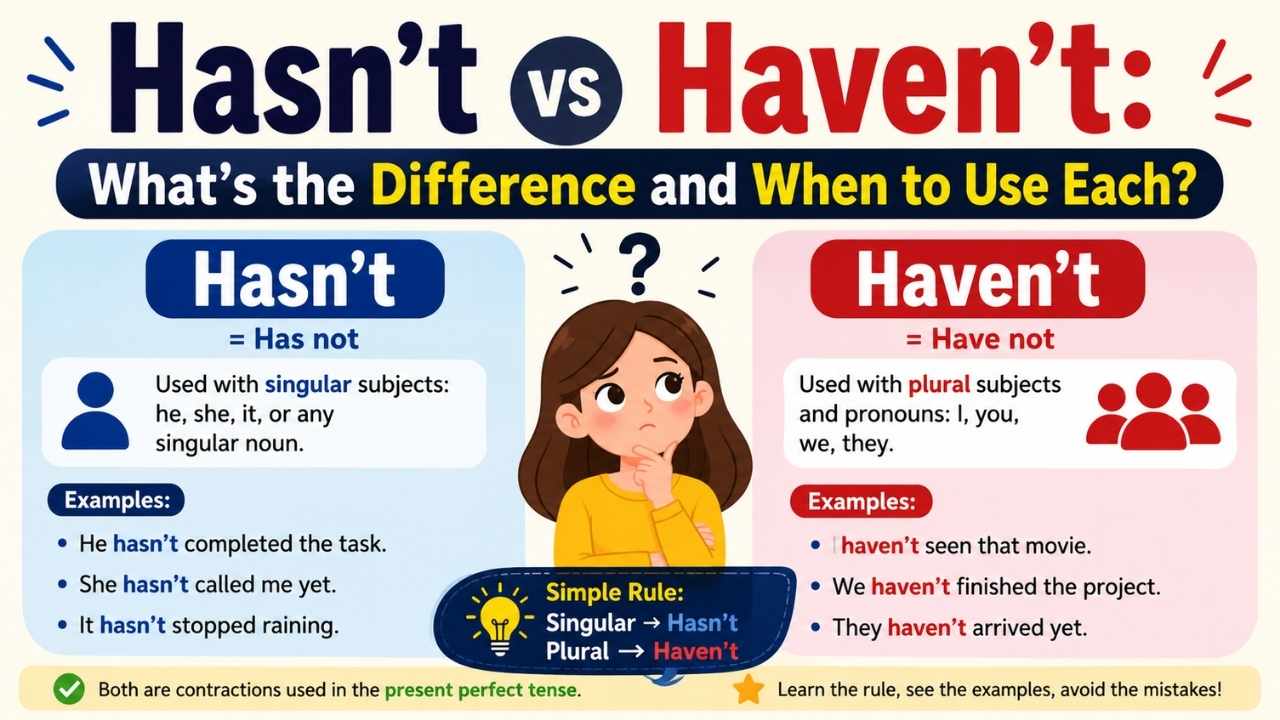
In simple terms, hasn’t means “has not,” while haven’t means “have not.” We use hasn’t with singular subjects like he, she, and it. We use haven’t with I, you, we, and they. These forms often appear in the present perfect tense and in natural spoken English.
If you wonder when to use hasn’t and haven’t, this guide will explain the rules, show real sentence examples, and help you avoid common grammar mistakes in everyday English.
What Does “Hasn’t” Mean?
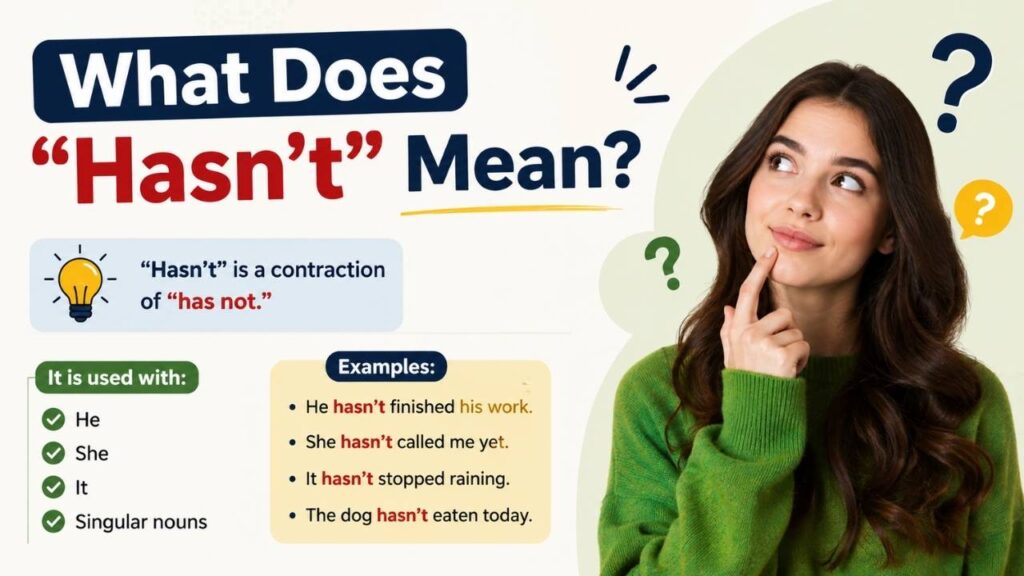
The word hasn’t is a short form of “has not.” People use this English contraction in both spoken and written English. It follows important grammar rules and works with singular subjects. You should use hasn’t with words like he, she, it, or any singular noun. This pattern helps maintain correct subject-verb agreement in a sentence.
For example:
- She hasn’t finished her homework.
- It hasn’t stopped raining yet.
- The dog hasn’t eaten today.
Many learners ask when to use hasn’t in English grammar. The answer is simple: use it when the subject is singular and the sentence needs “has not.” You will often see hasn’t in the present perfect tense and in daily conversations. Learning these sentence examples can help you avoid common grammar mistakes and improve natural English usage.
What Does “Haven’t” Mean?
The word haven’t is the short form of “have not.” This common English contraction appears in everyday conversation and writing. Unlike hasn’t, we use haven’t with plural subjects and certain pronouns. It follows basic subject-verb agreement rules in English grammar.
You should use haven’t with:
- I
- You
- We
- They
- plural nouns
For example:
- I haven’t seen that movie.
- They haven’t arrived yet.
- We haven’t finished the project.
Many English learners search for how to use haven’t correctly because it often causes confusion with hasn’t vs haven’t. The easiest rule to remember is that haven’t works with plural subjects and I/you. It also appears often in the present perfect tense and natural spoken English. These simple grammar examples help learners understand contractions more clearly.
Hasn’t vs Haven’t: The Main Difference
The main difference between hasn’t and haven’t comes from the subject of the sentence. Both words are English contractions, but they follow different grammar rules. Understanding this rule helps you improve subject-verb agreement and avoid common English mistakes.
Use hasn’t with singular subjects:
- He
- She
- It
- Singular nouns
Use haven’t with:
- I
- You
- We
- They
- Plural nouns
Here are simple examples:
- She hasn’t called me yet.
- They haven’t started dinner.
Many learners confuse hasn’t vs haven’t because both forms appear in the present perfect tense. However, the subject always controls which word you should use. If the subject is singular, choose hasn’t. If the subject is plural or uses I or you, choose haven’t. This simple grammar rule makes English contractions much easier to understand.
When to Use “Hasn’t”
You should use hasn’t when the subject is singular and the sentence needs the phrase “has not.” This rule is an important part of English grammar and helps create correct subject-verb agreement. Many learners ask when to use hasn’t, especially while writing or speaking in English.
Use hasn’t with:
- He
- She
- It
- Singular nouns
For example:
- He hasn’t completed his work.
- The baby hasn’t slept yet.
- She hasn’t answered my message.
People often use hasn’t in the present perfect tense to talk about actions that did not happen yet. Native speakers also use this contraction often in casual conversation because it sounds more natural than saying “has not.” Learning these grammar examples will help you speak more confidently and avoid common mistakes with hasn’t vs haven’t.
When to Use “Haven’t”
You should use haven’t when the sentence has plural subjects or the pronouns I and you. This common English contraction means “have not.” It follows standard grammar rules and helps create proper subject-verb agreement in English sentences.
Use haven’t with:
- I
- You
- We
- They
- Plural nouns
Examples:
- I haven’t eaten lunch yet.
- We haven’t watched the new show.
- The students haven’t completed the test.
Many learners search for when to use haven’t because they feel confused about hasn’t vs haven’t. A simple trick can help: if the subject is plural, choose haven’t. This word often appears in the present perfect tense and daily conversations. Native speakers use it often because contractions make speech sound smoother and more natural in everyday English.
What Does “Hasn’t” Mean?
The word hasn’t is a short form of “has not.” People use this English contraction in both spoken and written English. It follows important grammar rules and works with singular subjects. You should use hasn’t with words like he, she, it, or any singular noun. This pattern helps maintain correct subject-verb agreement in a sentence.
For example:
- She hasn’t finished her homework.
- It hasn’t stopped raining yet.
- The dog hasn’t eaten today.
Many learners ask when to use hasn’t in English grammar. The answer is simple: use it when the subject is singular and the sentence needs “has not.” You will often see hasn’t in the present perfect tense and in daily conversations. Learning these sentence examples can help you avoid common grammar mistakes and improve natural English usage.
What Does “Haven’t” Mean?
The word haven’t is the short form of “have not.” This common English contraction appears in everyday conversation and writing. Unlike hasn’t, we use haven’t with plural subjects and certain pronouns. It follows basic subject-verb agreement rules in English grammar.
You should use haven’t with:
- I
- You
- We
- They
- plural nouns
For example:
- I haven’t seen that movie.
- They haven’t arrived yet.
- We haven’t finished the project.
Many English learners search for how to use haven’t correctly because it often causes confusion with hasn’t vs haven’t. The easiest rule to remember is that haven’t works with plural subjects and I/you. It also appears often in the present perfect tense and natural spoken English. These simple grammar examples help learners understand contractions more clearly.
Hasn’t vs Haven’t: The Main Difference
The main difference between hasn’t and haven’t comes from the subject of the sentence. Both words are English contractions, but they follow different grammar rules. Understanding this rule helps you improve subject-verb agreement and avoid common English mistakes.
Use hasn’t with singular subjects:
- He
- She
- It
- Singular nouns
Use haven’t with:
- I
- You
- We
- They
- Plural nouns
Here are simple examples:
- She hasn’t called me yet.
- They haven’t started dinner.
Many learners confuse hasn’t vs haven’t because both forms appear in the present perfect tense. However, the subject always controls which word you should use. If the subject is singular, choose hasn’t. If the subject is plural or uses I or you, choose haven’t. This simple grammar rule makes English contractions much easier to understand.
When to Use “Hasn’t”
You should use hasn’t when the subject is singular and the sentence needs the phrase “has not.” This rule is an important part of English grammar and helps create correct subject-verb agreement. Many learners ask when to use hasn’t, especially while writing or speaking in English.
Use hasn’t with:
- He
- She
- It
- Singular nouns
For example:
- He hasn’t completed his work.
- The baby hasn’t slept yet.
- She hasn’t answered my message.
People often use hasn’t in the present perfect tense to talk about actions that did not happen yet. Native speakers also use this contraction often in casual conversation because it sounds more natural than saying “has not.” Learning these grammar examples will help you speak more confidently and avoid common mistakes with hasn’t vs haven’t.
When to Use “Haven’t”
You should use haven’t when the sentence has plural subjects or the pronouns I and you. This common English contraction means “have not.” It follows standard grammar rules and helps create proper subject-verb agreement in English sentences.
Use haven’t with:
- I
- You
- We
- They
- Plural nouns
Examples:
- I haven’t eaten lunch yet.
- We haven’t watched the new show.
- The students haven’t completed the test.
Many learners search for when to use haven’t because they feel confused about hasn’t vs haven’t. A simple trick can help: if the subject is plural, choose haven’t. This word often appears in the present perfect tense and daily conversations. Native speakers use it often because contractions make speech sound smoother and more natural in everyday English.
Has Not vs Have Not: Are They Different?
Yes, has not and have not are different because they follow different subject-verb agreement rules in English grammar. The meaning stays almost the same, but the subject changes the verb form. Many learners feel confused about hasn’t vs haven’t because both forms appear in the present perfect tense.
Use has not with singular subjects:
- She has not finished her classwork.
- The cat has not eaten yet.
Use have not with plural subjects and certain pronouns:
- They have not visited us yet.
- I have not seen that movie.
The contractions hasn’t and haven’t simply make these phrases shorter and more natural in spoken English. Native speakers use contractions often in daily conversation. However, formal writing sometimes prefers full forms like has not and have not instead of contractions.
British vs American English Usage
Both British and American English use hasn’t and haven’t in very similar ways. The same grammar rules and subject-verb agreement patterns apply in both styles of English. Whether you speak American English or British English, singular subjects still use hasn’t, while plural subjects use haven’t.
For example:
- She hasn’t arrived yet.
- They haven’t completed the work.
People in both countries also use these English contractions often in daily conversation because they sound natural and friendly. However, British English sometimes uses contractions slightly more in informal writing and speech. American English also uses them heavily in casual communication, emails, and online writing.
If you learn the basic rule for hasn’t vs haven’t, you can use these contractions correctly almost everywhere. The differences between British and American English are very small for this grammar topic.
Mini Grammar Quiz
This quick quiz can help you practice hasn’t vs haven’t and improve your English grammar skills. Read each sentence carefully and choose the correct contraction. These simple exercises also help learners understand subject-verb agreement more clearly.
Choose the Correct Answer
- She ___ finished her homework.
- hasn’t
- haven’t
- They ___ arrived at the airport.
- hasn’t
- haven’t
- I ___ seen this movie before.
- hasn’t
- haven’t
Correct Answers
- She hasn’t finished her homework.
- They haven’t arrived at the airport.
- I haven’t seen this movie before.
A simple trick can help you remember the rule:
- Singular subjects → hasn’t
- Plural subjects and I/you → haven’t
Practicing short sentence examples regularly can help you avoid common grammar mistakes in everyday English.
Quick Summary Table
Here is a simple table that explains the main difference between hasn’t and haven’t. This quick guide helps learners remember correct subject-verb agreement and avoid common English grammar mistakes.
| Subject | Correct Form | Example |
| He | hasn’t | He hasn’t called yet. |
| She | hasn’t | She hasn’t finished dinner. |
| It | hasn’t | It hasn’t stopped raining. |
| I | haven’t | I haven’t seen that show. |
| You | haven’t | You haven’t answered me. |
| We | haven’t | We haven’t started the project. |
| They | haven’t | They haven’t arrived yet. |
Remember this easy grammar rule:
- Singular subjects use hasn’t
- Plural subjects and I/you use haven’t
Learning this table can make English contractions easier to understand and use in daily conversation.
FAQs
What is the difference between hasn’t and haven’t?
The main difference between hasn’t and haven’t comes from the subject. Use hasn’t with singular subjects like he, she, and it. Use haven’t with I, you, we, and they.
Is “I hasn’t” correct?
No, “I hasn’t” is not correct in English grammar. You should say “I haven’t.” This follows correct subject-verb agreement rules.
When should I use hasn’t?
Use hasn’t when the sentence has a singular subject and needs the phrase “has not.”
When should I use haven’t?
Use haven’t with plural subjects or the pronouns I and you. It means “have not.”
Are hasn’t and haven’t contractions?
Yes, both words are English contractions. Hasn’t means “has not,” and haven’t means “have not.”
Conclusion
Understanding hasn’t vs haven’t becomes much easier when you focus on the subject of the sentence. Both words are common English contractions, but they follow different grammar rules. Use hasn’t with singular subjects like he, she, and it. Use haven’t with I, you, we, and they.
These contractions appear often in the present perfect tense, daily conversation, and natural spoken English. Many learners make mistakes because they forget about subject-verb agreement, but simple practice can solve that problem quickly.
A good way to improve your grammar is to read short examples and use these words in real conversations. Over time, the correct form will start to feel natural. Once you understand this easy rule, you can avoid common grammar mistakes and speak English more confidently in everyday situations.