
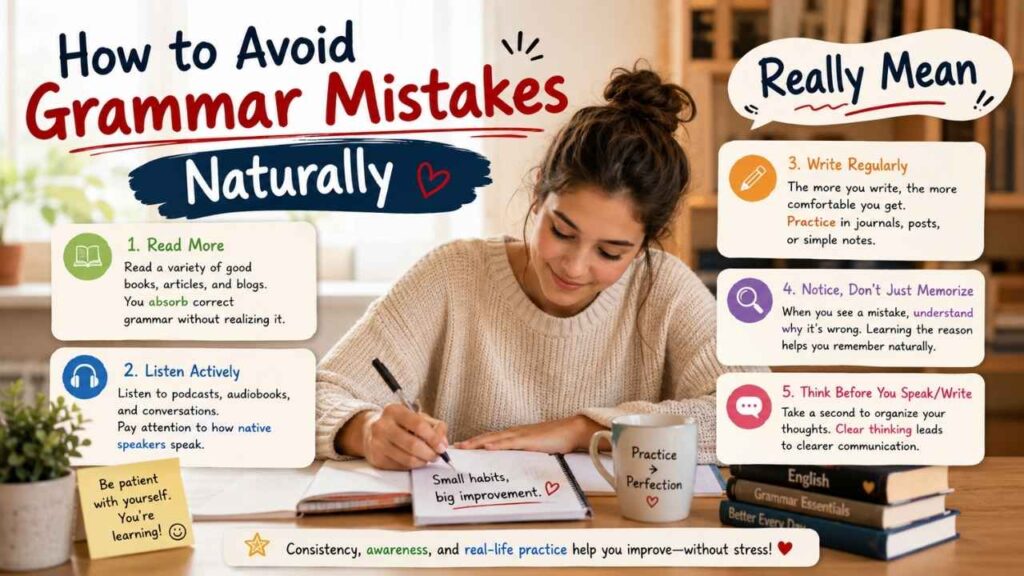
How to Avoid Grammar Mistakes Naturally
Grammar mistakes happen to everyone. Even skilled writers miss small errors when typing fast, texting friends, or answering emails. However, learning how grammar works can make writing feel clearer and more natural.
Today, people write more than ever before. Messages, social media posts, work emails, and online comments all depend on clear communication. Because of this, many people want to know how to avoid grammar mistakes without sounding overly formal or robotic.
English grammar also changes over time. Some rules stay strict, while others become more flexible in modern American English. Understanding those differences helps writers feel more confident in everyday situations.
Quick Answer
Learning how to avoid grammar mistakes starts with understanding sentence structure, punctuation, verb agreement, and word choice. Reading carefully, writing clearly, and checking common errors can improve grammar naturally over time.
TL;DR
- Grammar mistakes often involve punctuation, sentence structure, or word choice.
- Modern American English allows some flexibility in informal writing.
- Reading regularly improves grammar awareness naturally.
- Many grammar problems come from rushing or unclear sentence design.
- Simple sentences are usually easier to understand than overly complex ones.
- Practice and editing matter more than memorizing every rule.
Understanding What Grammar Mistakes Really Are
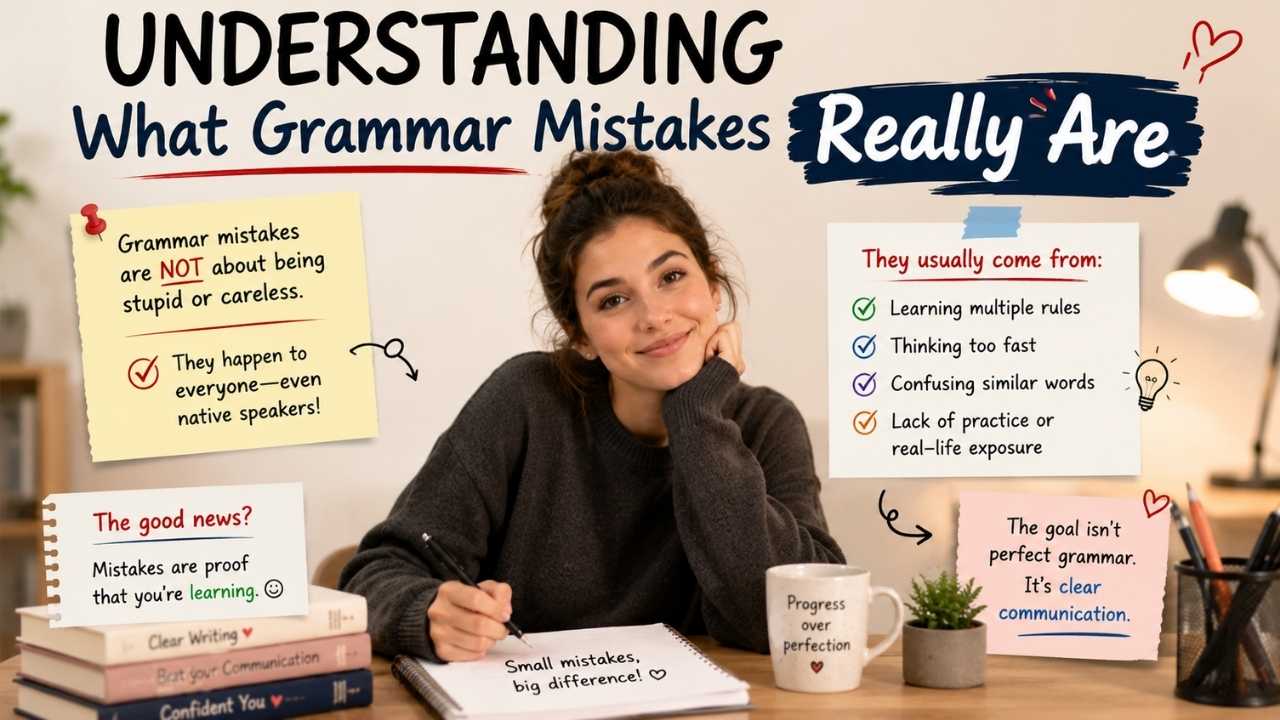
Grammar mistakes happen when words, punctuation, or sentence structures break accepted language rules. These errors can confuse readers or make writing feel unclear. However, not every unusual sentence is automatically wrong.
In modern American English, grammar depends heavily on context. A text message may allow shortcuts that would seem inappropriate in a business email. Because language changes constantly, grammar rules also shift over time.
Grammar and Communication
Grammar exists mainly to support clear communication. It helps readers understand meaning quickly and correctly. Without grammar patterns, sentences would become difficult to follow.
For example, word order matters greatly in English. The sentence “The dog chased the cat” means something very different from “The cat chased the dog.” Even small changes can alter meaning completely.
Why Grammar Errors Matter
Some mistakes are minor and barely noticed. Others can affect professionalism, clarity, or credibility. In school and work settings, grammar often shapes first impressions.
However, everyday communication is usually more forgiving. Many people use sentence fragments, abbreviations, and relaxed punctuation online without causing confusion.
The History of English Grammar Rules
English grammar developed over many centuries. Old English looked very different from modern American English today. Early forms of the language used more complex endings and flexible word order.
After the Norman Conquest in 1066, French heavily influenced English vocabulary and writing style. Later, printing presses helped standardize spelling and grammar patterns across England.
The Rise of Formal Grammar
During the 1700s and 1800s, grammar books became more common. Scholars tried to create strict rules for “correct” English. Many of those rules were influenced by Latin grammar traditions.
For example, some teachers discouraged ending sentences with prepositions because Latin structure worked differently. Yet modern English speakers often end sentences with prepositions naturally.
American English Changes
American English gradually developed its own style and usage patterns. Spelling simplified in some areas, and grammar became slightly less formal in everyday writing.
Today, American grammar tends to favor clarity and directness. Shorter sentences and conversational tone are especially common in digital communication.
Common Grammar Mistakes People Make
Many grammar mistakes appear repeatedly because English contains irregular patterns and confusing exceptions. Some errors happen because spoken English differs from written English.
Confusing Homophones
Words like “their,” “there,” and “they’re” often create confusion. Although they sound alike, they serve different grammatical purposes.
Similarly, “your” and “you’re” remain among the most common mistakes online. These errors usually happen when people type quickly without proofreading carefully.
Sentence Fragments and Run-Ons
A sentence fragment lacks a complete thought. A run-on sentence combines ideas without proper punctuation or structure.
For example, “Because I was tired” feels incomplete alone. Meanwhile, “I was tired I went home early” joins two full ideas incorrectly.
Subject-Verb Agreement Problems
Subjects and verbs must match in number. Singular subjects need singular verbs, while plural subjects need plural verbs.
Writers often struggle with phrases placed between the subject and verb. For example, “The list of items is on the desk” is correct because “list” remains singular.
Why Modern Digital Writing Creates More Errors
Phones, social media, and instant messaging changed how people write daily. Speed often matters more than accuracy in online communication.
Because of this, grammar shortcuts became common. Many people skip capitalization, punctuation, or full sentence structure in casual settings.
Informal Writing Habits
Texting encourages fast responses and shortened language. Over time, those habits can influence academic or professional writing too.
For example, people may accidentally use lowercase “i” in formal writing after becoming used to casual texting patterns.
Autocorrect Problems
Technology helps writers, but it also introduces new mistakes. Autocorrect may replace correct words with incorrect ones unexpectedly.
Because of this, proofreading remains important even when using grammar tools or writing software.
How Reading Helps You Avoid Grammar Mistakes
Reading exposes people to natural sentence patterns repeatedly. Over time, the brain begins recognizing correct grammar automatically.
People who read regularly often develop stronger grammar instincts without memorizing every rule directly.
Pattern Recognition
When readers encounter proper sentence structure often, grammar starts feeling intuitive. Incorrect sentences may simply “sound wrong” after enough exposure.
This process works especially well with books, articles, and professional writing written in clear modern English.
Vocabulary and Sentence Flow
Reading also improves vocabulary and rhythm. Writers learn how transitions, punctuation, and paragraph structure work together naturally.
Because of this, strong readers usually become stronger writers over time.
The Difference Between Spoken and Written Grammar
Spoken English follows different patterns from formal writing. People interrupt themselves, repeat words, and leave thoughts unfinished during conversation.
However, written grammar usually requires greater clarity and structure.
Casual Speech Patterns
In speech, people commonly say things like “Me and him went there.” Although common conversationally, formal grammar prefers “He and I went there.”
Modern American English accepts many relaxed speech patterns informally. Yet formal writing still follows more traditional grammar standards.
Writing Requires Precision
Readers cannot hear tone or facial expressions in writing. Because of this, grammar and punctuation carry more meaning on the page.
Clear grammar reduces misunderstanding and improves readability.
Formal vs Informal Grammar Usage
Grammar expectations change depending on context. A college essay, business proposal, and text message all follow different standards.
Understanding audience and situation helps writers choose the right style.
| Context | Correct Usage | Example | Notes |
| Text Message | Informal grammar accepted | “I’ll call u later” | Common in casual texting |
| Work Email | Standard grammar preferred | “I’ll call you later today.” | Professional tone matters |
| Academic Writing | Formal grammar expected | “The research supports the conclusion.” | Clarity and structure matter |
| Social Media | Mixed grammar styles | “Can’t believe this happened 😂” | Informal tone often accepted |
When Informal Grammar Works
Informal grammar creates warmth and personality in casual communication. Contractions, fragments, and conversational wording often sound more natural online.
However, clarity should still remain the goal.
When Formal Grammar Matters Most
Formal grammar becomes especially important in school, business, journalism, and public communication. Errors in those settings may appear careless or confusing.
Because of this, editing carefully matters more in professional environments.
British and American Grammar Differences
British and American English share most grammar rules. However, some differences appear in punctuation, verb forms, and collective nouns.
Collective Nouns
American English usually treats collective nouns as singular. British English sometimes treats them as plural.
For example, Americans often say “The team is winning.” British speakers may say “The team are winning.”
Past Tense Variations
Some verbs differ slightly between regions. Americans commonly use “learned” and “burned,” while British English may use “learnt” and “burnt.”
Both forms are generally understood internationally.
Punctuation Mistakes That Cause Confusion
Punctuation shapes sentence meaning and rhythm. Even one misplaced comma can change interpretation completely.
Comma Problems
Comma splices remain extremely common. This error happens when two complete sentences join with only a comma.
For example, “I love coffee, I drink it daily” should use a period, semicolon, or conjunction instead.
Apostrophe Errors
Apostrophes often confuse writers because they show both possession and contractions.
For example:
- “It’s” means “it is.”
- “Its” shows possession.
Many people mix these forms accidentally.
How Grammar Rules Continue to Change
English grammar constantly evolves. Some rules once considered wrong are now widely accepted.
Language changes because speakers shape grammar through everyday use.
Split Infinitives
Older grammar traditions discouraged split infinitives. However, modern usage often accepts them naturally.
For example, “to boldly go” sounds normal to many modern speakers.
Singular “They”
Singular “they” became increasingly accepted in American English during the 2020s. It now appears regularly in professional, academic, and everyday writing.
Because language adapts to social and cultural needs, grammar rules continue evolving gradually.
Editing Habits That Improve Grammar
Good editing catches many grammar problems before readers ever see them. Even experienced writers revise carefully.
Reading Aloud
Reading aloud helps identify awkward wording and unclear grammar. Sentences that sound unnatural often need revision.
This method works especially well for punctuation and sentence flow.
Slowing Down While Writing
Many grammar mistakes happen because writers rush. Slower writing usually improves clarity and structure immediately.
Short pauses between drafting and editing also help writers notice errors more easily.
Real-Life Examples of Grammar in Daily Communication
Grammar affects communication in subtle ways every day. Clear writing improves understanding in personal and professional situations alike.
Workplace Communication
Emails with strong grammar often appear clearer and more organized. Readers can focus on ideas instead of decoding confusing wording.
However, overly formal writing may sound stiff or distant in casual workplace settings.
Social Media and Texting
Online communication often blends formal and informal grammar styles. Many users intentionally ignore strict punctuation for tone or personality.
For example, lowercase writing sometimes feels more relaxed or conversational online.
Grammar Myths People Still Believe
Some grammar “rules” are actually preferences rather than strict requirements. Many originated from older teaching traditions instead of actual usage patterns.
Never Ending Sentences With Prepositions
Modern English commonly ends sentences with prepositions. Forcing unnatural wording can make writing sound awkward.
For example, “Who are you talking to?” sounds more natural than “To whom are you talking?”
Never Starting Sentences With “And”
Starting sentences with “and” or “but” has long appeared in respected English writing. Used carefully, these words improve flow and emphasis.
Today, many professional writers use them naturally.
Building Long-Term Grammar Confidence
Grammar improves gradually through practice, exposure, and revision. Most skilled writers still make occasional mistakes.
Confidence grows when people focus on communication instead of perfection.
Practice Matters More Than Memorization
Memorizing dozens of grammar rules rarely helps alone. Instead, consistent reading and writing create stronger instincts over time.
Short daily practice often works better than intense grammar drills.
Clarity Should Always Come First
Clear communication matters more than sounding overly sophisticated. Simple sentences often communicate ideas more effectively than complicated ones.
Strong grammar supports meaning rather than distracting from it.
FAQs
What is the fastest way to improve grammar?
Reading regularly and editing carefully usually improve grammar fastest. Short daily writing practice also helps build stronger habits naturally.
Are grammar mistakes always a problem?
Not always. Informal communication often allows relaxed grammar. However, professional and academic writing usually requires greater accuracy.
Why do native English speakers still make grammar mistakes?
English contains many irregular rules and exceptions. Also, fast typing and casual communication increase the chance of errors.
Is texting ruining grammar?
Research suggests texting changes writing style more than grammar ability itself. Most people still understand formal grammar when needed.
Do grammar rules change over time?
Yes. English grammar evolves constantly through everyday use. Some older rules become less strict as language changes.
Should I use grammar-checking apps?
Grammar tools can help catch errors quickly. However, they sometimes misunderstand tone, context, or modern usage patterns.
Conclusion
Learning how to avoid grammar mistakes takes practice, patience, and exposure to clear writing. Grammar is not only about rules. Instead, it helps people communicate ideas more effectively and confidently.
Modern American English continues changing as technology and culture evolve. Because of this, some grammar standards become more flexible over time. Still, clarity, structure, and readability remain important in every form of communication.
The best approach is simple: read often, write regularly, and revise carefully. Over time, strong grammar becomes less about memorizing rules and more about expressing ideas naturally and clearly.