
Instructions On vs Instructions For: Meaning, Difference, & Usage
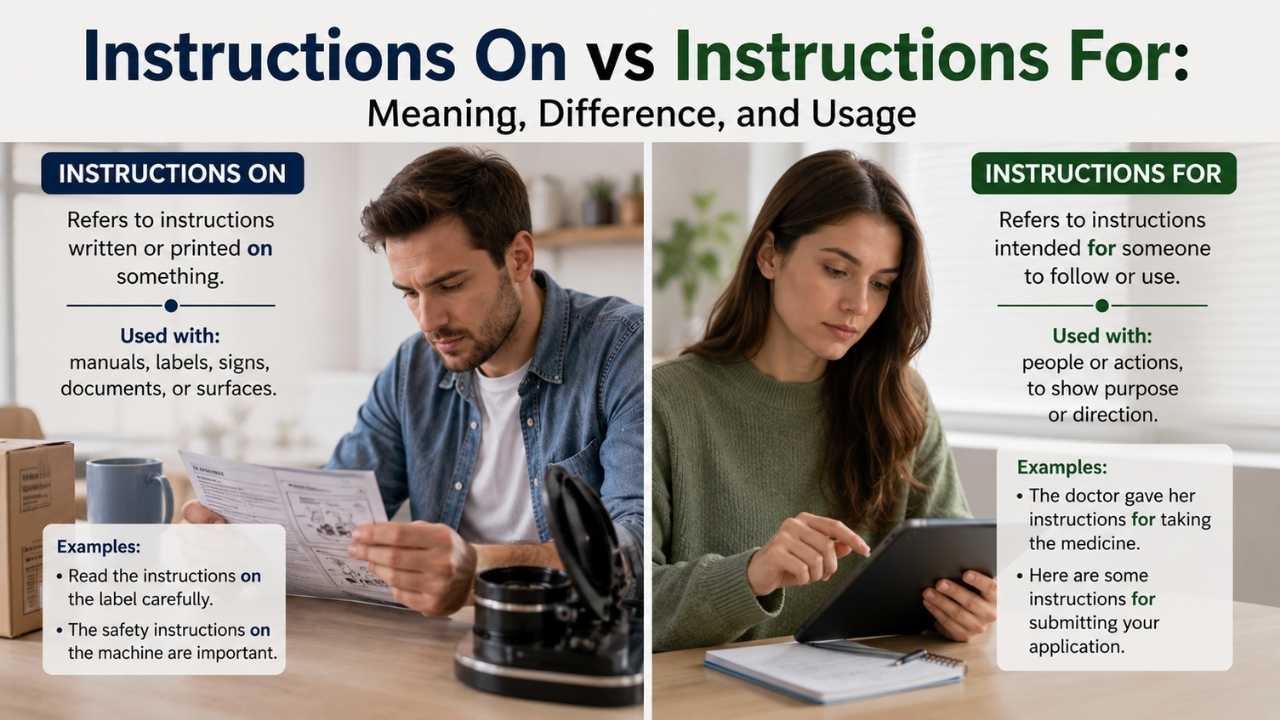
Many English learners and writers often get confused about whether to use “instructions on vs instructions for.” Both phrases are grammatically correct, but they are used in different situations. The difference depends on what you want to explain or emphasize. “Instructions on” usually refers to guidance or information about a specific topic, subject, or process, while “instructions for” usually refers to directions created for a particular person, purpose, task, or activity.
For example, you can read instructions on how to use a software program because the instructions explain the process. However, you can follow instructions for new users because those directions are meant for a specific group of people.
Understanding the difference between instructions on vs instructions for helps you choose the correct phrase and improve your English writing. In this guide, we will explain the meaning, usage, examples, and common mistakes related to these two expressions.
Instructions On vs Instructions For: Quick Difference
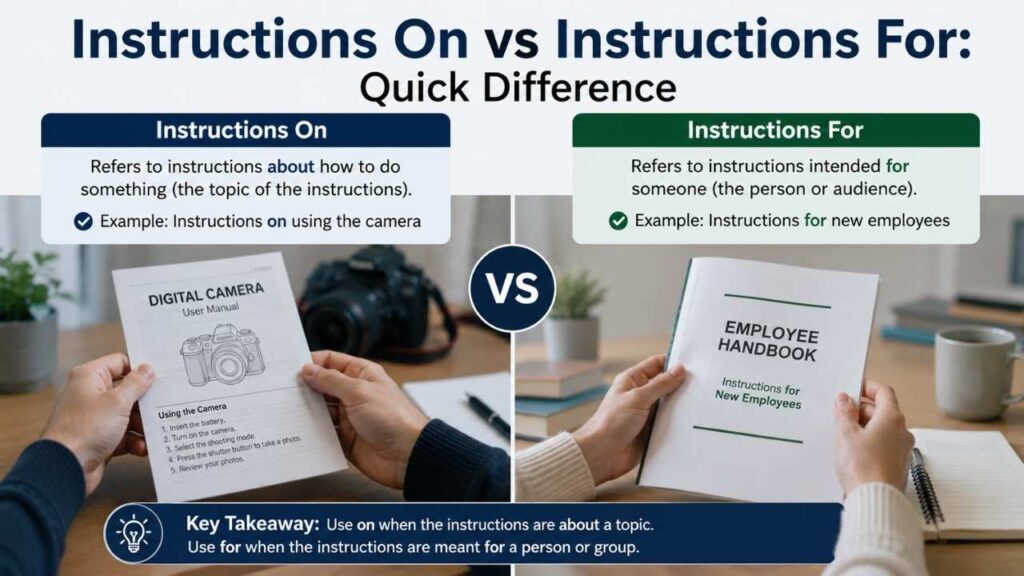
The main difference between instructions on and instructions for depends on the focus of the sentence. Instructions on focuses on the subject or topic that someone wants to learn about. It explains information, methods, or steps related to something.
For example:
- Instructions on using a camera explain the process of operating a camera.
- Instructions on writing an essay explain the topic of essay writing.
On the other hand, instructions for focuses on the person, purpose, or activity receiving the directions.
For example:
- Instructions for employees provide guidance intended for workers.
- Instructions for completing a form explain what someone needs to do.
In simple words, remember this rule:
Instructions on = information about something
Instructions for = directions meant for someone or something
Both expressions are correct, but the choice depends on the meaning you want to communicate.
What Does “Instructions On” Mean?
The phrase “instructions on” means guidance, information, or explanations about a particular topic, subject, or process. When you use instructions on, you are talking about what the instructions explain rather than who will use them.
This phrase commonly appears when someone provides educational material, technical information, or detailed guidance about a specific subject.
Examples:
- The teacher gave students instructions on writing research papers.
- The manual includes instructions on operating the machine.
- The website provides instructions on creating an account.
In each example, the focus remains on the activity or topic being explained.
Understanding the instructions on meaning can help you recognize when this phrase sounds natural. If you are explaining “how something works” or “how to do something,” instructions on is usually the better choice.
When Should You Use “Instructions On”?
You should use “instructions on” when you want to discuss information or guidance related to a specific subject, skill, or process. This phrase works well when the instructions teach someone about a topic.
Common situations include:
1. Explaining a Process
Example:
- The guide provides instructions on installing software.
2. Teaching a Skill
Example:
- She watched videos with instructions on improving writing skills.
3. Providing Information About a Topic
Example:
- The course includes instructions on workplace safety.
The phrase instructions on usage is especially common in educational, technical, and professional contexts. Whenever the main idea is “information about something,” choose on.
A simple way to remember it is:
If the instructions answer the question “What is this about?”, use instructions on.
What Does “Instructions For” Mean?
The phrase “instructions for” refers to directions created for a specific person, group, purpose, or task. Unlike instructions on, this phrase focuses more on who needs the instructions or what goal they help achieve.
The instructions for meaning becomes clearer when you look at real examples:
- The company prepared instructions for new employees.
- The package contains instructions for assembling the product.
- The teacher gave instructions for completing the assignment.
In these sentences, the instructions are designed for a particular situation or user.
You will often see instructions for in manuals, workplace documents, school activities, and step-by-step guides. It tells readers that the directions are intended to help someone complete a specific action.
A useful rule is:
If you can ask “Who are these instructions meant for?” or “What are these instructions helping someone do?”, instructions for is usually the correct choice.
When Should You Use “Instructions For”?
Use “instructions for” when you describe directions intended for a specific person, group, activity, or purpose. This phrase highlights the receiver or goal of the instructions.
You can use it in these situations:
1. Instructions for People or Groups
Examples:
- Instructions for students explain classroom activities.
- Instructions for employees describe workplace procedures.
- Instructions for beginners provide simple guidance.
2. Instructions for Completing Tasks
Examples:
- Instructions for filling out the application are available online.
- Instructions for preparing the presentation helped the team.
3. Instructions for Using Something
Example:
- The box includes instructions for using the device.
The phrase instructions for usage appears frequently because it connects instructions with a clear purpose. Whenever the focus is on the person, goal, or action, for usually works best.
Instructions On vs Instructions For: Detailed Comparison
Understanding the difference between instructions on and instructions for becomes easier when you compare their purpose and focus. Although both phrases provide guidance, they communicate slightly different meanings.
| Phrase | Main Focus | Meaning | Example |
| Instructions on | Topic or subject | Information about something | Instructions on using a computer |
| Instructions for | Person, purpose, or task | Directions meant for someone or something | Instructions for computer users |
The phrase instructions on answers the question: “What is this information about?” It introduces a topic, process, or area of learning.
Example:
- The website provides instructions on digital marketing.
The phrase instructions for answers the question: “Who or what are these instructions intended for?”
Example:
- The company created instructions for new employees.
Both phrases can sometimes appear in similar situations, but the focus changes. Learning this small grammar difference helps you avoid mistakes and choose the correct phrase naturally.
Can “Instructions On” and “Instructions For” Be Used Interchangeably?
Many people ask whether instructions on vs instructions for are interchangeable. The answer is that they can sometimes appear in similar sentences, but they are not always identical. The meaning changes depending on the preposition you choose.
For example:
Instructions on installing a printer
This means information or guidance about the process of installing a printer.
Instructions for installing a printer
This means directions that help someone complete the installation.
Both sentences are correct, but they focus on different ideas.
The first example focuses on the topic or process. The second example focuses on the task or purpose.
When choosing between them, think about the message you want to share. If you are explaining a subject, use instructions on. If you are giving directions to complete something, use instructions for.
Understanding this difference helps you use English expressions more naturally.
Instructions On vs Instructions For Examples in Sentences
Real-life examples make the instructions on vs instructions for difference easier to understand. Below are examples showing how both phrases work in everyday English.
Examples of “Instructions On”
- The teacher gave us instructions on writing a formal letter.
- The guide includes instructions on how to use the application.
- She searched for instructions on improving her pronunciation.
- The course provides instructions on website design.
- The article contains instructions on preparing a business plan.
Examples of “Instructions For”
- The manager shared instructions for new employees.
- The package contains instructions for assembling the chair.
- The website provides instructions for creating an account.
- The teacher gave instructions for completing the project.
- The manual includes instructions for first-time users.
These instructions sentence examples show that on introduces the topic, while for introduces the user, purpose, or task.
Instructions On vs Instructions For in Different Contexts
The correct phrase often depends on the situation where you use it. Different fields use these expressions in slightly different ways.
Education
Teachers usually provide instructions on topics students need to understand.
Example:
- The professor gave instructions on academic writing.
They provide instructions for assignments or activities.
Example:
- The teacher gave instructions for completing the homework.
Workplace
Companies often create instructions for employees because the directions are meant for workers.
Example:
- The company prepared safety instructions for employees.
They may also provide instructions on workplace safety because the topic is safety procedures.
Technology
You may find:
- Instructions on software installation → information about the process.
- Instructions for users → directions designed for users.
Understanding the context makes the correct choice much easier.
What Preposition Comes After “Instructions”?
A common grammar question is: “What preposition comes after instructions?” The answer is that several prepositions can follow instructions, but on and for are the most common choices depending on the meaning.
Use instructions on when you introduce a topic, subject, or process.
Examples:
- Instructions on photography
- Instructions on computer programming
- Instructions on safety procedures
Use instructions for when you introduce a person, purpose, or activity.
Examples:
- Instructions for students
- Instructions for installation
- Instructions for completing a form
The correct preposition after instructions depends on the relationship between the instructions and the following word. Instead of memorizing one fixed rule, focus on the meaning.
Ask yourself:
- Is it about a topic? → Use on
- Is it for a person or purpose? → Use for
This simple method helps you choose the correct preposition naturally.
Common Mistakes When Using Instructions On and Instructions For
Many English learners make mistakes because they think instructions on and instructions for have the same meaning. However, choosing the wrong preposition can slightly change the message.
Mistake 1: Using “on” for people
❌ Instructions on employees
✅ Instructions for employees
Why? Because employees are the people receiving the directions.
Mistake 2: Using “for” for a general topic
❌ Instructions for grammar rules
✅ Instructions on grammar rules
Why? Because grammar rules are the subject being explained.
Mistake 3: Ignoring the purpose
Some writers choose a preposition without thinking about the meaning. Always consider whether you are explaining a topic or helping someone complete a task.
Avoiding these common grammar mistakes improves your writing accuracy. The best way to remember the difference is:
On = about something
For = meant for something or someone
How Native Speakers Choose Between “On” and “For”
Native English speakers usually choose between instructions on and instructions for by focusing on the purpose of the sentence. They do not simply memorize grammar rules; they consider the relationship between the instructions and the information that follows.
For example:
- Instructions on photography sounds natural because photography is the topic being explained.
- Instructions for photographers sounds natural because photographers are the people receiving the guidance.
Similarly:
- Instructions on cooking techniques explains a subject.
- Instructions for cooking dinner explains a specific task.
This natural usage pattern shows why both phrases are correct but serve different purposes.
When writing, think about what you want your reader to understand first. If you want to introduce a topic, choose instructions on. If you want to guide someone toward an action, choose instructions for.
FAQs
Is “instructions on” grammatically correct?
Yes, instructions on is grammatically correct. Use it when you provide information or guidance about a specific topic, subject, or process.
Example:
- The book contains instructions on photography.
Is “instructions for” grammatically correct?
Yes, instructions for is also correct. Use it when directions are intended for a person, purpose, or activity.
Example:
- The document contains instructions for new users.
Which is more common: instructions on or instructions for?
Both phrases are common, but they appear in different contexts. Instructions for is often used in manuals and task-based guides, while instructions on is common in educational and informational content.
Are instructions on and instructions for the same?
No. They are related but not exactly the same. Instructions on focuses on the topic, while instructions for focuses on the person, purpose, or task.
Should I say instructions on how to or instructions for how to?
Both forms can appear, but instructions on how to is often more natural when introducing a method or explanation.
Example:
- Instructions on how to install the software.
For a specific task, many writers prefer:
- Instructions for installing the software.
Conclusion
The difference between instructions on vs instructions for is simple once you understand the focus of each phrase. Instructions on refers to guidance or information about a topic, subject, or process, while instructions for refers to directions created for a person, purpose, or activity.
Use instructions on when you explain something:
- Instructions on writing skills
- Instructions on using a tool
Use instructions for when you guide someone or describe a task:
- Instructions for employees
- Instructions for completing a form
Both expressions are correct, but choosing the right one makes your writing clearer and more natural. By understanding the meaning, usage rules, examples, and common mistakes, you can confidently decide whether to use instructions on or instructions for in any sentence.