

Sans in English: Meaning, Usage, and Grammar Guide
The word Sans in English is one of those terms that appears simple but carries a rich linguistic history. Although it is not among the most common words in everyday…
Read More
Work Alongside You vs Work Alongside With You: Real Difference
Many English learners and even native speakers wonder whether they should say Work Alongside You vs Work Alongside With You. Both expressions may sound similar at…
Read More
English Sentences for Workplace Conversation
English at work is more than grammar rules. It’s also about sounding natural, polite, and clear in everyday situations. Many people know English vocabulary but still…
Read More
How to Speak English More Fluently
Speaking English fluently is not only about knowing grammar rules. It also involves rhythm, confidence, vocabulary, listening, and natural expression. Many learners…
Read More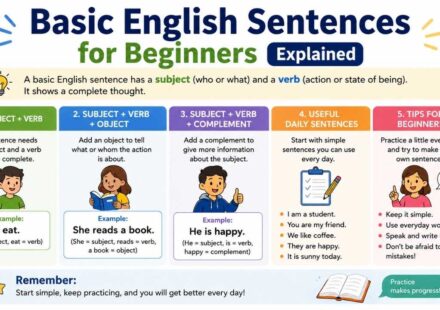
Basic English Sentences for Beginners Explained
Learning basic English sentences for beginners is one of the fastest ways to build confidence in English. Simple sentences help people speak clearly, understand…
Read More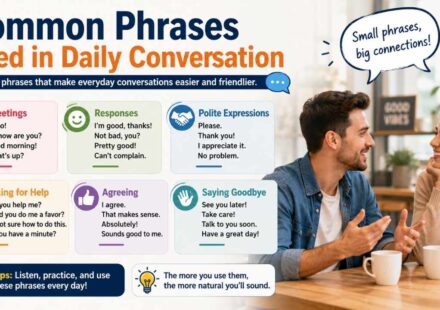
Common Phrases Used in Daily Conversation
Everyday English depends heavily on common phrases used in daily conversation. These phrases help people speak naturally, connect socially, and express ideas quickly.…
Read More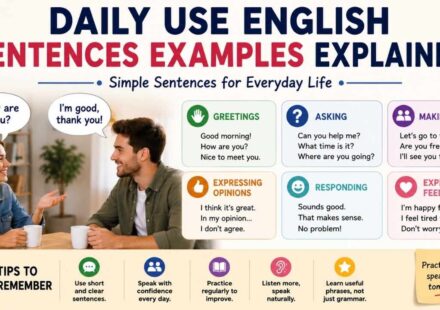
Daily Use English Sentences Examples Explained
Daily use English sentences examples help people speak and write more naturally in everyday life. These sentences appear in conversations, emails, texts, workplaces,…
Read More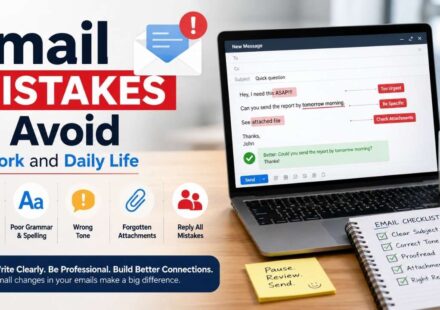
Email Mistakes to Avoid at Work and Daily Life
Email remains one of the most important communication tools in modern life. People use it for work, school, customer service, networking, and personal conversations.…
Read More
How to Sound Professional in Writing
Professional writing shapes how people see your ideas, skills, and credibility. Whether you send emails, write reports, or post online, your wording affects how…
Read More
Is It Correct to Say “Thank You All”? Meaning and Grammar
Many people ask, “Is it correct to say thank you all?” The simple answer is yes. The phrase “thank you all” is grammatically correct and very common in both spoken…
Read More