
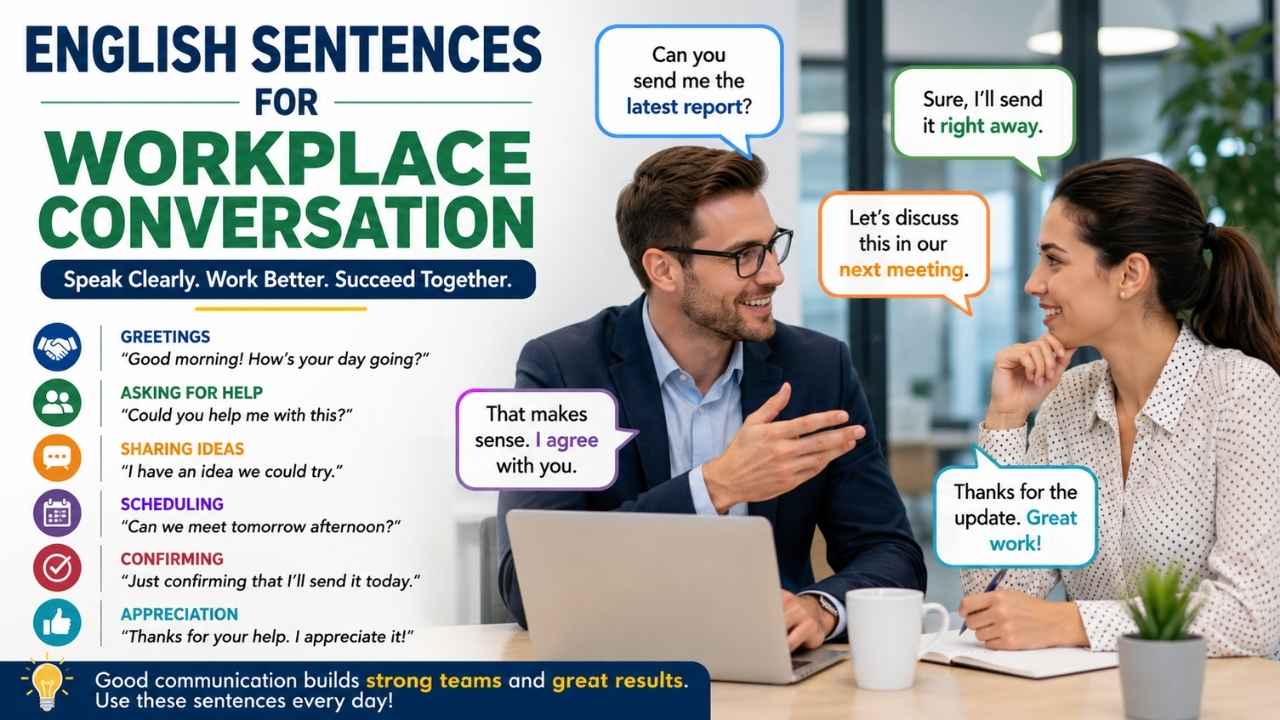
English Sentences for Workplace Conversation
English at work is more than grammar rules. It’s also about sounding natural, polite, and clear in everyday situations. Many people know English vocabulary but still struggle during workplace conversations.
Today, English sentences for workplace conversation help people communicate in meetings, emails, video calls, and casual office chats. Because modern workplaces depend on teamwork, strong communication matters more than ever.
In American workplaces, communication styles are often direct but friendly. Employees usually balance professionalism with casual conversation. As a result, understanding common workplace sentences can improve confidence, teamwork, and career growth.
Quick Answer
English sentences for workplace conversation are common expressions people use in professional settings to communicate clearly, politely, and naturally. These sentences help with meetings, teamwork, greetings, problem-solving, and daily office communication.
TL;DR
- Workplace English focuses on clarity and professionalism.
- American office English is usually friendly but direct.
- Tone changes between formal and informal situations.
- Short, polite sentences are common in modern workplaces.
- Context matters more than perfect grammar.
- Digital communication has changed workplace language.
Understanding Workplace Conversation in English
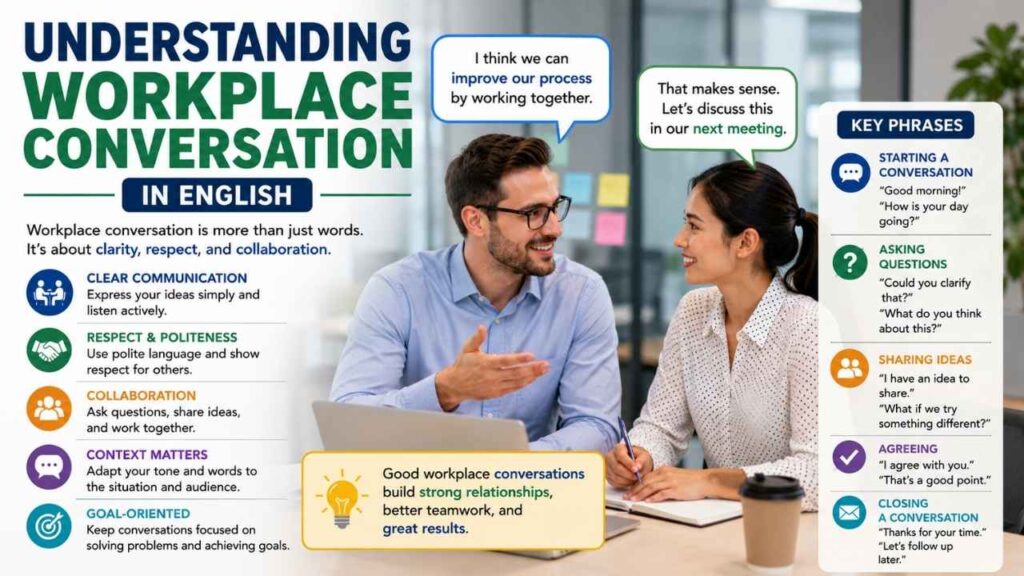
Workplace conversation refers to the language people use during professional interactions. This includes speaking with coworkers, managers, clients, and customers. The goal is usually clear communication rather than perfect grammar.
In modern American English, workplace communication often sounds less formal than older business English. For example, people commonly say “Can you send that over?” instead of “Would you kindly forward the document?” Both are correct, but the first sounds more natural today.
Everyday Workplace Communication
Many workplace sentences are short and efficient. Employees often use quick phrases during busy workdays. However, tone still matters because direct language can sometimes sound rude without polite wording.
For example, “I need this today” sounds demanding. In contrast, “Could you send this today?” sounds cooperative and professional.
Why Workplace English Matters
Good communication improves teamwork and reduces misunderstandings. It also helps people appear more confident and professional. Because many workplaces are international today, clear English has become even more important.
The Historical Development of Workplace English
Workplace English changed greatly during the twentieth century. Earlier business communication was highly formal and often used long sentences. Letters commonly included phrases like “Dear Sir” and “Yours faithfully.”
However, American business culture gradually became more conversational. By the late twentieth century, offices started favoring shorter and friendlier communication styles.
From Formal Business English to Modern Conversation
Older office English focused heavily on hierarchy. Managers used formal titles, and employees often avoided casual language. Today, many American workplaces encourage open communication instead.
For example, employees now commonly say:
“Let’s discuss this tomorrow.”
Earlier business English may have used:
“I would appreciate the opportunity to discuss this matter tomorrow.”
Technology Changed Communication
Email, messaging apps, and video meetings transformed workplace English. Because people communicate quickly online, sentences became shorter and more direct.
Today, phrases like “Just checking in” or “Quick reminder” appear constantly in workplace communication. These expressions reflect modern digital habits.
Common English Sentences Used at Work
Certain workplace sentences appear repeatedly in American offices. These expressions help people manage daily communication smoothly.
Greeting Coworkers Professionally
Greetings help create positive workplace relationships. In American offices, greetings are usually polite but relaxed.
People commonly say:
“Good morning.”
“How’s your day going?”
“Nice to see you.”
“Hope your week’s going well.”
These expressions sound warm without becoming too personal.
Asking for Help or Information
Professional workplaces depend on collaboration. Because of this, polite request sentences are extremely common.
Employees often say:
“Could you help me with this?”
“Do you have a minute?”
“Can you clarify that?”
“I wanted to ask about the project timeline.”
These phrases soften requests and encourage cooperation.
Participating in Meetings
Meetings require clear and respectful communication. American workplaces often value concise speaking during discussions.
Common meeting expressions include:
“I’d like to add something.”
“That makes sense.”
“I agree with your point.”
“Could we revisit that later?”
These sentences help conversations flow professionally.
Formal vs Informal Workplace English
Workplace English changes depending on the situation. Conversations with clients usually sound more formal than chats with close coworkers.
In American offices, people often move between formal and informal language throughout the day. Understanding this shift is important.
Formal Communication
Formal English appears in presentations, interviews, and professional emails. The language sounds respectful and structured.
Examples include:
“I appreciate your feedback.”
“Please let me know if you have questions.”
“I look forward to hearing from you.”
These expressions create a polished professional tone.
Informal Office Conversation
Coworkers often use relaxed English during daily interactions. Informal speech helps workplaces feel friendly and collaborative.
Examples include:
“I’ll take care of it.”
“Sounds good.”
“No problem.”
“Let’s catch up later.”
However, informal language should still remain respectful.
Workplace English in American Culture
American workplace communication values confidence, efficiency, and friendliness. Employees are often encouraged to speak directly while remaining polite.
Because workplace culture in the United States tends to be collaborative, people frequently use encouraging language. Managers may ask employees for opinions openly during meetings.
Direct but Friendly Communication
American English often sounds more direct than some other varieties of English. However, tone softeners help conversations remain polite.
For example:
“Can you update this?”
may become:
“Can you update this when you get a chance?”
The second sentence sounds less demanding.
Positive Workplace Language
Positive wording is common in American offices. Instead of focusing only on problems, employees often emphasize solutions.
For example:
“Let’s find another approach.”
sounds more constructive than:
“This idea won’t work.”
British and American Workplace Differences
British and American workplace English share many similarities. However, small differences exist in vocabulary, tone, and formality.
American office English is usually more casual. British workplaces may use slightly more formal phrasing in some settings.
| Context | American Usage | British Usage | Notes |
| Starting a meeting | “Let’s get started.” | “Shall we begin?” | British English may sound slightly softer |
| Email closing | “Thanks” | “Kind regards” | Formality differs slightly |
| Discussing schedules | “Vacation” | “Holiday” | Vocabulary variation |
| Asking for opinions | “What do you think?” | “What are your thoughts?” | Both are correct |
These differences are usually minor. Most English speakers understand both styles easily.
Common Mistakes in Workplace Conversation
Many learners know grammar rules but struggle with workplace tone. Small wording choices can affect professionalism.
Sounding Too Direct
Direct language sometimes sounds rude in professional settings. This problem often appears in requests.
For example:
“Send me the report.”
sounds stronger than:
“Could you send me the report?”
Adding polite words improves workplace communication greatly.
Using Overly Casual Language
Some casual expressions are inappropriate at work. Slang may confuse coworkers or sound unprofessional.
For example, phrases like “What’s up?” or “No worries, dude” may not fit formal workplace settings.
Overusing Apologies
Many people apologize too often at work. While politeness matters, excessive apologizing can weaken confidence.
Instead of:
“Sorry to bother you again.”
people sometimes say:
“Thanks for your patience.”
This wording sounds more confident and positive.
Workplace Sentences for Emails and Messages
Digital communication now dominates many workplaces. Because written communication lacks facial expressions and tone, sentence choice becomes especially important.
Common Email Sentences
Professional emails often include predictable sentence patterns. These phrases help communication stay polite and organized.
Examples include:
“I’m following up on our conversation.”
“Please see the attached document.”
“Let me know your thoughts.”
“Thank you for your time.”
These expressions are widely accepted in American business writing.
Messaging Apps and Quick Communication
Modern offices use messaging platforms constantly. As a result, communication became shorter and faster.
Employees often write:
“Got it.”
“On my way.”
“I’ll check and update you.”
“Thanks for the heads-up.”
Although brief, these phrases still sound professional.
Workplace English for Team Collaboration
Teamwork requires clear communication. Employees must explain ideas, ask questions, and solve problems together.
Sharing Ideas Politely
In American workplaces, employees often express opinions carefully. Even disagreement usually sounds respectful.
People commonly say:
“I see your point, but I have another idea.”
“That’s interesting. What if we tried this instead?”
These sentences help avoid conflict during discussions.
Encouraging Team Members
Supportive language strengthens workplace relationships. Managers and coworkers frequently use encouraging expressions.
Examples include:
“Great job on the presentation.”
“I appreciate your effort.”
“Thanks for handling that.”
Positive feedback improves morale and teamwork.
How Workplace English Has Changed Since 2025
Workplace language continues evolving quickly. Hybrid work, remote meetings, and digital tools changed communication styles dramatically.
Today, shorter sentences dominate professional communication. Employees often prioritize speed and clarity over highly formal grammar.
Video Meetings Changed Conversation Style
Remote work increased conversational flexibility. Many meetings now sound more relaxed than traditional office discussions.
For example, employees commonly say:
“You’re on mute.”
“Can everyone see my screen?”
“I’ll drop the link in chat.”
These expressions barely existed in workplaces decades ago.
Inclusive and Neutral Language
Modern workplaces increasingly encourage inclusive communication. People often avoid overly gendered or exclusive expressions.
For example, many offices now prefer:
“everyone”
instead of:
“guys”
This shift reflects broader cultural changes in professional communication.
Real-Life Workplace Conversation Examples
Real workplace English often sounds simpler than textbook English. Native speakers usually prefer natural and efficient wording.
Conversation Between Coworkers
One employee might say:
“Do you have time to review this?”
Another may answer:
“Sure, send it over.”
This exchange sounds natural because it’s short, polite, and clear.
Speaking With a Manager
Employees often use slightly more formal language with supervisors.
For example:
“I wanted to update you on the project.”
“This task should be finished by Friday.”
These sentences sound professional without being overly formal.
Misunderstandings and Gray Areas in Workplace English
Some workplace communication rules are flexible. Different companies also have different communication cultures.
Is Casual Language Unprofessional?
Not always. Many American companies encourage casual communication because it feels collaborative and modern.
However, extremely casual language may still sound inappropriate in client meetings or formal presentations.
Should Grammar Always Be Perfect?
Perfect grammar helps in important documents. However, everyday workplace communication often prioritizes clarity instead.
Short messages sometimes ignore traditional grammar rules completely. For example:
“Sounds good.”
is technically a sentence fragment, yet it’s completely normal in workplace English.
Building Confidence in Workplace Conversations
Confidence grows through practice and exposure. Many professionals improve simply by hearing common workplace phrases repeatedly.
Listening Helps Natural Communication
Watching meetings, interviews, or workplace videos can improve communication skills. Because workplace English follows patterns, repetition helps learners understand natural phrasing.
Practice Makes Communication Easier
People often memorize useful workplace sentences first. Later, they adapt those patterns naturally during conversations.
For example, someone may learn:
“Could you clarify that?”
Then gradually create similar sentences independently.
FAQs
What are English sentences for workplace conversation?
These are common expressions used during professional communication. They help people speak politely, clearly, and naturally at work.
Why is workplace English different from textbook English?
Workplace English is usually shorter and more practical. People focus on efficiency and clarity during real conversations.
Is informal English acceptable at work?
Yes, informal English is common in many American workplaces. However, people still avoid slang or disrespectful language in professional settings.
How can I sound more professional in English?
Use polite requests, clear wording, and positive language. Also, avoid overly direct commands during conversations.
Do Americans use formal business English often?
Formal English still appears in presentations and official emails. However, daily office conversations are usually more relaxed.
Are grammar mistakes always a problem at work?
Small grammar mistakes are often acceptable in casual communication. Still, important documents should remain clear and accurate.
Conclusion
Workplace communication is a major part of modern life. Because offices depend on teamwork and collaboration, strong communication skills matter greatly. Learning common workplace expressions helps people sound more confident, professional, and natural.
Today, English sentences for workplace conversation combine professionalism with friendliness. American workplaces especially value clear, respectful, and efficient communication. As workplace culture continues changing, conversational English will likely become even more flexible and natural.
The best way to improve is through regular exposure and practice. Over time, these workplace expressions become easier to understand and use naturally in everyday professional situations.