
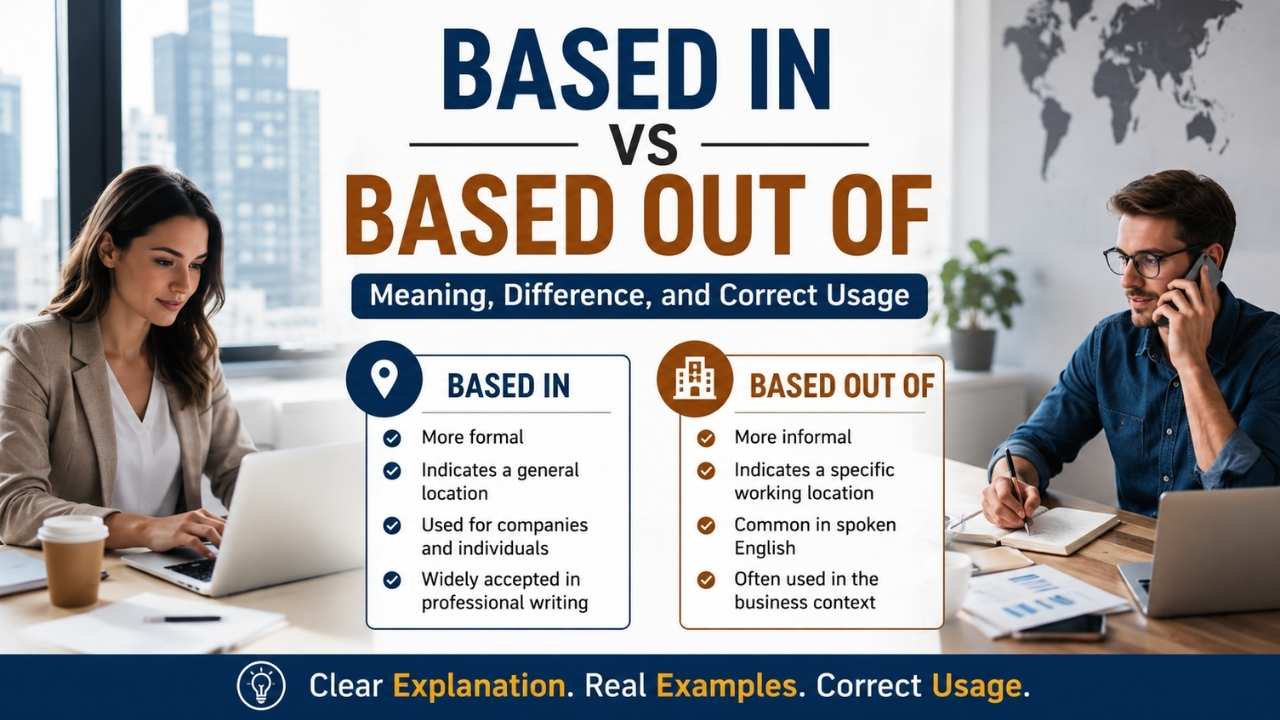
Based In vs Based Out of: Meaning, Difference, and Correct Usage
Many English learners and even professionals get confused when they see phrases like “based in” and “based out of.” At first, both look similar, but they do not always mean the same thing. This confusion often appears in business English, job descriptions, and even LinkedIn profiles. Because of this, people often search for based in vs based out of meaning and try to understand which phrase is correct.
In simple terms, both expressions describe a location, but they work differently in tone and usage. One is more formal and widely accepted in writing, while the other is more informal and common in spoken English.
In this article, you will clearly learn the difference between based in and based out of, their correct usage, and real-life examples so you can use them confidently in both professional and daily communication.
Quick Answer
“Based in” means a person or company operates from a specific location, usually in a formal or official way. For example, “The company is based in New York.”
“Based out of” means someone works from or operates from a location, often used in informal or American English speech. For example, “He is based out of Chicago office.”
In short, based in is more formal and standard English, while based out of is informal and mostly used in business conversations in the US. Both are used in real life, but they are not equally formal in writing.
What Does “Based In” Mean?

The phrase “based in” is used to show the main location of a person, company, or organization. It is the most grammatically correct and widely accepted form in both American and British English. When someone asks about a company’s location, they usually expect this phrase. It is commonly used in business English usage, professional writing, and official communication.
For example, you can say:
- “Apple is based in California.”
- “She is based in New York for work.”
This phrase works for both companies and individuals. It shows where the main operations happen. In formal writing, resumes, and corporate profiles, based in meaning is always preferred over informal alternatives. It clearly communicates location without confusion. Because of its clarity and correctness, it is widely used in academic, professional, and global communication contexts.
What Does “Based Out Of” Mean?
The phrase “based out of” is more informal and is mostly used in spoken American English. It describes where someone works or operates from, but it is less strict than “based in.” Many people use it in job roles, especially in business communication, sales teams, and remote work settings.
For example:
- “He is based out of Dallas office.”
- “Our team is based out of Chicago.”
This phrase often appears in business English usage, especially in the United States. However, it is not always considered fully formal. That is why in official writing, people usually avoid it. Instead, they prefer “based in” for clarity and professionalism.
In simple terms, based out of meaning in business refers to working from a location rather than just belonging to it. It is widely understood but should be used carefully depending on the context.
Based In vs Based Out Of: Key Differences
The difference between based in vs based out of mainly depends on formality and usage context. “Based in” is more formal, while “based out of” is informal and conversational.
Here is a simple breakdown:
- Based in → formal, written English, company location, official use
- Based out of → informal, spoken English, job roles, US communication
Another key difference is how they are used. “Based in” is used for both companies and individuals, while “based out of” is mostly used for employees or teams working from a place.
For example:
- “The company is based in London.” (formal and correct)
- “He is based out of the New York office.” (informal usage)
Understanding this difference helps you avoid common grammar confusion and improves your professional English writing and communication skills.
Which One Is Grammatically Correct?
Both phrases exist, but they are not equal in grammar strength. “Based in” is the standard and grammatically correct form used in formal English. It is widely accepted in academic writing, business communication, and global English usage.
On the other hand, “based out of” is not incorrect, but it is considered informal and stylistic. It is mostly used in American spoken English and casual business communication. Because of this, grammar experts often recommend avoiding it in formal writing.
If you are unsure, always choose based in vs based out of usage rules:
- Use based in for professional writing, resumes, and official documents
- Use based out of only in casual or spoken communication
This simple rule helps you avoid mistakes and ensures your English sounds natural and professional.
When to Use “Based In”
You should use “based in” when you want to sound professional, clear, and grammatically correct. It is the best choice for formal English usage in almost all written communication.
Common situations include:
- Company descriptions
- Academic writing
- Resume and LinkedIn profiles
- Official emails and documents
For example:
- “The company is based in Texas.”
- “She is based in California for her job.”
This phrase is also preferred in American vs British English usage because it avoids confusion. It clearly shows location without sounding informal. If you are writing for business or professional audiences, always choose based in meaning in English grammar as your default option.
When to Use “Based Out Of”
You should use “based out of” in informal or conversational English, especially in American workplace communication. It is often used when talking about employees, teams, or job locations.
Common situations include:
- Sales or field jobs
- Remote work descriptions
- Casual business conversations
For example:
- “He is based out of the Chicago office.”
- “Our sales team is based out of Atlanta.”
However, in formal writing, it is better to avoid this phrase. Instead, use based in vs based out of office meaning carefully depending on context. While it is widely understood, it does not always sound professional in official documents. That is why many grammar guides recommend using it only in spoken or informal settings.
Resume & LinkedIn Usage (Important Professional Tip)
When writing a resume or LinkedIn profile, choosing the correct phrase is very important for professionalism. In most cases, “based in” is the safest and most accepted choice. It clearly shows your location without sounding informal or unclear.
For example:
- “Marketing Manager based in New York” ✔
- “Software Engineer based in California” ✔
Avoid using “based out of” in resume writing, because it can sound too casual or inconsistent in formal profiles. Recruiters often prefer clean and standard English, and based in vs based out of LinkedIn usage follows the same rule.
If you want to sound professional, always stick to based in meaning in business English. It improves clarity, strengthens your profile, and makes your communication more globally acceptable.
Business English Usage in Emails
In professional emails, clarity and formality matter the most. That is why “based in” is the preferred phrase in business communication. It helps maintain a clean and professional tone.
For example:
- “Our company is based in Florida.”
- “The client is based in London.”
Using “based out of” in emails is not recommended, especially in formal communication. It may sound informal or inconsistent depending on the audience.
In business email phrases examples, sticking to standard grammar improves trust and readability. That is why most professionals use based in vs based out of usage rules to decide the correct phrase. Always prefer clarity over casual expression when writing to clients or corporate audiences.
American vs British English Usage
In American English, both phrases are used, but “based out of” is more common in spoken and informal business settings. In contrast, British English strongly prefers “based in” in almost all cases.
For example:
- US: “He is based out of the Dallas office.” (informal)
- UK: “He is based in London.” (standard)
This difference shows how English evolves in different regions. However, in global communication, based in vs based out of difference explained simply comes down to one rule: “based in” is safer and more universal. It works in both American and British contexts, making it the best choice for international communication.
Common Mistakes People Make
Many learners confuse these phrases and use them incorrectly in formal writing. One common mistake is using “based out of” in resumes or official documents, which can sound too informal. Another mistake is mixing both phrases in the same context without understanding their tone difference.
Some people also assume both are interchangeable, but based in vs based out of usage rules clearly show they are not equal. “Based in” is standard English, while “based out of” is informal American usage.
Avoiding these mistakes helps improve your professional English writing, grammar accuracy, and communication clarity. Always match the phrase with the right context.
FAQs
Is based out of grammatically correct?
Yes, but it is informal and mostly used in American spoken English.
Can I use based out of in resume?
It is better to avoid it. Use “based in” instead.
Which is more professional, based in or based out of?
“Based in” is more professional and widely accepted.
What does based in mean in business English?
It means the main location where a company or person operates.
Is based out of formal or informal?
It is informal and used in casual communication.
Conclusion
The main rule is simple: use “based in” for formal and professional communication, and use “based out of” only in informal spoken English. Both phrases are used in real life, but they are not equal in grammar strength or professional acceptance.
If you follow based in vs based out of meaning and usage rules, you will always choose the correct phrase. This improves your business English usage, writing clarity, and professional communication skills.