
Themselves vs Themself: Meaning, Grammar and Usage Explained
The confusion between themselves vs themself is very common in modern English writing. Many learners wonder whether “themself” is correct grammar or if only “themselves” should be used. This topic mainly appears because English has changed over time, especially with the rise of singular “they”.
In traditional grammar, “themselves” was only used for plural subjects. However, modern English now allows more flexible usage in certain contexts. Writers, students, and ESL learners often search for difference between themselves and themself, especially when trying to write correctly in academic or professional work.
In this article, you will clearly understand themself meaning, correct usage rules, examples, and when each form is appropriate. Everything is explained in simple language so you can easily avoid common grammar mistakes and use these pronouns correctly in real-life writing situations.
Quick Answer
“Themselves” is the standard plural reflexive pronoun used for groups of people, while “themself” is a modern singular form used with gender-neutral singular “they.”
In simple terms, themselves = plural, and themself = singular (modern usage). Traditional grammar only accepted “themselves,” but modern English increasingly accepts “themself” in specific contexts. This is why people often ask is themself correct or is themself grammatically correct in English. The answer depends on context.
In formal writing, “themselves” is still safer. In modern inclusive writing, “themself” is often accepted when referring to a single person using “they.” This quick rule helps learners understand when to use themselves or themself without confusion. Always match the pronoun to whether the subject is plural or singular for correct grammar usage.
What Does “Themselves” Mean?
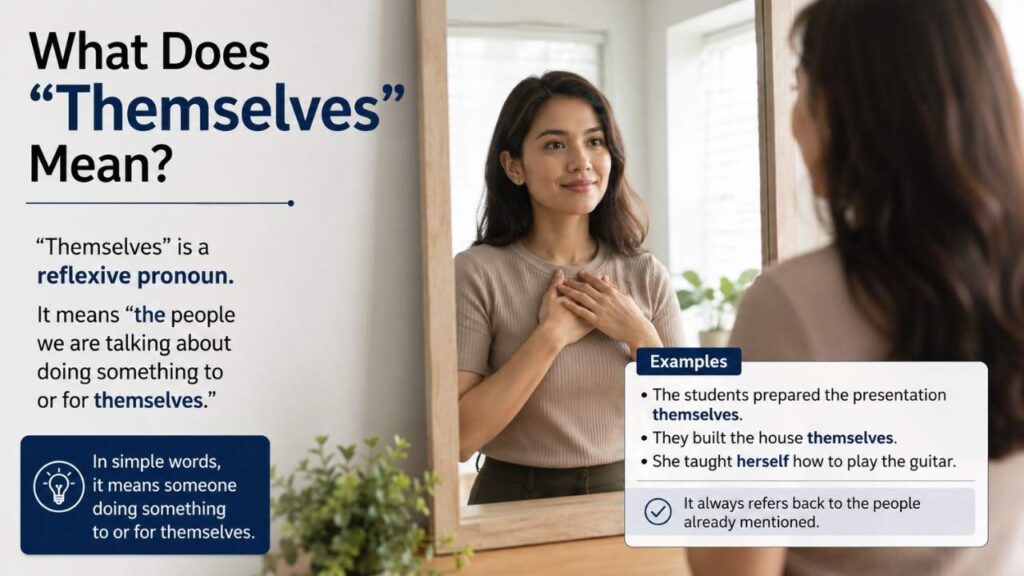
“Themselves” is a plural reflexive pronoun in English grammar. It refers to more than one person or group acting on themselves. This word follows traditional grammar rules and is widely used in both spoken and written English. For example, when people ask about correct usage of themselves, the answer is simple: it always refers to plural subjects like “they,” “people,” or “students.”
Examples:
- They prepared themselves for the exam.
- The children enjoyed themselves at the park.
In all these cases, “themselves” shows that the action reflects back on a group. This makes it an important part of reflexive pronouns in English. In formal writing, academic essays, and professional communication, “themselves” is always the safe and correct choice. It follows standard English grammar rules pronouns and avoids confusion in sentence structure.
What Does “Themself” Mean?
“Themself” is a singular reflexive pronoun used with singular “they.” It appears in modern English when we refer to one person without specifying gender. This usage supports gender-neutral pronouns and inclusive language. Many learners ask about themself meaning, especially because it is not traditionally taught in older grammar rules.
Examples:
- Someone should take care of themself.
- Each student must bring themself to the meeting.
Here, “themself” refers to one person, even though “they” is used. This is why users search for why do people say themself instead of themselves. Modern English allows this form in informal writing and some style guides. However, in strict academic writing, “themselves” is still preferred. The use of “themself” is growing as language evolves, especially in contemporary English pronoun usage.
Themselves vs Themself: Key Differences (Comparison Table)
| Feature | Themselves | Themself |
| Number | Plural | Singular |
| Usage | Group reference | Singular “they” |
| Formal writing | Always accepted | Limited acceptance |
| Grammar style | Traditional | Modern |
| Example | They helped themselves | They helped themself |
This comparison clearly shows the difference between themselves and themself explained simply. The main distinction lies in number and context. “Themselves” follows traditional grammar rules, while “themself” reflects modern language evolution. Many writers use this table to understand themselves vs themself usage rules with examples. In SEO writing and academic content, understanding this difference helps avoid grammar mistakes. It also improves clarity when working with pronoun agreement rules and modern inclusive language.
When Should You Use “Themselves”?
You should use “themselves” when referring to plural subjects. This includes groups of people, teams, or any situation involving more than one person. It is the safest choice in formal writing and academic content. Many grammar guides recommend it for formal vs informal English usage because it follows traditional rules.
Use “themselves” in cases like:
- Students preparing for exams
- Employees working in a company
- Friends enjoying a trip
Example sentences:
- The workers organized themselves efficiently.
- The team challenged themselves to improve.
This form is widely accepted in all contexts, including essays and professional documents. If you are unsure whether to use themselves or themself, choosing “themselves” is always grammatically safe and correct according to standard English usage rules.
When Should You Use “Themself”?
You should use “themself” when referring to a single person using gender-neutral “they.” This is part of modern English evolution and supports inclusive communication. It is commonly used in informal writing, digital content, and some modern style guides.
Use “themself” when:
- The subject is unknown or non-binary
- You want to avoid gender-specific language
- Writing in modern conversational English
Examples:
- Each guest should bring themself to the event.
- Someone left their phone; they should check themself.
This usage answers the common question can we use themself in formal writing. The answer is: sometimes, but not always. It depends on the style guide. While it is becoming more accepted, traditional grammar still prefers “themselves.” This shows how modern English grammar usage continues to evolve with society.
Is “Themself” Grammatically Correct?
The question is themself grammatically correct in English depends on the grammar system you follow. In traditional prescriptive grammar, “themself” was considered incorrect. However, modern descriptive grammar accepts it in certain contexts, especially with singular “they.”
Today, many linguists and dictionaries recognize themself as acceptable in modern English, but not always in formal academic writing. This difference creates confusion in grammar usage themself vs themselves.
So, the correct answer is:
- Traditional English → Not preferred
- Modern English → Increasingly accepted
This shows how language evolves. Many experts support its use in inclusive writing and everyday communication, especially in contemporary English grammar usage.
Why English Uses Singular “They”
English uses singular “they” because it helps avoid gender-specific language. This is important in modern communication where inclusivity matters. Instead of guessing gender, writers can use “they” and related forms like themself or themselves.
This change happened gradually in English history. It became more common in everyday speech and later in writing. Today, it supports gender-neutral pronouns and reduces bias in language.
Examples:
- Someone forgot their bag; they should find it.
- Each person must bring themself a notebook.
This evolution explains why people ask about why do people use themself instead of themselves. The language adapts to social changes, making communication simpler and more inclusive.
Common Mistakes Learners Make
Many learners confuse themselves vs themself in writing. One common mistake is using “themself” in formal essays where “themselves” is required. Another mistake is mixing singular and plural pronouns incorrectly.
Common errors include:
- Using “themself” for plural subjects
- Using “themselves” for singular “they” incorrectly
- Ignoring pronoun agreement rules
These mistakes often happen because learners do not fully understand reflexive pronouns in English. To avoid confusion, always check whether the subject is singular or plural. This helps improve clarity and accuracy in writing and prevents grammar errors in both academic and professional content.
Quick Grammar Rules Summary
- Use themselves for plural subjects
- Use themself for singular “they”
- “Themselves” is safer for formal writing
- “Themself” is modern and context-based
- Always follow pronoun agreement rules
This simple guide helps you quickly remember the correct usage without confusion.
FAQs
Is “themself” grammatically correct?
Yes, “themself” is grammatically correct in modern English when used with singular “they,” but it is still less accepted in formal writing than “themselves.”
When should I use “themselves”?
Use “themselves” for plural subjects like groups of people. It is the standard and safest choice in formal English.
When should I use “themself”?
Use “themself” when referring to a single person using gender-neutral “they.” It is more common in modern and informal writing.
Can I use “themself” in academic writing?
It depends on the style guide. Most formal academic writing still prefers “themselves,” so use caution when choosing “themself.”
What is the main difference between themselves and themself?
“Themselves” is plural, while “themself” is singular (modern usage of “they”). The difference depends on number and context.
Conclusion
The difference between themselves vs themself mainly depends on grammar tradition and modern language evolution. “Themselves” remains the standard plural reflexive pronoun and is widely accepted in all formal contexts. On the other hand, “themself” is a modern, singular form used with gender-neutral “they,” and its acceptance is growing in everyday English.
If you are writing formally, always choose “themselves” to stay grammatically safe. If you are writing in modern, inclusive, or informal contexts, “themself” can be used appropriately when referring to a single person. Understanding this difference helps you avoid grammar mistakes and improves your overall writing clarity in English.