
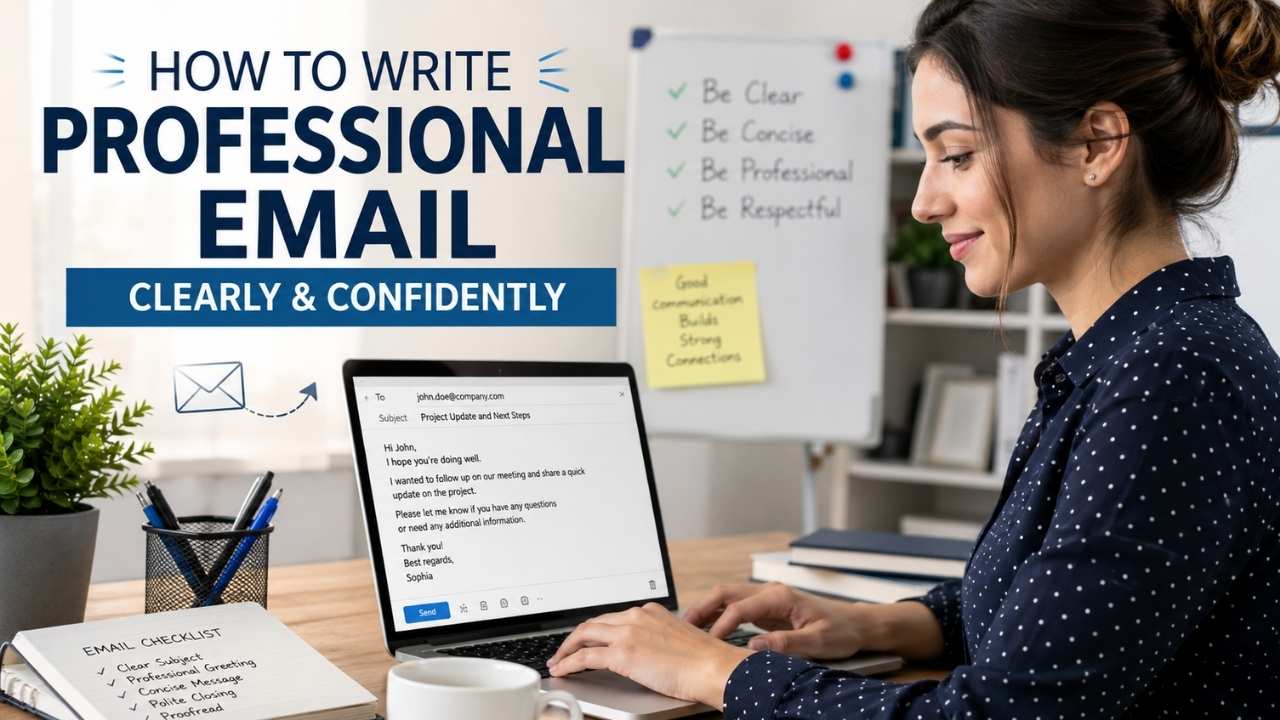
How to Write Professional Email Clearly and Confidently
Writing a strong email still matters in 2026. Even with chat apps and video calls, email remains a key part of work, school, and business communication in the United States.
However, many people still struggle with tone, structure, and clarity. Some emails sound too casual. Others feel stiff or confusing. Because of this, learning how to write professional email messages can improve both communication and credibility.
Professional email writing is not just about grammar rules. It also involves audience awareness, organization, politeness, and modern workplace expectations. Today, short and clear messages often work better than long and formal ones.
Quick Answer
How to write professional email messages starts with a clear subject line, polite greeting, direct message, and respectful closing. In modern American English, professional emails should sound confident, concise, and easy to understand.
TL;DR
- Professional emails should be clear, polite, and organized.
- Most modern workplace emails are shorter than older business letters.
- Tone matters as much as grammar and spelling.
- American English emails often sound more direct than British business emails.
- Clear structure helps readers respond faster.
- Strong email writing improves workplace communication and trust.
What Professional Email Writing Means

Professional email writing refers to using clear, respectful language in workplace or formal communication. The goal is to help the reader quickly understand the message and know what action to take.
In American English, professional emails usually follow a simple structure. Writers begin with a greeting, explain the purpose, add needed details, and end with a polite closing. Because readers often scan emails quickly, short paragraphs work best.
The Difference Between Professional and Casual Emails
Casual emails often include slang, emojis, incomplete sentences, or personal language. Professional emails avoid overly relaxed wording, especially in first-time or workplace communication.
However, professional does not always mean overly formal. Modern American workplaces often prefer natural language over stiff business phrases. For example, “Thanks for your help” sounds more modern than “Your assistance is greatly appreciated.”
Why Tone Matters in Email
Tone shapes how readers interpret a message. Since emails lack facial expressions and voice cues, wording becomes extremely important.
A short email can accidentally sound rude if it lacks polite transitions. On the other hand, overly apologetic language may sound uncertain. Today, many communication experts encourage balanced wording that sounds both respectful and confident.
The Historical Background of Professional Email
Email communication began spreading widely during the late twentieth century. Early workplace emails often copied the style of printed business letters.
Because traditional business writing valued formality, older emails frequently used long greetings and rigid structures. Phrases like “To whom it may concern” or “Please be advised” were once common.
How Business Writing Changed Over Time
As internet communication became faster, email styles changed. Workers needed shorter messages that could be read quickly on screens and phones.
By the 2010s and 2020s, many American companies preferred concise communication. Direct language became more acceptable, especially in technology, media, and startup industries.
Today, professional emails still require politeness, but they usually avoid unnecessary complexity. Readers now value speed, clarity, and action-focused writing.
The Basic Structure of a Professional Email
A professional email usually contains five main parts. Each section helps readers understand the message more easily.
| Context | Correct Usage | Example | Notes |
| Subject Line | Clear and specific | Meeting Rescheduled to Friday | Helps readers prioritize |
| Greeting | Polite opening | Hi Maria, | Matches workplace tone |
| Main Message | Direct purpose | I’m following up about the report. | Keep paragraphs short |
| Closing | Respectful ending | Thank you, | Signals completion |
| Signature | Contact information | Jordan Lee | Useful in professional settings |
Writing Effective Subject Lines
Subject lines guide readers before they open the email. A vague subject line may confuse or frustrate the recipient.
Strong subject lines usually explain the topic immediately. For example, “Project Update for May 2026” works better than “Quick Question.”
Organizing the Main Message
The first sentence should explain the purpose quickly. Readers should not search through long introductions to find the main point.
After the opening, supporting details should appear in logical order. Because many people read emails on mobile devices, shorter paragraphs improve readability.
How Professional Email Works in American English
American workplace communication often values directness and efficiency. As a result, many professional emails in the United States sound less formal than older business writing.
For example, greetings like “Hi James” are common even in professional settings. In contrast, older styles often preferred “Dear Mr. Wilson.”
Modern Workplace Expectations
Today, many employers expect emails to be friendly but concise. Extremely formal wording can sound distant or outdated in some industries.
However, context still matters. Emails to clients, executives, or academic institutions may require more formal language than internal team communication.
Confidence Versus Politeness
Professional American emails often balance confidence with respect. Writers are encouraged to sound clear without sounding demanding.
For example, “Could you send the report by Thursday?” sounds professional and direct. Meanwhile, “I was just wondering if maybe you could possibly send the report” may sound uncertain.
Common Grammar Rules in Professional Emails
Grammar affects readability and professionalism. Even small errors can distract readers or create confusion.
However, modern business emails do not require perfect academic writing. Instead, they require clear communication.
Sentence Length and Clarity
Short sentences usually work best in email writing. Long sentences can become difficult to follow, especially on phones.
Writers often improve clarity by breaking complex ideas into smaller parts. Transition words also help readers follow the message naturally.
Punctuation and Capitalization
Professional emails should use standard punctuation and capitalization. Messages written in all lowercase may appear careless in formal settings.
Similarly, excessive exclamation marks can make messages feel overly emotional. One exclamation point is usually enough when needed.
Avoiding Texting Language
Text abbreviations like “u,” “thx,” or “pls” usually appear too informal for professional communication. While casual shorthand may work in private messaging, workplace emails generally use complete words.
Professional Email Greetings and Closings
Greetings and closings shape the tone of the email immediately. Because of this, choosing the right wording matters.
Common Greetings in Modern Emails
“Hi,” “Hello,” and “Good morning” are widely accepted in American business writing today. These greetings sound professional without being overly formal.
Meanwhile, “Dear” still appears in legal, academic, or highly formal communication. It remains correct, but it is less common in many casual office environments.
Choosing the Right Closing
Closings should sound respectful and natural. Common examples include “Thank you,” “Best,” and “Sincerely.”
Some older closings now sound unusually formal in everyday workplaces. For example, “Yours faithfully” appears more often in British English than American business writing.
Formal Versus Informal Email Styles
Professional emails exist on a spectrum. Some messages require formal structure, while others allow conversational language.
When Formal Writing Is Necessary
Formal emails are common in job applications, customer complaints, academic communication, and legal matters. In these situations, writers often avoid contractions and slang.
More formal language can also show respect in first-time communication or sensitive discussions.
When Informal Professional Writing Works
Internal team communication often sounds more relaxed. Coworkers may use shorter greetings and conversational wording.
However, informal should not mean careless. Even relaxed workplace emails still require clarity and professionalism.
British and American Differences in Email Writing
British and American business emails share many similarities, but small differences still exist.
American English often favors shorter and more direct wording. British English may sound slightly more formal in comparable workplace situations.
Differences in Tone
Americans sometimes view direct requests as efficient. British writers may soften requests more frequently with indirect phrasing.
For example, an American email may say, “Please send the document today.” A British email might say, “Would you mind sending the document today?”
Differences in Vocabulary
Certain terms also vary. Americans commonly use “vacation,” while British writers often use “holiday.” Date formatting may differ as well.
Despite these differences, international business communication has become more standardized over time.
Common Mistakes People Make in Professional Emails
Many email problems come from tone, organization, or unclear wording rather than grammar alone.
Writing Messages That Are Too Long
Long emails can overwhelm readers. Important details may become buried inside unnecessary information.
Because attention spans are shorter today, concise writing usually improves response rates and understanding.
Sounding Too Harsh
Very short emails may appear rude accidentally. For example, a message containing only “Send this today” lacks warmth and context.
Adding small polite phrases often improves tone significantly. Simple wording like “Thanks” or “Could you” can soften direct requests naturally.
Overusing Formal Business Phrases
Older business expressions sometimes sound robotic today. Phrases like “Please find attached herewith” feel outdated in many workplaces.
Modern American email writing usually favors plain, natural language instead.
Real-Life Professional Email Examples
Professional email writing changes depending on purpose and audience. A message to a coworker differs from one sent to a hiring manager.
Workplace Collaboration Emails
Team emails often focus on updates, deadlines, or scheduling. These messages usually benefit from short paragraphs and direct requests.
For example, a project update email should quickly explain progress, next steps, and timelines.
Job Application Emails
Job-related emails often require more formality. Writers usually include a respectful greeting, concise introduction, and clear purpose.
Grammar and proofreading matter more heavily in hiring situations because employers may judge professionalism through writing quality.
Customer Service Communication
Customer service emails should sound calm, respectful, and solution-focused. Even difficult situations benefit from polite wording and clear explanations.
In modern American business culture, empathy is increasingly valued in customer communication.
Email Etiquette in Digital Communication
Email etiquette continues evolving alongside technology and workplace culture.
Mobile-Friendly Writing
Many people now read email primarily on phones. Because of this, large text blocks can feel difficult to read.
Short paragraphs and clear formatting improve accessibility and readability on smaller screens.
Response Expectations
Modern workplaces often expect faster replies than in earlier decades. However, instant responses are not always necessary.
Professional etiquette usually involves acknowledging important messages within a reasonable time frame, even if a full answer comes later.
Emojis and Informal Features
Emojis sometimes appear in workplace communication today. However, they are more common in internal team culture than formal business settings.
In professional emails, emojis should remain limited and context-appropriate. 😊
Debates and Gray Areas in Professional Email Writing
Some email rules remain flexible rather than absolute.
Is Formal Grammar Always Necessary?
Language experts increasingly recognize that workplace communication depends on effectiveness more than strict perfection.
For example, sentence fragments occasionally appear in modern emails because they create speed and clarity. While fragments may break traditional grammar rules, they can still function effectively in professional settings.
Are Greetings Becoming Shorter?
Some modern emails skip greetings entirely, especially during ongoing conversations. However, many readers still prefer at least a brief opening.
Because expectations vary across industries and generations, writers often adapt based on audience and workplace culture.
How Professional Email Writing Continues to Change
Professional communication keeps evolving with technology and social habits.
The Influence of Messaging Apps
Workplace messaging platforms have changed how people write. Many professionals now prefer shorter, faster communication styles.
As a result, email writing has become more conversational over time.
Artificial Intelligence and Email Writing
Writing tools now help users draft and edit emails quickly. However, human judgment still matters because tone and context remain important.
Readers can usually recognize emails that feel overly generic or impersonal. Because of this, thoughtful editing still improves communication quality.
FAQs
What is the best format for a professional email?
A professional email usually includes a clear subject line, greeting, direct message, and polite closing. Short paragraphs also improve readability.
How formal should a professional email be?
The level of formality depends on the audience and situation. Workplace team emails are often less formal than job applications or legal communication.
Is it okay to use contractions in professional emails?
Yes, contractions are widely accepted in modern American business writing. Words like “don’t” and “it’s” often sound natural and professional.
Should professional emails be short?
Most professional emails work better when they are concise. Readers usually prefer messages that explain the purpose quickly and clearly.
Can professional emails include emojis?
In some workplaces, light emoji use is acceptable in casual internal communication. However, formal business emails usually avoid them.
Why do some professional emails sound rude?
Emails can sound rude when they are too short, unclear, or missing polite wording. Since readers cannot hear tone of voice, small wording choices matter more.
Conclusion
Learning how to write professional email messages is really about communicating clearly, respectfully, and confidently. Grammar matters, but organization and tone matter just as much.
Modern American email writing has become more conversational over time. However, strong professional emails still follow clear structure and thoughtful wording.
The best professional emails help readers understand the message quickly and respond easily. When writers focus on clarity, tone, and purpose, email becomes a stronger and more effective communication tool.