Email Writing Examples for Work That Sound Professional
Work emails shape how people see your professionalism, clarity, and communication skills. A simple message can build trust, solve problems, or create confusion within seconds. Because of that, many professionals search for email writing examples for work to improve how they communicate every day.
Today, workplace emails do much more than share information. They help teams collaborate, manage projects, request updates, introduce coworkers, and handle customer communication. In many offices across the United States, email remains one of the most important business tools despite the rise of messaging apps.
Modern work emails also reflect changing language habits. Some workplaces prefer highly formal communication, while others use shorter and more conversational messages. Understanding when to use each style helps people communicate naturally and confidently.
Quick Answer
Email writing examples for work show how professionals structure clear, polite, and effective workplace emails. Most successful work emails include a clear subject line, a professional greeting, concise information, and a respectful closing.
TL;DR
- Work emails should be clear, direct, and easy to read.
- American workplaces often prefer a friendly but professional tone.
- Short paragraphs improve readability on phones and laptops.
- Formality depends on the workplace culture and audience.
- Common mistakes include vague subject lines and overly long messages.
- Modern email writing is becoming more conversational.
Understanding Workplace Email Writing
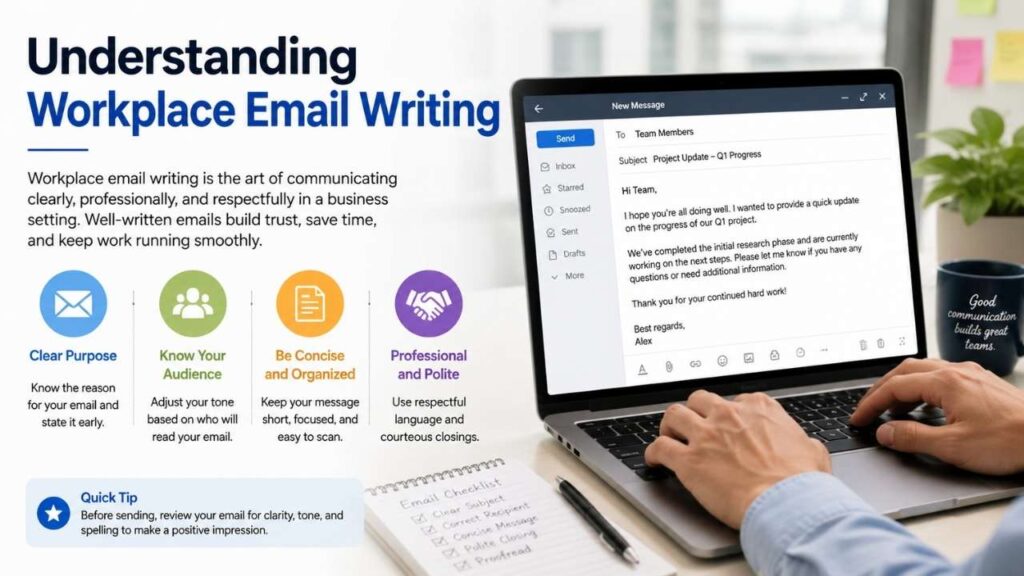
Workplace email writing refers to the way professionals communicate in business settings through email. These messages may include updates, requests, introductions, scheduling details, feedback, or customer communication.
The structure of work emails follows a fairly predictable pattern. Most begin with a greeting, followed by the main message, and end with a professional sign-off. Because readers often scan emails quickly, organization matters greatly.
What Makes a Work Email Professional?
Professional emails balance clarity and politeness. They avoid slang, unclear wording, and emotional language. However, modern American workplaces also value warmth and approachability.
For example, many professionals now write:
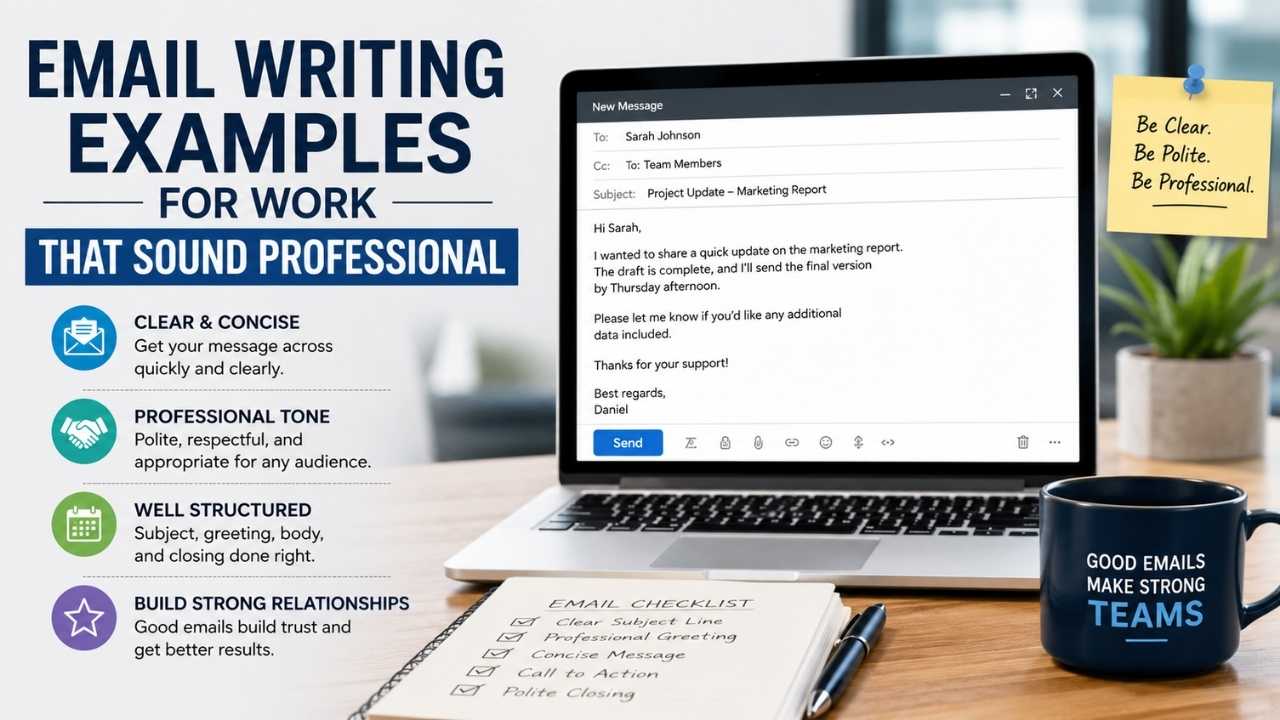
Hi Sarah,
I wanted to share a quick update on the marketing report. The draft is complete, and I’ll send the final version by Thursday afternoon.
Please let me know if you’d like any additional data included.
Best,
Daniel
This style sounds respectful without feeling stiff or overly formal.
Why Email Structure Matters
People often read emails quickly during busy workdays. Because of this, strong structure improves communication. Clear organization also reduces misunderstandings and unnecessary follow-up messages.
In American business culture, concise writing is especially valued. Long introductions or indirect wording may frustrate readers who want information quickly.
The History of Business Email Communication
Business communication existed long before email. In earlier centuries, professionals relied on handwritten letters, memos, and printed office correspondence.
The rise of electronic mail began in the 1970s. However, workplace email became widespread during the 1990s as internet access expanded across offices in the United States. Early business emails were often formal because they copied traditional business letter styles.
How Email Language Changed Over Time
Over the years, email writing became more conversational. Many workplaces reduced strict formality as communication speed increased.
For example, older business emails commonly used phrases like:
“Dear Mr. Thompson, I hope this message finds you well.”
Today, many professionals simply write:
“Hi Mark,”
This shift reflects broader changes in workplace culture. American companies now often encourage collaboration, openness, and friendly communication styles.
The Influence of Digital Communication
Text messaging, workplace chat apps, and remote work also changed email habits. Shorter sentences became common because people increasingly read messages on mobile devices.
However, email still remains more formal than texting or chat platforms. Professionals usually avoid emojis, abbreviations, and casual internet language in important work emails.
Core Rules of Effective Work Emails
Good work emails follow several basic communication rules. These principles help messages stay clear, respectful, and easy to understand.
Use Clear Subject Lines
The subject line tells readers what the message contains. Vague subjects create confusion and may cause emails to be ignored.
Instead of writing “Question,” professionals often write:
Hi Amanda,
I’m confirming tomorrow’s meeting at 2:00 p.m. in Conference Room B.
Please let me know if anything changes.
Thanks,
Kevin
Specific subject lines save time for both the sender and the reader.
Keep Messages Concise
Short emails are easier to process. Most workplace readers prefer concise messages with only necessary details.
However, concise writing does not mean abrupt writing. Professionals still include polite greetings and transitions to maintain a respectful tone.
End With a Professional Closing
Closings help emails feel complete and courteous. Common American workplace closings include “Best,” “Thanks,” “Regards,” and “Sincerely.”
The chosen closing often depends on the relationship and context. “Thanks” feels friendly and collaborative, while “Sincerely” sounds more formal.
Email Writing Examples for Different Work Situations
Different workplace situations require different tones and structures. Understanding these differences improves communication skills greatly.
| Context | Correct Usage | Example | Notes |
| Requesting Help | Polite and direct | “Could you review this document by Friday?” | Clear deadlines help |
| Following Up | Respectful reminder | “I wanted to follow up on my previous email.” | Avoid sounding demanding |
| Introducing Yourself | Friendly professionalism | “I recently joined the finance team.” | Keep introductions brief |
| Apologizing | Honest and concise | “I apologize for the delay.” | Focus on solutions |
| Scheduling Meetings | Clear logistics | “Are you available Tuesday at 10 a.m.?” | Include time zones when needed |
Request Emails
Request emails should explain exactly what is needed. Polite wording matters because direct commands may sound rude in professional settings.
Follow-Up Emails
Follow-up emails help keep projects moving. However, excessive follow-ups may feel aggressive if sent too quickly.
Many professionals wait one or two business days before sending reminders unless the issue is urgent.
Formal vs Informal Work Emails
Modern workplace communication often mixes formal and informal styles. The correct tone depends on company culture, job roles, and relationships between coworkers.
Formal Workplace Emails
Formal emails are common in legal settings, government offices, finance, and external business communication. These messages usually use complete sentences and highly respectful language.
Formal writing also avoids contractions more often. For example, writers may use “cannot” instead of “can’t.”
Informal Workplace Emails
Many American workplaces now prefer a relaxed but professional tone. Informal emails still remain respectful, but they sound more conversational.
For example:
“Thanks for the update. I’ll review the document this afternoon.”
This style feels friendly while remaining professional.
American vs British Email Writing Styles
American and British workplace emails share many similarities. However, there are subtle differences in tone, spelling, and formality.
American professionals often favor direct communication. British workplace emails may sound slightly more indirect or reserved in some situations.
Differences in Vocabulary
American English uses terms like “schedule” and “vacation,” while British English may prefer “timetable” and “holiday.”
Spelling differences also appear regularly. American emails use “organization,” while British emails may use “organisation.”
Differences in Tone
American workplace communication often includes enthusiastic phrases like “Great job” or “Looking forward to working together.”
British communication sometimes sounds more understated or cautious. However, workplace culture matters more than nationality alone.
Common Work Email Mistakes
Many workplace email problems come from unclear wording or poor tone choices. Small mistakes can create confusion or appear unprofessional.
Writing Overly Long Emails
Long emails overwhelm busy readers. Important details may become buried inside unnecessary information.
Short paragraphs improve readability, especially on phones. Today, many professionals skim messages quickly before responding.
Using Unclear Language
Vague wording creates misunderstandings. For example, phrases like “soon” or “later” may mean different things to different people.
Specific details improve clarity. Dates, times, and action items help readers understand expectations immediately.
Sounding Too Abrupt
Very short emails sometimes sound cold or rude even when unintended. Because email lacks facial expressions and vocal tone, wording matters carefully.
Adding brief polite phrases softens communication naturally.
Real-Life Workplace Email Usage
Work emails appear in nearly every industry today. Employees use them for communication with managers, coworkers, clients, and customers.
Emails in Remote Work
Remote work increased email usage dramatically during the 2020s. Distributed teams often rely heavily on written communication because face-to-face conversations happen less frequently.
As a result, clear writing became even more important in American workplaces.
Mobile Email Habits
Many professionals now read emails on phones throughout the day. Because of this trend, shorter formatting became standard practice.
Large text blocks feel difficult to read on small screens. Therefore, modern email writing favors concise paragraphs and simple sentence structures.
The Psychology Behind Professional Email Tone
Email tone influences how readers interpret messages emotionally. Even neutral wording may sound harsh if readers are stressed or busy.
Why Tone Matters
People cannot hear vocal tone through email. Because of this, writers often use extra politeness to avoid misunderstandings.
For example, adding “please” or “thank you” helps messages feel cooperative rather than demanding.
Building Trust Through Email
Consistent communication builds professional credibility. Clear and respectful emails help coworkers trust a person’s reliability and judgment.
In many workplaces, email habits strongly shape professional reputation.
Email Etiquette in Modern American Workplaces
Email etiquette refers to expected communication behavior in professional settings. These expectations continue evolving as workplace culture changes.
Response Time Expectations
Many American offices expect responses within one business day. However, urgent issues may require faster replies.
Remote work also blurred boundaries between work and personal time. Because of this, some companies now encourage healthier communication habits.
CC and Reply-All Culture
Using CC and Reply-All incorrectly can frustrate coworkers. Professionals generally include only people who truly need the information.
Overusing Reply-All creates cluttered inboxes and unnecessary distractions.
How AI and Technology Changed Email Writing
Technology increasingly shapes workplace communication habits. Grammar tools, predictive typing, and AI writing assistants now help many professionals draft emails faster.
Benefits of Writing Tools
Modern writing tools improve spelling, grammar, and clarity. They also help non-native English speakers communicate more confidently.
However, automated writing sometimes sounds robotic or overly generic.
The Importance of Human Tone
Even with advanced tools, human judgment still matters greatly. Readers respond better to emails that sound authentic and thoughtful.
Professionals often edit automated drafts to make them feel more personal and natural.
Confusing Areas and Ongoing Debates
Some workplace email rules remain debated because communication styles vary widely across industries and generations.
Is Formality Still Necessary?
Some professionals believe highly formal emails sound outdated. Others feel formality still shows respect and professionalism.
In reality, most successful workplace communication adapts to the audience and company culture.
Are Short Emails Rude?
Short emails sometimes appear abrupt, especially across cultures. However, many busy workplaces value concise communication.
Tone, wording, and context usually matter more than email length alone.
How Workplace Email Writing Continues to Evolve
Workplace communication changes alongside technology and social habits. Younger professionals often prefer shorter and faster communication styles.
At the same time, traditional email structure remains important in formal business settings.
The Future of Professional Emails
Email is unlikely to disappear completely. Instead, its role may continue shifting toward formal documentation, external communication, and detailed discussions.
Meanwhile, instant messaging may handle quick daily conversations inside teams.
Changing Expectations Across Generations
Different age groups sometimes prefer different communication styles. Younger workers may favor directness, while older professionals may expect more formal wording.
Successful communicators usually adjust their style based on the situation and audience.
FAQs
What is the best format for a work email?
A good work email includes a subject line, greeting, concise message, and professional closing. Clear formatting helps readers understand the purpose quickly.
How formal should workplace emails be?
The level of formality depends on workplace culture and audience. Most American workplaces prefer communication that is professional but still friendly.
Is it okay to use contractions in work emails?
Yes, contractions are common in modern business communication. Words like “don’t” and “can’t” often make emails sound more natural and conversational.
How long should a professional email be?
Most work emails should stay brief and focused. Readers usually prefer concise messages with only essential details.
Should I use emojis in workplace emails?
Emojis are acceptable in some casual workplaces but usually inappropriate in formal communication. It’s safer to avoid them unless company culture clearly welcomes them.
Why do work emails sometimes sound rude?
Email lacks vocal tone and facial expressions. Because of this, very short or direct messages may appear harsher than intended.
Conclusion
Professional email writing remains one of the most important communication skills in modern workplaces. Clear messages help people collaborate effectively, avoid misunderstandings, and build stronger professional relationships.
Today’s American workplaces usually favor communication that feels both respectful and approachable. Because of this, successful emails balance professionalism with natural language and concise structure.
By studying email writing examples for work, professionals can learn how tone, structure, and clarity influence everyday communication. Small improvements in email habits often create better teamwork, smoother projects, and stronger workplace confidence.