

May vs Might: Easy Rules for Everyday English
People often confuse may and might because both words talk about possibility. In many situations, they seem almost identical. However, their tone, level of certainty, and grammar patterns can change the meaning slightly.
In modern American English, the difference between may vs might is more flexible than it was in older English. Still, many writers, teachers, and style guides explain subtle distinctions between them. Because of that, learners often wonder which one sounds more natural.
Today, both words appear in everyday speech, emails, texting, social media posts, and formal writing. Understanding how they work helps your English sound clearer and more confident.
Quick Answer
The main difference between may vs might is that may often suggests a stronger possibility, while might can sound less certain or more hypothetical. However, in everyday American English, people frequently use them interchangeably.
TL;DR
- May and might both express possibility.
- May sometimes sounds more certain than might.
- Might often sounds softer or more cautious.
- May is more common in formal permission requests.
- In casual American English, the difference is often very small.
- Context usually matters more than strict grammar rules.
What May and Might Mean
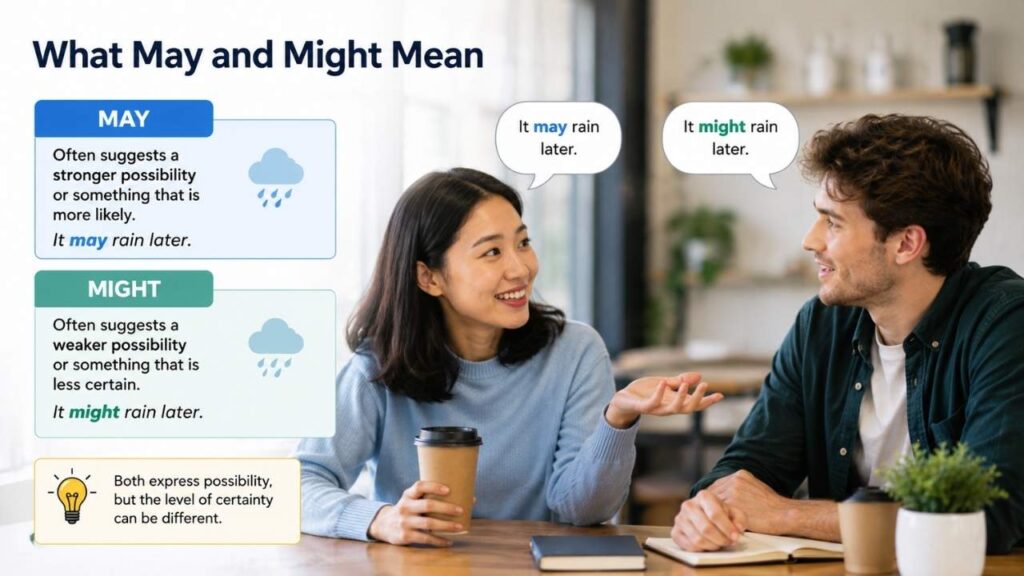
Both may and might are modal verbs. Modal verbs help express ideas like possibility, permission, uncertainty, or prediction. Unlike regular verbs, they work alongside another verb.
For example, someone might say, “It may rain later” or “It might rain later.” In both cases, the speaker believes rain is possible.
However, listeners sometimes hear a slightly different tone. May can sound more direct or likely. Meanwhile, might can sound more uncertain or polite.
How They Work in a Sentence
Both words usually come before the base form of a verb. The structure is simple and stays the same in most situations.
| Context | Correct Usage | Example | Notes |
| Possibility | may + base verb | She may arrive soon. | Common in speech and writing |
| Possibility | might + base verb | She might arrive soon. | Often sounds less certain |
| Permission | may + base verb | You may leave now. | More formal |
| Hypothetical idea | might + base verb | I might go if I finish work. | Suggests uncertainty |
Unlike many verbs, modal verbs do not change form. People do not say “mays” or “mighted.”
Why They Matter in Daily English
These words appear constantly in modern communication. Americans use them while making plans, discussing weather, giving opinions, or expressing uncertainty.
For example, someone texting a friend may write, “I might be late.” In contrast, a doctor may say, “This medication may cause drowsiness.” The meaning changes slightly based on tone and context.
The Historical Background of May and Might
The story of may and might goes back hundreds of years. Both words come from Old English and originally had stronger meanings than they do today.
In early English, may often expressed power or ability rather than possibility. Over time, its meaning shifted toward permission and likelihood.
Meanwhile, might began as the past tense form of may. Historically, people used it when speaking about past situations. However, English slowly changed, and the connection became weaker.
How Usage Changed Over Time
By the eighteenth and nineteenth centuries, grammar books started teaching stricter differences between the two words. Writers often claimed that may showed real possibility, while might showed weaker or imagined possibility.
Today, American English no longer follows those distinctions strictly. Many native speakers switch between them naturally without changing the meaning much.
Because language evolves constantly, modern usage now depends more on tone and style than rigid grammar rules.
How Americans Use May and Might Today
In the United States, people commonly use both words in casual and professional settings. However, certain patterns appear more often in modern American speech.
May in Everyday American English
Americans often use may in formal situations, especially when discussing permission or professional communication.
For example, a teacher may say, “You may begin the test.” A business email might include, “This update may affect your account.”
In these cases, may sounds polished and direct. It fits well in workplaces, schools, and official writing.
Might in Casual Conversation
Meanwhile, might appears constantly in relaxed conversation. It often sounds softer, friendlier, or less forceful.
Someone may say:
“I might order pizza tonight.”
“We might visit Chicago this summer.”
Because it sounds less definite, might helps speakers avoid sounding too certain.
Why Context Matters More Than Rules
In real conversations, Americans usually focus on the overall meaning instead of strict grammar categories. Tone, situation, and speaker intention often matter more.
For example, “I may go” and “I might go” usually communicate the same idea. Most listeners would not notice a major difference.
May vs Might for Possibility
The most common use of both words involves possibility. This is also where confusion happens most often.
When May Sounds Stronger
Traditionally, grammar guides explain that may suggests a higher chance of something happening.
For example:
“The package may arrive today.”
This sentence can imply the speaker believes arrival is fairly likely.
When Might Sounds Less Certain
By contrast, might often sounds weaker or more hypothetical.
For example:
“The package might arrive today.”
This version can suggest more doubt or uncertainty.
Why Native Speakers Ignore the Difference Sometimes
Despite traditional explanations, many Americans use the two words almost interchangeably. Context usually clarifies the speaker’s meaning anyway.
Because of that, modern English accepts both forms in many situations.
Using May for Permission
One important difference still remains strong in modern English. May is widely used for permission.
For example:
“You may enter.”
“May I ask a question?”
These expressions sound polite and standard.
Why Might Rarely Replaces May Here
People almost never use might to ask permission in modern American English.
A sentence like “Might I leave early?” sounds extremely formal or old-fashioned. Most Americans would simply say:
“May I leave early?”
or
“Can I leave early?”
Because of this, may remains the preferred choice for formal permission.
May vs Might in Formal Writing
Formal writing sometimes preserves distinctions that casual speech ignores.
Academic articles, business documents, and legal writing often use may carefully because it sounds more direct and authoritative.
For example:
“This policy may change without notice.”
Meanwhile, writers often choose might when discussing uncertainty, speculation, or theoretical outcomes.
For example:
“These results might suggest a new trend.”
Why Professional Tone Matters
In formal contexts, word choice affects tone. May can sound confident and official. In contrast, might can sound cautious and analytical.
Because of that, professional writers often select one word intentionally.
British and American Differences
American and British English share most rules for these words. However, slight style differences exist.
British English sometimes uses might more frequently in polite or formal contexts. Americans, meanwhile, often prefer simpler and more direct wording.
For example, British speakers may say:
“You might want to check again.”
Americans also use this phrase, but they may choose more direct alternatives depending on context.
Shared Modern Trends
Despite regional differences, both forms are accepted across English-speaking countries. Global media and internet communication have also reduced many older distinctions.
Today, speakers from different countries generally understand both forms easily.
Common Mistakes With May and Might
Many learners struggle because grammar books sometimes oversimplify the rules.
Treating the Difference as Absolute
One common mistake involves believing that may and might always have completely different meanings.
In reality, native speakers often use them interchangeably. Overthinking the distinction can make writing sound unnatural.
Using Might for Permission
Another mistake happens when learners use might instead of may for permission.
For example:
“Might I use your phone?”
Although technically understandable, this sounds unusually formal in everyday American English.
Avoiding One Word Entirely
Some learners become nervous and only use one option. However, both words remain important in natural English.
Using both helps speech sound more flexible and fluent.
Real-Life Examples in Modern Communication
The internet and texting culture have changed how people use modal verbs. Today, short digital messages often favor softer wording.
Texting and Social Media
On social media, people commonly use might because it sounds casual and less forceful.
Examples include:
“I might delete this later.”
“We might need coffee first.”
These phrases sound conversational and relaxed.
Emails and Workplace Communication
Professional emails often use may for clarity and politeness.
For example:
“You may find the attached document helpful.”
Because workplace communication values clarity, may often appears more frequently there.
May Have vs Might Have
Both phrases discuss past possibilities.
Using May Have
“May have” suggests something possibly happened in the past.
For example:
“She may have forgotten the meeting.”
The speaker thinks forgetting is possible.
Using Might Have
“Might have” can sound slightly more uncertain or hypothetical.
For example:
“She might have forgotten the meeting.”
In many conversations, though, the distinction remains very small.
Why These Forms Matter
These structures appear often in conversation, news reports, and storytelling. Understanding them helps listeners follow discussions about uncertain past events.
Confusing Debates Around May and Might
Grammar experts sometimes disagree about strict usage rules. Older style guides often present sharp distinctions, while modern linguists describe more flexible usage.
Traditional Grammar Views
Traditional grammar teaching usually says:
- May = stronger possibility
- Might = weaker possibility
This rule still appears in many classrooms.
Modern Linguistic Views
However, modern language research shows that native speakers rarely follow this distinction consistently. Tone and context influence meaning more than fixed rules.
Because English changes naturally, many experts now describe the difference as stylistic rather than absolute.
How Usage Keeps Changing
English constantly evolves through media, technology, and everyday conversation.
The Move Toward Simpler English
Modern American English often favors flexible and conversational grammar. As a result, strict distinctions between similar words sometimes weaken over time.
This shift affects may and might too.
What Sounds Natural Today
Today, most Americans choose whichever word sounds natural in the moment. Context, personality, and speaking style all influence the decision.
Because of that, fluent English depends more on communication than memorizing rigid rules.
How to Choose Between May and Might
Choosing the right word becomes easier when you focus on tone instead of fear.
Use May When You Want Clarity or Formality
May works well in professional writing, formal permission, and direct statements.
It often sounds polished and confident.
Use Might When You Want Softness or Uncertainty
Might works well in casual speech, hypothetical ideas, and gentle suggestions.
It often sounds less forceful and more conversational.
Trust Natural Context
In many situations, either choice works perfectly. Listening to native speakers helps you develop a natural sense of tone over time.
FAQs
Is may more formal than might?
Yes, may often sounds more formal, especially in professional or academic writing. However, both words appear in modern English regularly.
Can may and might mean the same thing?
Yes. In many conversations, they express nearly identical meanings. Context usually matters more than strict grammar rules.
Do Americans use might often?
Yes, Americans use might frequently in casual conversation. It sounds relaxed and natural in everyday speech.
Is might weaker than may?
Traditionally, grammar guides say yes. However, modern speakers often ignore this distinction in casual English.
Can I use might for permission?
Technically yes, but it sounds very formal or old-fashioned. Most Americans use may or can instead.
Which is better in formal writing?
That depends on the tone you want. May often sounds more direct, while might sounds more cautious or analytical.
Conclusion
Understanding may vs might becomes easier once you focus on real communication instead of memorizing strict rules. Both words express possibility, but they can create slightly different tones.
In modern American English, the difference is often subtle. May tends to sound more formal or certain, while might usually sounds softer or less definite. Still, native speakers regularly use both naturally and flexibly.
The best approach is to notice how people use these words in real life. Over time, choosing between them will start to feel natural and automatic.