
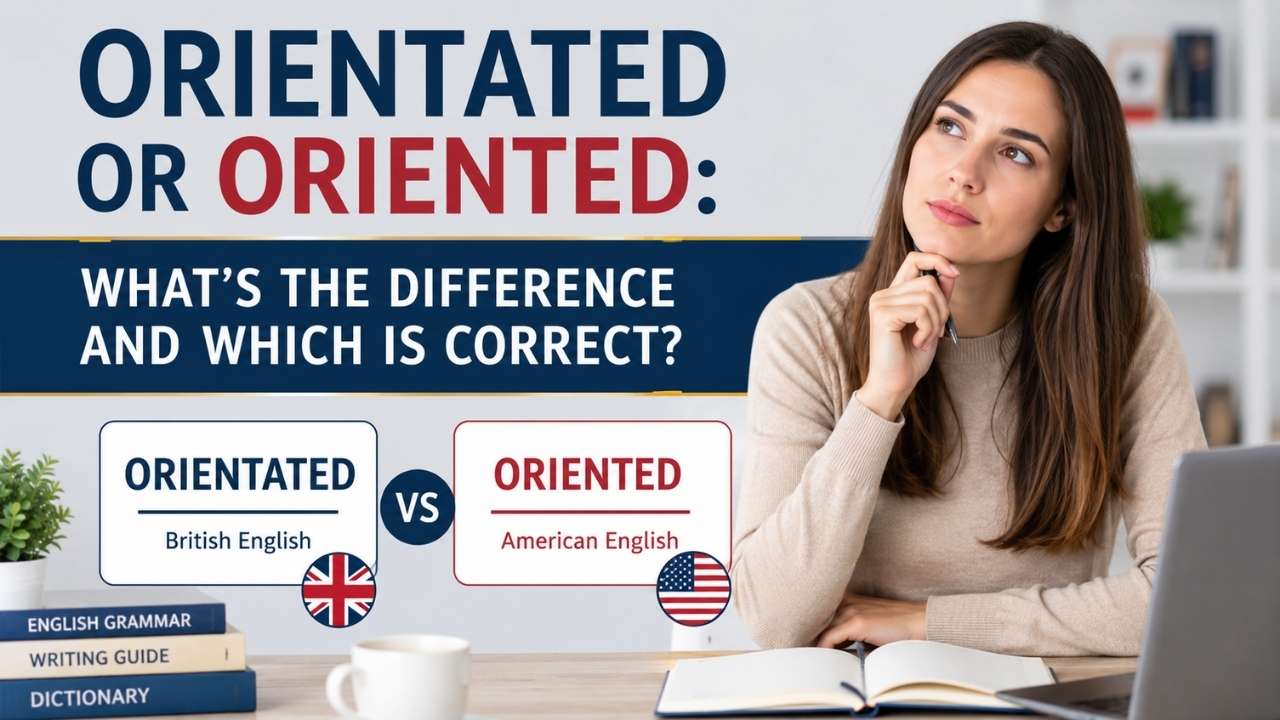
Orientated vs Oriented: What’s the Difference & Which Is Correct?
When it comes to orientated vs oriented, many English learners and even native speakers wonder which word is correct. The good news is that both words are grammatically correct, but they are not used equally. Oriented is the preferred spelling in American English, while orientated is more common in British English.
This difference often causes confusion in school, business, and everyday writing. Understanding the difference between orientated and oriented helps you choose the right word for your audience and write with confidence.
In this guide, you’ll learn the meaning of oriented, the meaning of orientated, when each form should be used, how they compare in British vs American English, and see plenty of clear examples. By the end, you’ll know which spelling is the better choice for any writing situation.
Quick Answer
Oriented and orientated have the same meaning and are both grammatically correct. The main difference is regional usage. Oriented is the preferred spelling in American English, while orientated is used more often in British English. If you’re writing for a U.S. audience, choose oriented. For British readers, either word may be acceptable, though orientated is more common.
What Does “Oriented” Mean?
The word oriented means directed toward, focused on, or adjusted to a particular purpose, goal, or situation. It comes from the verb orient, which means to find your position or become familiar with something.
Today, oriented is the preferred form in American English and is widely used in schools, workplaces, business writing, and everyday conversations. For example, you may hear phrases like customer-oriented service, career-oriented student, or goal-oriented mindset.
In each case, the word describes someone or something that is focused on a specific direction or objective. If you are writing for a U.S. audience, oriented is usually the safest choice because it sounds more natural and matches the style used in most American publications.
What Does “Orientated” Mean?
Orientated has the same meaning as oriented. It also means focused on, directed toward, or adjusted to a particular goal or situation. The difference is not in the definition but in regional usage.
Orientated is more common in British English, although many people in the UK also use oriented. Because both words share the same meaning, choosing one usually depends on your audience rather than grammar. If you are writing for readers in the United Kingdom, orientated may sound more familiar.
However, if your audience is mainly American, oriented is the preferred spelling. Understanding the difference between orientated and oriented helps you write more naturally and avoid confusing your readers.
Orientated vs Oriented: The Main Difference at a Glance
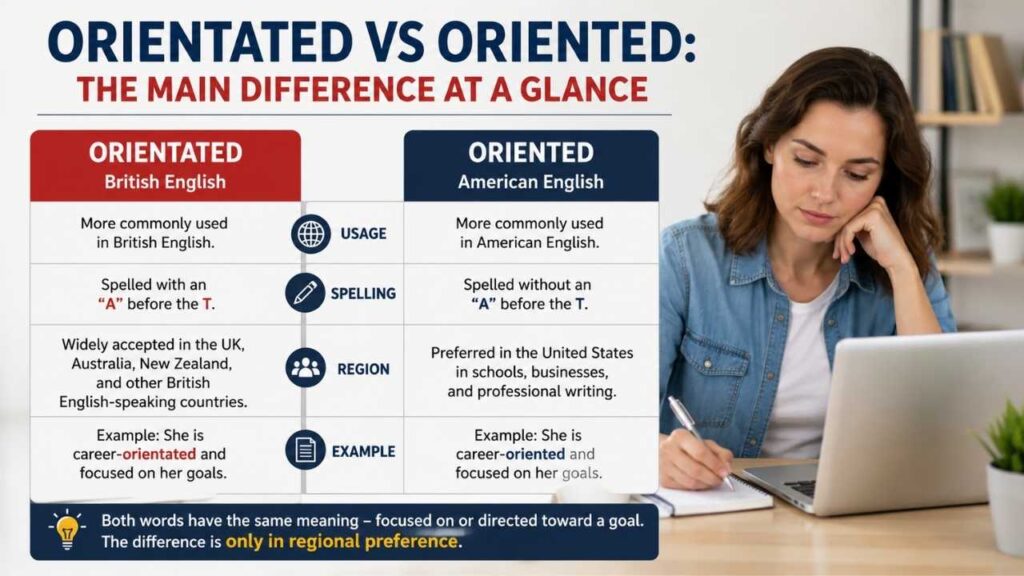
Although orientated and oriented have the same meaning, their preferred usage is different. Oriented is the standard spelling in American English, while orientated appears more often in British English. Neither word is grammatically wrong, so you should choose the one that matches your audience.
If your article, email, or report is for American readers, use oriented. If you are writing mainly for British readers, orientated is also acceptable. Think of it like other regional differences in English.
For example, writers often compare At the Weekend or On the Weekend because each version is preferred in different regions. The same idea applies here—knowing your audience helps you choose the most natural wording.
| Feature | Oriented | Orientated |
| Meaning | Focused or directed toward something | Same meaning |
| Grammar | Correct | Correct |
| American English | Preferred | Less common |
| British English | Common | More common |
| Best Choice for U.S. Audience | ✅ Yes | ❌ Usually No |
Is “Orientated” Grammatically Correct?
Yes, orientated is grammatically correct. Many people believe it is a mistake because oriented is much more common in American English, but that is not true. Major dictionaries recognize orientated as a valid word.
The main difference is that it is used more frequently in British English than in American English. If you use orientated in a document written for British readers, it is unlikely to sound unusual. However, if you are writing for a U.S. audience, oriented is generally the better choice because it matches American spelling preferences.
This is similar to other grammar topics where regional usage matters more than correctness, such as Shined vs Shone, where both forms are accepted but one is preferred depending on the context and audience.
American English vs British English: Which Form Is Preferred?
The biggest difference between oriented and orientated comes down to American English vs British English. In the United States, oriented is the standard form used in newspapers, books, schools, and professional writing. It appears far more often than orientated. In the United Kingdom, both words are accepted, but orientated is seen more frequently than it is in American English.
Even so, many British publishers also choose oriented, so you may see both spellings. If your goal is to reach an international audience, oriented is usually the safest option because it is widely recognized around the world. Understanding regional preferences can improve your writing, just as learning the Paucity Meaning Explained helps you use less common English words with confidence.
Why Do Both Words Exist?
Many people ask, “Why do people say orientated instead of oriented?” The answer lies in the history of the English language. Over time, English has developed different word forms that remain acceptable in different regions. Orientated appeared as a variation of oriented, and both have been used for many years. As English spread across different countries, some regions continued using one form more than the other.
Today, dictionaries accept both spellings, even though oriented is much more common in modern American English. Instead of asking which word is “right,” it is better to ask which spelling fits your audience. Choosing the appropriate form helps your writing sound natural, consistent, and easy for readers to understand.
When Should You Use “Oriented”?
Use oriented whenever you are writing for an American audience or creating content that follows American English. It is the preferred spelling in schools, business documents, websites, blogs, and professional communication across the United States.
You will often see phrases such as customer-oriented, career-oriented, family-oriented, and results-oriented. These expressions sound natural to American readers and are commonly used in everyday writing.
If you are unsure whether to choose orientated or oriented, think about who will read your content. For most international websites, oriented is also the safer option because it is more widely recognized. Choosing the right spelling makes your writing consistent, professional, and easier for readers to understand.
When Can You Use “Orientated”?
You can use orientated when writing for readers who are familiar with British English. Although it has the same meaning as oriented, it is more common in the United Kingdom and some other English-speaking countries. If your audience expects British spelling, using orientated will sound natural and correct.
However, it is important to stay consistent throughout your document. Avoid switching between orientated and oriented in the same article unless you are explaining the difference between them.
Many writers ask, “Should I use orientated or oriented?” The answer depends on your audience. If your readers are mainly American, choose oriented. If they are mainly British, orientated is perfectly acceptable.
Real-Life Example Sentences
Seeing words in context is one of the easiest ways to understand their meaning. Here are a few examples that show how oriented and orientated are used in real writing.
Examples with “Oriented”:
- Our company is customer-oriented and values excellent service.
- She is career-oriented and enjoys learning new skills.
- The training program is results-oriented and focuses on practical experience.
Examples with “Orientated”:
- The company is customer-orientated and always listens to clients.
- He is career-orientated and works hard to reach his goals.
- The course is skill-orientated and helps students prepare for work.
Both forms are correct, but choose the one that matches your readers.
Common Mistakes Writers Make
One common mistake is believing that orientated is incorrect. In reality, both words are grammatically correct, but they are preferred in different regions. Another mistake is mixing American English and British English in the same article. For example, starting with oriented and later changing to orientated can make your writing look inconsistent.
Some writers also choose a spelling without thinking about their audience. If you are writing for U.S. readers, oriented is usually the better choice. If your audience is British, orientated may fit better. Before publishing, read through your article and make sure you have used the same spelling consistently from beginning to end.
What Do Major Dictionaries and Style Guides Recommend?
Most major dictionaries recognize both oriented and orientated as correct English words. However, they also point out that oriented is the more common form, especially in American English. Many professional style guides and editors recommend using oriented when writing for U.S. readers because it is the standard spelling in American publications.
In contrast, orientated appears more often in British sources and is accepted there as a regional variation. If you are writing for an international audience or want the safest option, oriented is generally the best choice. Following the preferred spelling for your audience helps your writing look polished, consistent, and easier to read.
Which Version Should You Choose?
If you are still wondering which is correct, oriented or orientated, remember that both are correct. The better choice depends on where your audience is located. For articles, blogs, business writing, and academic work aimed at American readers, choose oriented because it is the standard form.
If your content is written for British readers, orientated is also an acceptable choice. The most important rule is to stay consistent throughout your writing. Do not switch between the two spellings unless you are comparing them in a grammar lesson.
By matching your spelling to your audience, your writing will sound more natural, build trust with readers, and communicate your message more clearly.
FAQs
Is orientated grammatically correct?
Yes. Orientated is a correct English word. It is simply more common in British English than in American English.
Is oriented an American English spelling?
Yes. Oriented is the preferred spelling in American English and is widely used in schools, businesses, and publications.
Do orientated and oriented have different meanings?
No. They have the same meaning. The only real difference is regional preference.
Which spelling should I use?
Use oriented for American readers and orientated for British readers. If your audience is international, oriented is usually the better choice.
Conclusion
The debate over orientated vs oriented is not about right or wrong—it is about regional usage. Both words are correct, and both mean focused on, directed toward, or adjusted to a particular goal or purpose.
The key difference is that oriented is the standard choice in American English, while orientated is more common in British English. If you are writing for a U.S. audience, oriented is the best option because it matches American writing standards.
For British readers, orientated is also acceptable. By understanding the difference between orientated and oriented, you can choose the spelling that fits your audience and make your writing clear, natural, and professional.