
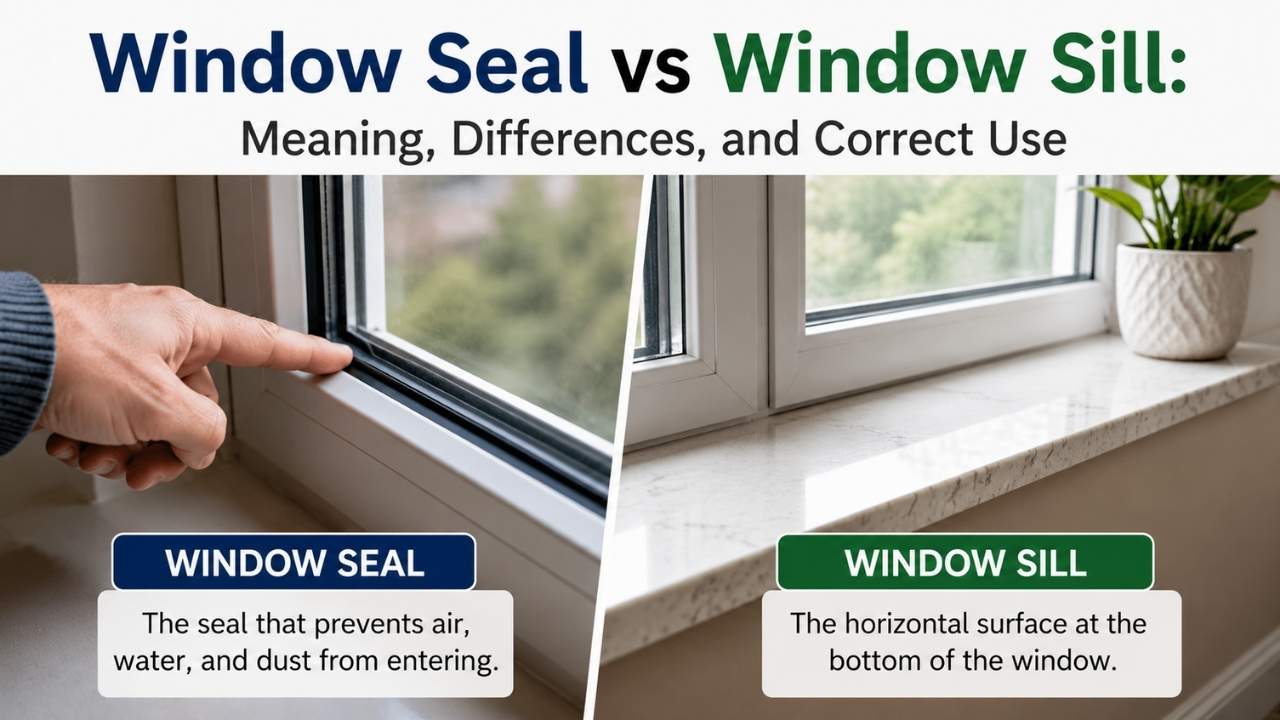
Window Seal vs Window Sill: Meaning, Differences, and Correct
Many people use the terms window seal vs window sill as if they mean the same thing. However, these two window components serve very different purposes. If you have ever wondered, “Is it window seal or window sill?” or searched for the difference between a window seal and a window sill, you are not alone. Homeowners, DIY enthusiasts, students, and even writers often confuse these common window terms.
A window seal helps protect your home from air leaks, moisture, and drafts. In contrast, a window sill is the horizontal ledge at the bottom of a window that supports the structure and helps with water drainage. Both parts play important roles in window construction, but they function in completely different ways.
Understanding the window seal vs window sill distinction can help you communicate more clearly, identify problems such as a broken window seal or a damaged sill, and learn more about the parts of a window. In this guide, you’ll discover the meaning, functions, locations, and key differences between these important elements of a window frame.
Quick Answer: Window Seal vs Window Sill
The difference between a window seal and a window sill is simple. A window seal is a protective barrier that stops air leaks, moisture, dust, and drafts from entering through a window. It usually sits around the glass or frame and helps improve energy efficiency. If the seal breaks, you may notice condensation, foggy glass, or higher heating and cooling costs.
A window sill, on the other hand, is the horizontal ledge at the bottom of a window. It supports the window frame and helps move water away from the wall. Window sills can be made from wood, stone, vinyl, or other materials.
In short, a window seal protects against air and water entry, while a window sill provides support and drainage. Although both are important parts of a window, they serve different functions.
What Is a Window Seal?
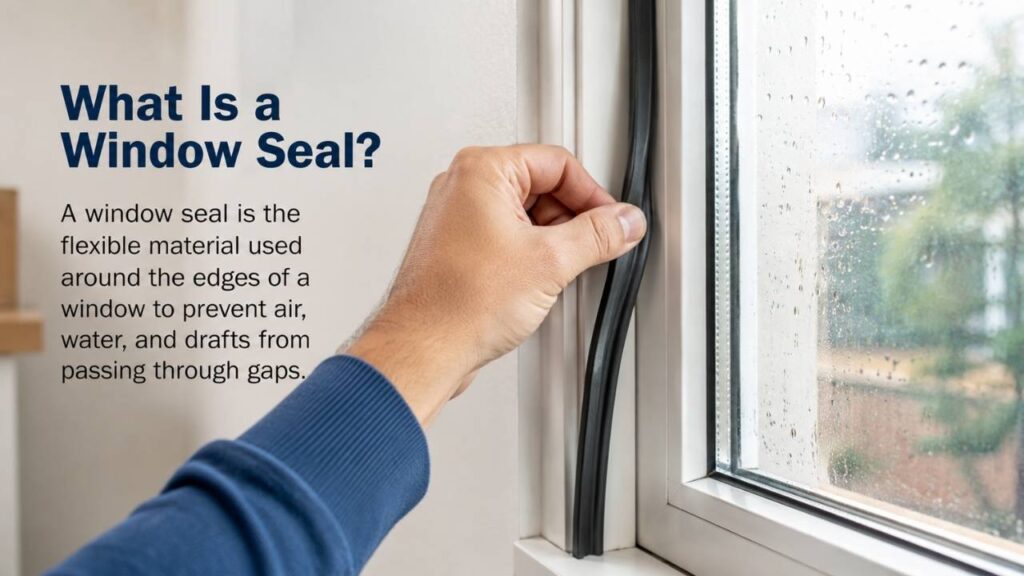
A window seal is a material that creates a tight barrier around a window. Its main job is to prevent air leakage, moisture, dust, and outside weather from entering your home. Modern windows often use rubber, silicone, or other sealing materials to create this protection.
The seal sits around the edges of the glass or frame. In double-pane windows, the seal also helps keep insulating gas between the panes. This feature improves thermal insulation and supports better energy efficiency.
When a window seal fails, several problems can appear. You may notice drafts, moisture buildup, or condensation trapped between the glass panes. These signs often indicate a broken window seal that needs attention.
Because it helps control temperature and moisture, the window seal plays a major role in window maintenance, comfort, and reducing energy costs throughout the year.
What Is a Window Sill?
A window sill is the flat, horizontal surface located at the bottom of a window. It forms an important part of the window structure and supports the frame above it. Both interior and exterior window sills help protect the building from water damage.
The outside sill directs rainwater away from the wall and window opening. This drainage function helps reduce moisture problems and protects nearby building materials. Inside the home, the sill often serves as a small shelf where people place plants, books, or decorations.
Window sills come in different materials, including wood, stone, vinyl, and PVC. Each material offers different benefits for appearance, durability, and maintenance.
Although many people confuse a window sill with a window seal, the sill does not stop air leaks. Instead, it provides support, protection, and water management for the entire window system.
Window Seal vs Window Sill: Key Differences
Although both are important window components, a window seal and a window sill serve different purposes. A window seal focuses on protection, while a window sill focuses on support and drainage.
| Feature | Window Seal | Window Sill |
| Location | Around glass or frame | Bottom ledge of window |
| Purpose | Stops air and moisture | Supports window and drains water |
| Visibility | Often hidden | Clearly visible |
| Materials | Rubber, silicone, sealants | Wood, stone, vinyl, PVC |
| Common Issues | Drafts, fogging, leaks | Rot, cracks, water damage |
The easiest way to remember the difference is to think about function. A window seal keeps unwanted air and moisture out. A window sill supports the structure and directs rainwater away. Understanding this distinction helps homeowners identify problems faster and use the correct window terminology when discussing repairs or maintenance.
Why Do People Confuse Window Seal and Window Sill?
Many people confuse window seal and window sill because the words sound somewhat similar. Since both belong to the same window structure, people often assume they describe the same thing. However, they refer to different parts of a window.
Another reason for confusion is that both help protect a home from moisture. A window seal prevents water and air from entering through gaps, while a window sill helps direct rainwater away from the building. Because they both contribute to weather protection, people sometimes mix them up.
Online discussions, home improvement forums, and everyday conversations also contribute to this misunderstanding. Some people use the wrong term without realizing it. Learning the difference between a window seal and a window sill makes communication easier and helps homeowners better understand common window repair and maintenance issues.
When to Use “Window Seal”
Use the term window seal when talking about the protective barrier that prevents air leaks, moisture, dust, and drafts from entering around a window. This term commonly appears in discussions about energy efficiency, insulation, and window repairs.
Correct examples include:
- The window seal needs replacement.
- Moisture entered because the seal failed.
- A damaged seal caused condensation between the panes.
- The technician repaired the broken window seal.
Incorrect examples include:
- I placed flowers on the window seal.
- The cat sat on the window seal.
In these cases, the correct term is window sill.
If you are discussing weatherproofing, insulation, drafts, condensation, or moisture protection, you are usually referring to a window seal. Using the correct term helps avoid confusion, especially when speaking with contractors, builders, or home maintenance professionals.
When to Use “Window Sill”
Use the term window sill when referring to the horizontal ledge at the bottom of a window. The sill provides support for the window frame and helps move water away from the building.
Correct examples include:
- The cat slept on the window sill.
- She placed a flower pot on the window sill.
- The wooden window sill needs repainting.
- Rain damaged the exterior window sill.
Incorrect examples include:
- The window sill prevents drafts.
- The window sill keeps insulating gas between panes.
These examples describe a window seal, not a sill.
Whenever you discuss a visible ledge, decoration space, structural support, or water drainage, the correct term is window sill. Understanding this usage helps people avoid mistakes and communicate clearly when discussing parts of a window or home improvement projects.
Signs Your Window Seal May Be Damaged
A damaged window seal can create several noticeable problems inside your home. One of the most common signs is condensation or fog trapped between the glass panes. This usually happens when the seal no longer keeps moisture out.
You may also feel drafts near the window. These air leaks reduce comfort and force heating and cooling systems to work harder. As a result, energy bills may increase.
Other warning signs include visible moisture around the frame, mold growth, and water intrusion during rainy weather. In some cases, outdoor noise may become more noticeable because the seal no longer provides proper insulation.
If you notice these issues, inspect the window as soon as possible. Fixing a broken window seal early can help prevent larger problems, improve energy efficiency, and protect your home from moisture damage.
Common Problems With Window Sills
Like any building material, a window sill can develop problems over time. Water damage is one of the most common issues, especially for wooden sills exposed to frequent rain and moisture.
Rot often appears when water remains on the sill for long periods. Cracks can also develop due to weather changes, age, or poor maintenance. If these problems continue, moisture may reach nearby walls and cause additional damage.
Some homeowners also notice peeling paint, mold growth, or discoloration on older sills. These signs usually indicate that the sill needs cleaning, repair, or replacement.
Regular inspections can help prevent expensive repairs. Keeping the sill clean and properly sealed helps protect the surrounding window structure. A well-maintained window sill supports the frame, improves appearance, and continues directing water away from the building effectively.
Window Seal vs Window Sill vs Window Frame
People often confuse the window seal, window sill, and window frame, but each part serves a different purpose. The frame forms the main structure that holds the entire window in place.
The window seal sits around the glass or frame and prevents moisture, dust, and drafts from entering. It supports insulation and improves energy efficiency.
The window sill sits at the bottom of the window. It provides support and helps move rainwater away from the wall. Many homeowners use indoor sills as small shelves for decorations.
The window frame surrounds the entire window system and provides structural strength. Without it, the window could not remain securely attached to the building.
Understanding these differences makes it easier to identify problems, discuss repairs, and learn more about basic window anatomy and construction terminology.
Window Sill vs Window Ledge: Are They the Same?
In many situations, people use window sill and window ledge to describe the same feature. Both terms usually refer to the flat surface at the bottom of a window. However, usage can vary depending on location and personal preference.
In everyday conversation, many homeowners say “window ledge” because it sounds more familiar. Builders, contractors, and home improvement professionals often prefer the term window sill, which is the more technical name.
In the United States, “window sill” is generally the standard term. In some regions, “window ledge” appears more often in casual speech. Despite these differences, both terms usually describe the same visible part of the window.
Knowing both names can help you understand instructions, home maintenance guides, and conversations related to window construction and repair projects.
Real-Life Examples of Window Seals and Window Sills
Understanding these terms becomes easier when you see them in real-life situations. Imagine you feel a cold draft near your bedroom window during winter. In that case, a damaged window seal may be allowing air to enter.
Now imagine placing a plant beside your window. The flat surface holding the plant is the window sill. This simple example shows how different these two window parts are.
A contractor inspecting foggy glass will likely discuss the condition of the seal. A carpenter replacing rotted wood near the bottom of a window will focus on the sill instead.
These examples show that a window seal protects against moisture and drafts, while a window sill provides support and drainage. Recognizing these functions helps homeowners understand common window maintenance and repair discussions more clearly.
Common Mistakes People Make
One common mistake is using window seal and window sill as interchangeable terms. Although both belong to the same window system, they perform completely different jobs.
Another mistake involves confusing the sill with the window frame. The frame surrounds the entire window, while the sill forms only the bottom ledge. Some people also mistake weather stripping or sealant for the sill because they do not understand basic window terminology.
Writers sometimes use the wrong term in articles, creating confusion for readers. Homeowners may also describe the wrong part when requesting repairs, which can lead to misunderstandings with contractors.
Learning the correct names for window components helps prevent these mistakes. Accurate terminology improves communication and makes it easier to identify maintenance issues, discuss repairs, and understand how different window parts work together.
FAQs
Is it window seal or window sill?
Both terms are correct, but they describe different parts of a window. A seal prevents air and moisture from entering, while a sill supports the window and directs water away.
What is the main difference between a window seal and a window sill?
The seal provides weather protection, while the sill provides support and drainage.
Can a broken window seal be repaired?
In many cases, professionals can repair or replace damaged seals depending on the type of window.
Can a damaged window sill cause leaks?
Yes. Cracks, rot, or other damage may allow water to reach nearby walls.
Are window ledges and window sills the same thing?
Usually, yes. Both terms often refer to the bottom ledge of a window.
Which part of a window prevents air leaks?
The window seal prevents drafts, moisture, and unwanted air from entering.
Conclusion
Understanding the difference between a window seal and a window sill helps you use the correct term and better understand how windows work. Although people often confuse these parts, their functions are very different.
A window seal protects your home from drafts, moisture, and air leakage. It plays an important role in insulation and energy efficiency. A window sill, on the other hand, supports the window and helps move water away from the building. It also contributes to the appearance and functionality of the window.
Whether you are discussing repairs, learning about window anatomy, or improving your home maintenance knowledge, knowing these terms can make conversations much easier. The next time someone asks, “Is it window seal or window sill?” you’ll know exactly how to explain the difference and use each term correctly.