
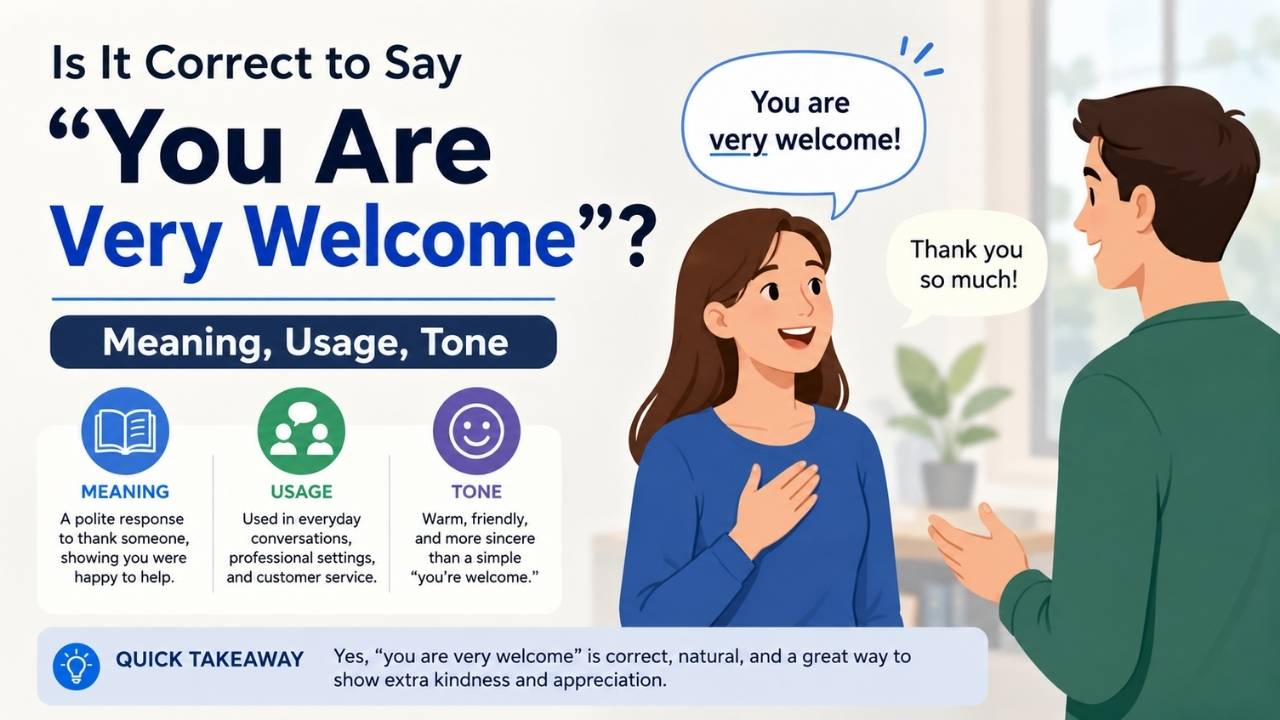
Is It Correct to Say “You Are Very Welcome”? Meaning, Usage
If someone says “thank you,” you may reply with “you are very welcome.” This polite expression shows that you were happy to help and that you appreciate the other person’s gratitude. While many people simply say “you’re welcome,” adding the word “very” creates a warmer and more friendly response.
Many English learners ask, “What does ‘you are very welcome’ mean?” Others wonder, “Is ‘you are very welcome’ grammatically correct?” The good news is that this phrase is both correct English and a natural part of everyday conversation.
In this guide, you’ll learn the meaning of “you are very welcome,” when to use it, how it compares to “you’re welcome,” and whether it sounds formal or informal. You’ll also find practical examples, common usage situations, and alternative ways to respond to thank you in both personal and professional communication.
Quick Answer
“You are very welcome” is a polite expression used in response to “thank you.” It means that you were happy to help and appreciate the other person’s gratitude. The phrase is grammatically correct, natural, and commonly used in both personal and professional conversations.
Compared to “you’re welcome,” adding the word “very” creates a warmer and more sincere tone. You can use “you are very welcome” in formal, informal, and workplace settings whenever you want to sound especially friendly or appreciative.
What Does “You Are Very Welcome” Mean?
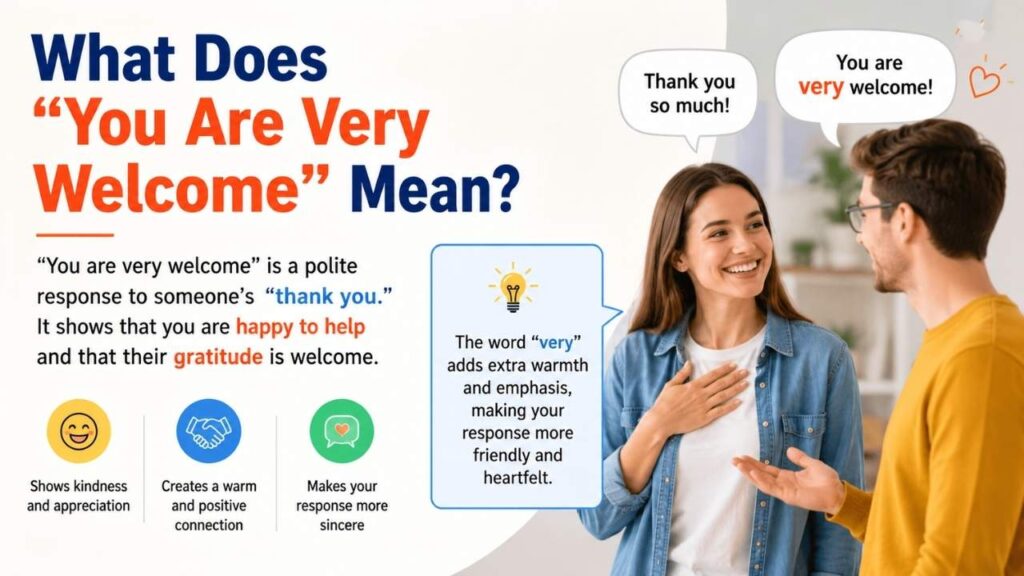
The phrase “you are very welcome” is a polite response to someone’s thank you. It tells the other person that you were happy to help and that their appreciation is welcome. The word “very” adds extra warmth and emphasis, making the response sound more sincere than a simple “you’re welcome.”
When people ask, “What does ‘you are very welcome’ mean?”, the answer is simple: it is a friendly and respectful way to acknowledge someone’s gratitude. Native speakers often use it in both personal and professional conversations.
Literal Meaning
The phrase suggests that the person is completely welcome to the help, service, or favor they received.
Implied Meaning
Beyond its literal meaning, it communicates kindness, friendliness, and willingness to assist.
Why the Word “Very” Matters
The word “very” acts as an intensifier. It strengthens the message and makes the response feel more enthusiastic and appreciative.
Is “You Are Very Welcome” Grammatically Correct?
Yes, “you are very welcome” is grammatically correct. Many English learners wonder, “Is ‘you are very welcome’ correct English?” The answer is yes.
The phrase follows standard English grammar rules:
- You = subject
- Are = linking verb
- Very = adverb
- Welcome = adjective
Understanding the Structure of the Phrase
The phrase uses a simple sentence structure that native speakers understand instantly. Because it follows common grammar patterns, it sounds natural in conversation.
The Role of “Very” as an Intensifier
In English grammar, very increases the strength of an adjective. Here, it strengthens welcome, making the response sound warmer.
Why Native Speakers Use It Naturally
Native speakers often add words like very, really, or absolutely to show stronger emotions. That’s why “you are very welcome” feels friendly and genuine.
When Should You Use “You Are Very Welcome”?
You can use this phrase whenever someone thanks you.
Responding to Gratitude
This is the most common situation. When someone expresses appreciation, you are very welcome acknowledges their thanks politely.
Example:
Person A: Thank you for your help.
Person B: You are very welcome.
Professional Situations
The phrase works well in professional communication because it sounds respectful and courteous.
Customer Service Interactions
Customer service professionals frequently use this expression because it creates a positive experience for customers.
Everyday Conversations
Friends, family members, neighbors, and coworkers all use this phrase in daily interactions.
Is “You Are Very Welcome” Formal or Informal?
One common question is, “Is ‘you are very welcome’ formal or informal?”
The answer is that it works in both settings.
Formal Usage
In formal situations, the phrase sounds respectful and professional.
Examples include:
- Business emails
- Customer service
- Professional meetings
- Academic settings
Informal Usage
In casual conversations, it sounds warm and friendly.
Examples include:
- Conversations with friends
- Family gatherings
- Social events
Semi-Formal Situations
Many workplace conversations fall between formal and informal. The phrase fits these situations perfectly.
You Are Welcome vs You Are Very Welcome
Many people compare “you are welcome” vs. “you are very welcome.”
Key Differences
Both phrases are correct and polite. The main difference is emphasis.
Tone Comparison
You are welcome sounds neutral.
You are very welcome sounds warmer and more enthusiastic.
Example Sentences
- Thank you for your assistance. You are welcome.
- Thank you for your assistance. You are very welcome.
The second response feels more personal and friendly.
You’re Welcome vs. You Are Very Welcome
Another common comparison is “you’re welcome vs. you are very welcome.”
Contraction vs. Full Form
You’re welcome is simply a contraction of you are welcome.
Tone and Emphasis
You’re welcome is short and casual.
You are very welcome adds emphasis and sounds more heartfelt.
Which Sounds More Natural?
Both sound natural. Native speakers choose one based on the situation and the tone they want to convey.
How Native English Speakers Use “You Are Very Welcome”
Native speakers use this phrase to show genuine appreciation and kindness.
American English Usage
In American English, people often use the phrase in customer service, business communication, and everyday conversations.
British English Usage
British speakers also understand and use the phrase, although alternatives such as “not at all” may appear more frequently in some situations.
Common Speech Patterns
Native speakers often pair the phrase with additional friendly comments:
- You are very welcome. Happy to help.
- You are very welcome. Anytime.
- You are very welcome. Glad I could help.
Examples of “You Are Very Welcome” in Sentences
Workplace Examples
- Thank you for reviewing my report.
- You are very welcome.
- Thank you for helping with the project.
- You are very welcome.
Customer Service Examples
- Thank you for resolving my issue.
- You are very welcome.
- Thank you for your support.
- You are very welcome.
Family and Friends Examples
- Thanks for driving me home.
- You are very welcome.
- Thanks for the gift.
- You are very welcome.
Academic Examples
- Thank you for explaining the lesson.
- You are very welcome.
Alternative Ways to Say “You Are Very Welcome”
Sometimes you may want different polite responses to thank you.
My Pleasure
A professional and courteous alternative.
Happy to Help
Friendly and commonly used in workplaces.
Anytime
Casual and welcoming.
Glad I Could Help
Shows genuine willingness to assist.
Don’t Mention It
A relaxed and informal response.
Other alternatives include:
- No problem
- Of course
- Absolutely
- It was nothing
- You’re most welcome
Common Mistakes When Using “You Are Very Welcome”
Overusing It
Using the phrase in every conversation can sound repetitive.
Using It in Casual Text Messages
Many people prefer shorter responses such as you’re welcome, no problem, or anytime in text messages.
Confusing Tone Levels
Some people assume the phrase is always formal. In reality, it works in both formal and informal situations.
Why “You Are Very Welcome” Sounds Warmer Than “You’re Welcome”
The phrase carries more emotional weight because it adds emphasis.
Emotional Emphasis
The word very strengthens the response and shows greater enthusiasm.
Politeness Signals
People often interpret the phrase as more thoughtful and respectful.
Relationship Building in Communication
Small language choices can improve interpersonal communication. Saying “you are very welcome” can make conversations feel friendlier and more positive.
FAQs
Is “You Are Very Welcome” Correct English?
Yes. It is grammatically correct and widely used.
Is It Too Formal?
No. It works in formal, informal, and semi-formal situations.
Can It Be Used in Emails?
Yes. It sounds polite and professional in business communication.
Do Native Speakers Say It Often?
Yes. Native speakers use it when they want to sound warm and appreciative.
What Is the Best Alternative?
It depends on the situation. Popular alternatives include my pleasure, happy to help, anytime, and glad I could help.
Conclusion
“You are very welcome” is a polite, friendly, and grammatically correct expression used in response to gratitude. It adds warmth and sincerity to the more common phrase “you’re welcome.”
Whether you use it in personal conversations, workplace communication, or customer service interactions, it helps create a positive and respectful tone. Understanding its meaning, usage, grammar, and alternatives will help you communicate more naturally and confidently in English.