
Common Phrases Used in Daily Conversation
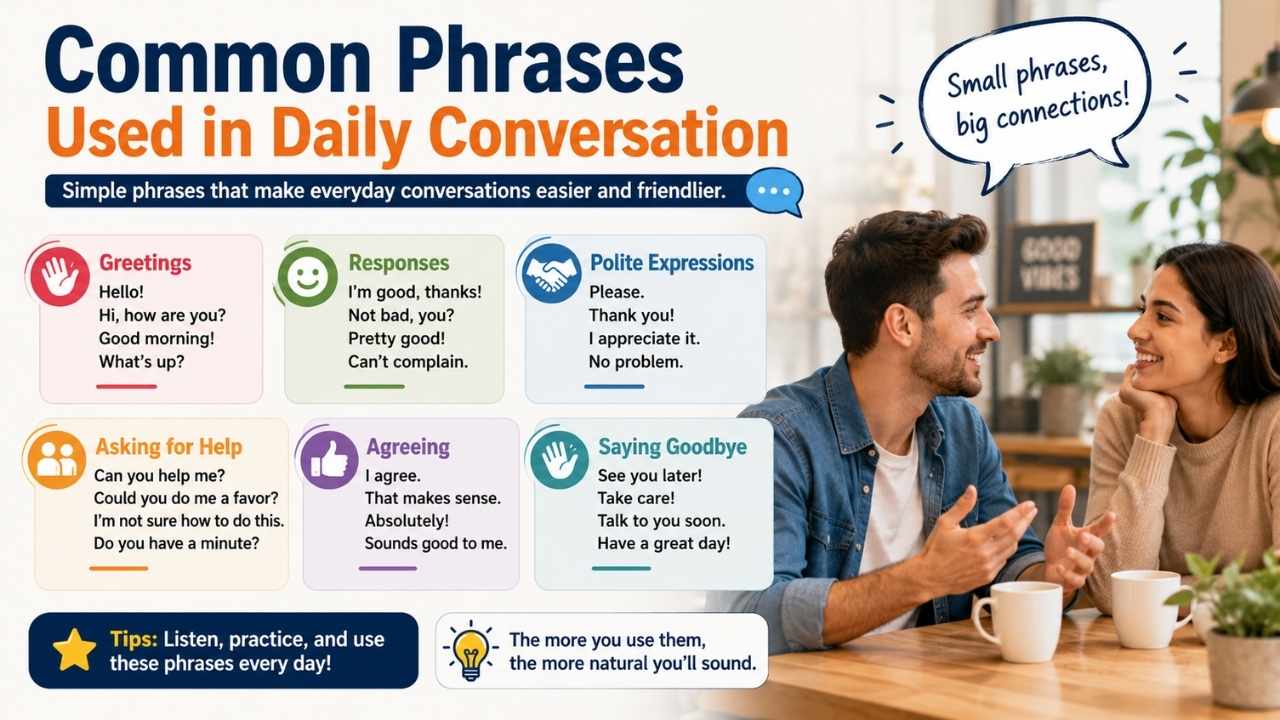
Everyday English depends heavily on common phrases used in daily conversation. These phrases help people speak naturally, connect socially, and express ideas quickly. Instead of building every sentence word by word, speakers often rely on fixed expressions that others instantly understand.
Today, these phrases appear everywhere in American life. People use them in text messages, workplaces, classrooms, social media posts, and casual conversations. Some phrases sound friendly and relaxed, while others fit more formal situations.
Because English changes constantly, many daily phrases also evolve over time. Some expressions become shorter, more informal, or more digital-friendly. Others stay popular for decades because they remain useful in everyday communication.
Quick Answer
Common phrases used in daily conversation are familiar expressions people repeat regularly in spoken and written English. They help conversations sound smooth, natural, and socially appropriate in modern American English.
TL;DR
- Daily conversation phrases make English sound natural and fluent.
- Americans use many fixed expressions automatically in speech.
- Some phrases are formal, while others are casual or slang-based.
- Context changes the meaning of many common expressions.
- Digital communication has shaped modern conversational phrases.
- Usage rules continue evolving in American English.
What Common Conversation Phrases Are
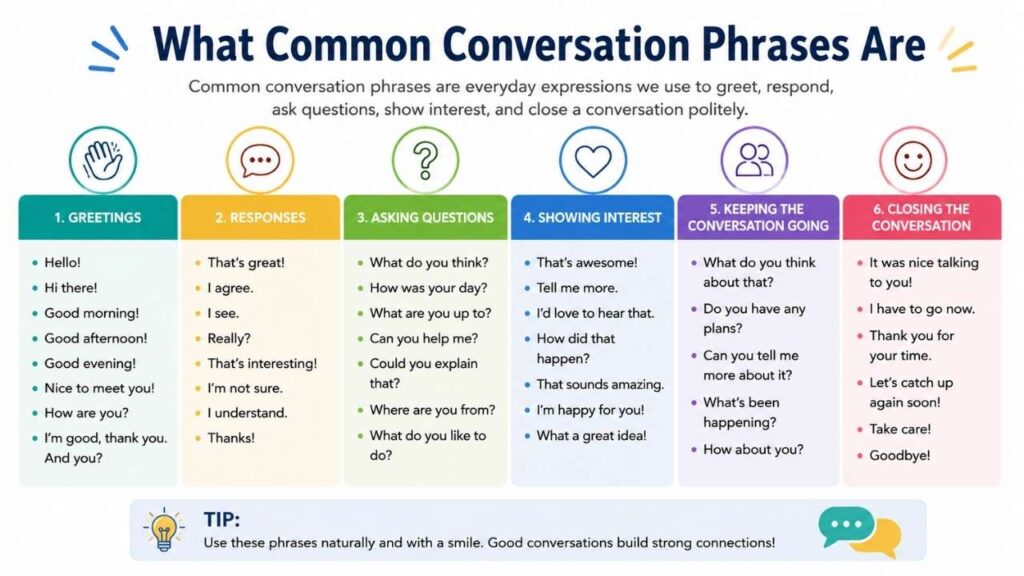
Daily conversation phrases are groups of words people commonly use together. These expressions often carry meanings beyond the exact dictionary definition of each word. Because of this, native speakers recognize them quickly.
For example, phrases like “How’s it going?” or “No problem” work as social tools. They help conversations begin, continue, or end smoothly. In many cases, speakers do not stop to think about the grammar structure because the phrase already feels natural.
How Fixed Expressions Work
Some expressions are completely fixed. People rarely change the wording. For instance, “See you later” usually stays in that exact form. However, other phrases allow small changes depending on tone or situation.
These expressions also create rhythm in speech. Instead of sounding robotic, speakers appear more relaxed and confident. That is why learners often study common phrases separately from grammar rules.
Why People Use Them So Often
Conversation moves quickly. Therefore, people prefer familiar wording that others immediately understand. Common phrases save time and reduce confusion.
In American English especially, conversational flow matters greatly. Speakers often value friendliness and ease more than perfect grammatical precision in casual settings.
The Historical Background of Everyday English Phrases
Many conversation phrases have surprisingly old origins. Some expressions entered English hundreds of years ago through trade, literature, or social customs. Others developed through American culture and media.
During Early Modern English, people used formal greetings much more often. Over time, English became less rigid and more conversational. As society changed, everyday speech became shorter and simpler.
How American English Influenced Conversation
American English strongly shaped modern conversational phrases during the twentieth century. Movies, television, radio, and later the internet spread American expressions worldwide.
For example, phrases like “What’s up?” gained popularity through entertainment and youth culture. Meanwhile, workplace communication introduced expressions such as “Sounds good” and “Take care.”
The Role of Technology
Texting and online communication changed phrase usage again during the 2000s and 2010s. People began shortening expressions and using more relaxed wording.
Today, phrases like “No worries” or “I got you” appear regularly in both speech and digital communication. These expressions reflect modern conversational habits in the United States.
How Americans Use Conversation Phrases Today
Modern American English relies heavily on conversational shortcuts. People often choose phrases that sound warm, efficient, and socially comfortable.
For example, Americans commonly soften direct statements. Instead of saying “You are wrong,” someone may say “I’m not sure about that.” This approach helps maintain politeness.
Informal Speech in Daily Life
Casual phrases dominate daily interactions in the USA. Friends, coworkers, and even customer service workers often use relaxed expressions.
In many situations, sounding too formal can feel distant. Therefore, conversational phrases help speakers appear approachable and friendly.
Workplace and Professional Settings
Professional English still includes many common conversational phrases. However, the tone changes slightly depending on the environment.
For example, “I appreciate it” sounds more professional than “Thanks a lot.” Similarly, “Let me check on that” sounds smoother than a blunt response.
| Context | Correct Usage | Example | Notes |
| Greeting | Casual introduction | “How’s it going?” | Common in informal speech |
| Workplace | Polite agreement | “Sounds good to me.” | Friendly but professional |
| Texting | Casual reassurance | “No worries.” | Very common online |
| Customer Service | Helpful response | “I’d be happy to help.” | More formal tone |
| Friends | Casual farewell | “Catch you later.” | Informal American usage |
Greetings People Use Every Day
Greetings are among the most repeated phrases in English. These expressions do more than say hello. They also signal friendliness and social awareness.
Americans often prefer relaxed greetings over formal ones. Because of this, phrases like “Hey” or “What’s up?” appear frequently in casual speech.
Formal and Informal Greetings
Formal greetings usually appear in workplaces, schools, or professional emails. Expressions like “Good morning” or “How are you?” remain common in these situations.
Informal greetings are more flexible. Friends often shorten greetings or combine them with humor and slang.
Why Greeting Phrases Matter
Greeting phrases create first impressions quickly. Even short expressions can affect how friendly or respectful someone appears.
In American culture, greeting people casually often feels natural and welcoming. However, overly casual wording may sound disrespectful in formal situations.
Common Response Phrases in Conversations
Conversation depends on quick responses. Therefore, English includes many short reaction phrases that speakers use automatically.
Expressions like “Absolutely,” “I hear you,” or “That makes sense” help conversations continue smoothly. These phrases show attention and engagement.
Supportive Conversation Language
Americans frequently use supportive wording in conversation. This style helps create positive interactions.
For example, someone may say “You’ve got this” to encourage another person. Although informal, this phrase communicates support clearly.
Agreement and Disagreement
English speakers often soften disagreement through indirect phrases. Instead of open confrontation, people may use expressions like “I see your point, but…” or “Maybe, but…”
This conversational style is especially common in professional American settings.
Phrases Commonly Used in Texting and Social Media
Digital communication has transformed modern English phrases dramatically. Short, fast expressions dominate online interactions.
People now use phrases like “Sounds good,” “For sure,” and “My bad” in both texts and speech. Online culture often spreads these expressions quickly.
Informal Digital Language
Texting encourages shorter sentence structures. Therefore, many phrases lose extra words over time.
For example, “I am going to” often becomes “I’m gonna” in casual digital communication. Although informal, these shortened forms appear widely in American English.
Social Media Influence
Social media platforms spread conversational trends rapidly. A phrase can become nationally popular within weeks.
However, online phrases sometimes disappear just as quickly. Because of this, conversational English constantly evolves.
Formal vs Informal Conversation Phrases
English changes depending on context. Some phrases work perfectly with friends but sound inappropriate in professional settings.
Understanding this difference helps speakers communicate naturally without sounding rude or awkward.
Informal Expressions
Informal phrases usually appear in relaxed conversations. Friends and family often use slang, shortened expressions, and casual wording.
For example, “Hang on a sec” sounds natural among friends. However, it may feel too casual in formal business communication.
Formal Alternatives
Formal English tends to sound more structured and respectful. Instead of “What’s up?” someone may say “How have you been?”
Professional settings often require careful phrase selection because tone matters greatly.
British and American Differences in Daily Phrases
American and British English share many conversational phrases. However, some expressions differ in wording, tone, or popularity.
For example, Americans often say “No problem,” while British speakers may prefer “That’s alright.” Both phrases communicate similar meanings.
Vocabulary Differences
Some daily phrases use completely different vocabulary. Americans may say “Take care,” while British speakers sometimes use “Cheers” more broadly.
These differences rarely prevent understanding. Still, they can reveal regional language habits.
Tone and Directness
American conversational English often sounds more openly enthusiastic. British English may appear more restrained or understated.
Because of this, the same phrase can feel slightly different depending on cultural context.
Common Mistakes People Make With Conversation Phrases
Many learners understand grammar rules but still struggle with conversational phrasing. This happens because fixed expressions often ignore literal logic.
For example, “What’s up?” is usually a greeting, not a real question about location.
Using Phrases Too Literally
Some expressions have meanings that differ from the exact words. Therefore, direct interpretation may cause confusion.
Similarly, phrases like “Take it easy” usually mean “goodbye” or “relax,” depending on context.
Choosing the Wrong Tone
Tone matters greatly in conversation. A phrase that sounds friendly in one setting may sound rude in another.
For example, “Relax” can sound supportive or dismissive depending on voice and situation.
Real-Life Examples of Daily Conversation Phrases
Daily phrases appear constantly in ordinary communication. Americans use them while shopping, texting, working, and socializing.
Because these expressions are repetitive, they become deeply connected to social behavior.
Everyday Workplace Examples
Coworkers often use phrases like “I’ll get back to you” or “Let’s touch base later.” These expressions sound polite and cooperative.
Although some workplace phrases become clichés, they remain extremely common in American offices.
Family and Friend Conversations
Friends usually prefer relaxed language. Phrases like “You good?” or “No big deal” appear regularly in casual speech.
These shorter expressions help conversations feel natural and emotionally comfortable.
Why Context Changes Meaning
Many English phrases depend heavily on context. The same words may carry different meanings based on tone, relationship, or situation.
For example, “Sure” can sound enthusiastic, uncertain, or sarcastic depending on delivery.
Spoken Tone Matters
Voice tone changes interpretation dramatically. In spoken English, pauses and emphasis help listeners understand intent.
Digital communication sometimes removes these clues. Therefore, misunderstandings happen more easily online.
Social Relationships Affect Usage
People speak differently with friends, strangers, teachers, and managers. Conversation phrases shift naturally between these relationships.
Because of this, fluent communication requires more than vocabulary knowledge alone.
How Daily Phrases Continue Changing
English constantly evolves through culture, media, and technology. New conversational phrases appear every year, especially among younger speakers.
Some expressions remain popular for generations, while others disappear quickly.
Generational Language Changes
Younger speakers often introduce fresh phrases into mainstream English. Over time, older generations may adopt them as well.
For example, internet slang frequently enters everyday spoken conversation in the USA.
The Future of Conversational English
Modern English will likely continue becoming faster and more informal. However, politeness and clarity still matter strongly in communication.
As digital communication grows, conversational phrases may become even shorter and more flexible.
Misunderstandings and Debates About Conversation Phrases
Language experts sometimes debate whether informal phrases weaken English standards. However, most linguists recognize that conversational language naturally changes over time.
Everyday phrases often follow social needs rather than strict grammar rules.
Are Informal Phrases Incorrect?
Informal expressions are not automatically wrong. Instead, their appropriateness depends on context.
For example, “Gonna” works well in casual speech but usually appears less often in formal writing.
Changing Standards in Modern English
Modern English accepts many conversational forms that older grammar guides discouraged. Today, natural communication often matters more than rigid formality in casual settings.
Still, professional and academic writing continue using more traditional standards.
Why Conversation Phrases Help Fluency
Learning common expressions improves fluency faster than memorizing isolated vocabulary words. These phrases help speakers respond naturally in real situations.
Because conversations move quickly, familiar expressions reduce hesitation.
Building Natural Speech Patterns
People who know conversational phrases often sound more confident. Their speech flows more smoothly because they rely on familiar patterns.
This skill matters especially in spoken American English.
Understanding Native Speakers
Native speakers frequently shorten or blend words together. Therefore, recognizing common phrases improves listening comprehension greatly.
Over time, repeated exposure helps these expressions feel automatic.
FAQs
What are common phrases used in daily conversation?
These are everyday expressions people use regularly in speech and writing. They help conversations sound natural and socially comfortable.
Why are conversation phrases important in English?
They improve fluency and make communication smoother. Without them, speech can sound overly formal or unnatural.
Are informal phrases grammatically wrong?
Not necessarily. Informal phrases are acceptable in casual contexts, although some may not fit formal writing.
Do Americans and British speakers use the same phrases?
Many phrases overlap, but some wording differs. Tone and frequency also vary between American and British English.
Why do some phrases have meanings that differ from the words?
Many expressions developed through cultural usage over time. As a result, their meanings became more figurative than literal.
How can learners use conversation phrases naturally?
The best method is regular exposure through listening and speaking. Context helps learners understand tone and proper usage.
Are texting phrases becoming standard English?
Some digital expressions are entering everyday spoken English. However, many still remain informal or context-specific.
Conclusion
Common phrases used in daily conversation shape how people communicate in modern American English. These expressions help speakers sound natural, friendly, and socially aware in both spoken and digital communication.
Although grammar rules remain important, real conversation often depends on flexible and familiar wording. Context, tone, and social setting all influence how phrases work in daily life.
As English continues evolving, conversation phrases will keep changing too. However, understanding these expressions helps people communicate more confidently and connect more naturally with others.