
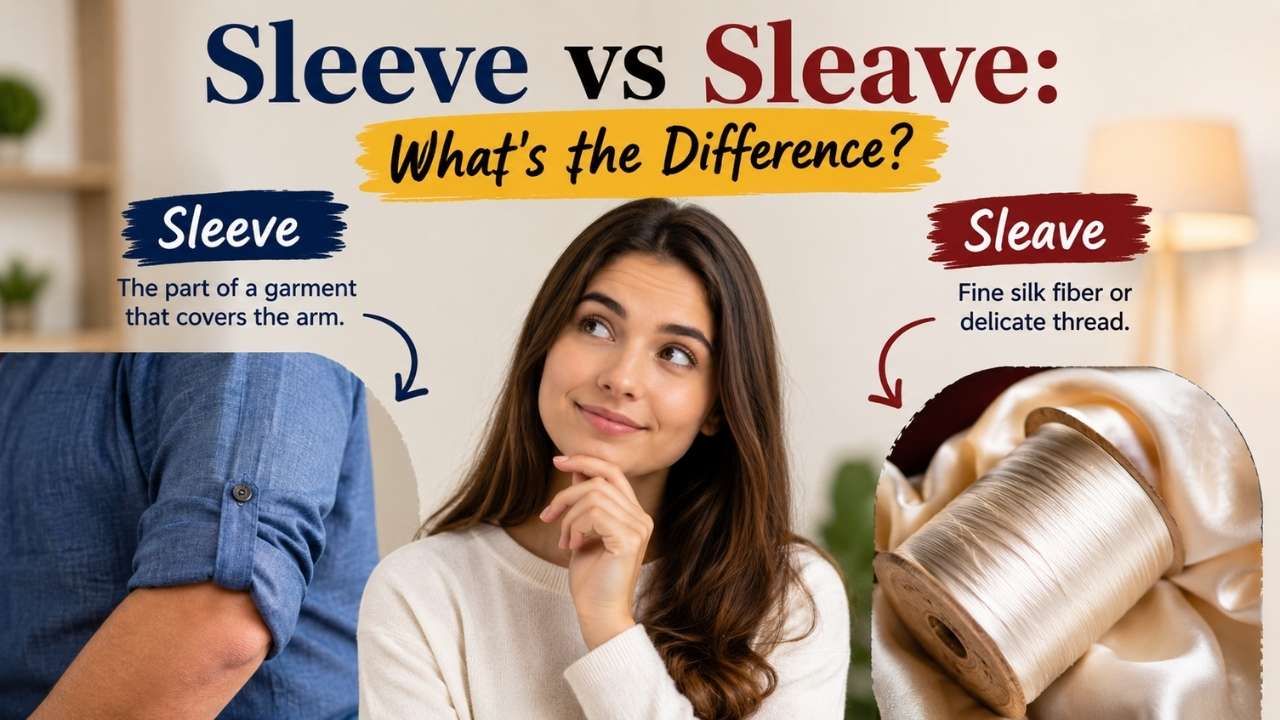
Sleeve vs Sleave: What’s the Difference?
Many English words look similar but have very different meanings. Sleeve vs sleave are a perfect example. Because the words differ by only one letter, many people assume they are spelling variations of the same term. However, they are not.
In modern American English, sleeve is a common everyday word. You hear it in conversations about clothing, sports, technology, and even idioms. Sleave, on the other hand, is a rare word that most native speakers never use.
Understanding the difference between these terms can help you avoid spelling mistakes and recognize older or literary language when you encounter it.
Quick Answer
Sleeve vs Sleave comes down to meaning and usage. A sleeve is the part of a garment that covers the arm, while sleave is an old English word referring to fine thread or untwisted silk. Today, sleeve is standard English, while sleave appears mainly in historical and literary contexts.
TL;DR
- Sleeve is a common modern English word.
- It usually refers to the arm-covering part of clothing.
- Sleave is an old and uncommon word.
- Sleave traditionally means fine silk fiber or thread.
- Most writers today need sleeve, not sleave.
- Confusion happens because the words look and sound similar.
Understanding Sleeve and Sleave
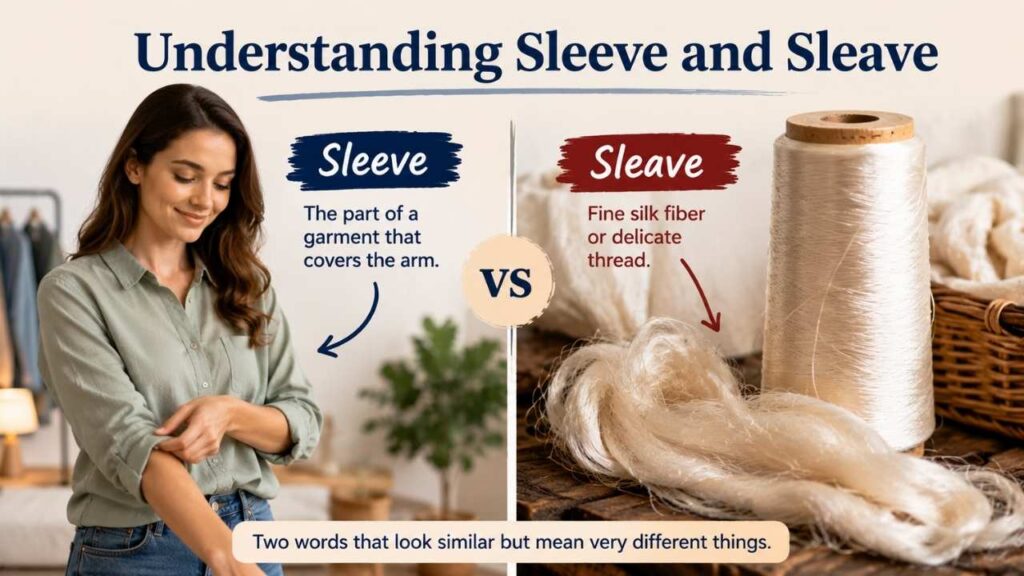
At first glance, the two words seem closely related. Their spelling differs by only one letter, and they share a somewhat similar pronunciation in some accents.
However, they belong to different parts of English vocabulary. Sleeve remains active in everyday speech and writing. Sleave survives mostly in dictionaries, literary works, and discussions of historical language.
What Is a Sleeve?
A sleeve is the section of a shirt, jacket, dress, or other garment that covers all or part of the arm. The word can also be used metaphorically.
For example, someone may say they have “an ace up their sleeve.” In that case, the sleeve becomes a symbol of a hidden advantage rather than a piece of clothing.
What Is a Sleave?
A sleave traditionally refers to fine silk fibers, loosely twisted thread, or delicate strands of material. The word was more familiar centuries ago than it is today.
Modern readers most often encounter it in classic literature, especially older British texts and works influenced by historical English vocabulary.
The Meaning of Sleeve in Modern English
Today, sleeve has several meanings beyond clothing. American English speakers use it naturally in many situations.
The most common meaning remains the garment component that surrounds the arm. Whether discussing a T-shirt, sweater, or business suit, people regularly refer to sleeves.
Sleeve as Clothing
In fashion and everyday conversation, sleeves help describe clothing styles. A shirt may have short sleeves, long sleeves, or no sleeves at all.
Because clothing is such a common topic, this meaning appears frequently in speech, advertising, and writing.
Sleeve as a Protective Cover
The word also refers to protective coverings. For example, a laptop sleeve protects a computer from scratches. A document sleeve protects important papers.
This broader meaning developed naturally because both uses involve something that surrounds and protects another object.
Sleeve in Idioms
English contains several popular expressions featuring sleeve.
When someone “wears their heart on their sleeve,” they openly show their emotions. When someone has “something up their sleeve,” they have a secret plan or advantage.
These phrases remain extremely common in American English.
The Meaning of Sleave in Historical English
Unlike sleeve, sleave is rarely heard today. Most speakers never encounter it outside literature classes or dictionary research.
Historically, the word referred to delicate silk fibers or loosely twisted silk thread. It belonged primarily to textile and weaving vocabulary.
Textile Origins
Centuries ago, cloth production involved many specialized terms. Workers needed precise language for fibers, threads, and weaving techniques.
Sleave emerged within this environment. It described a specific type of fine material rather than a general object.
Literary Survival
Although everyday use faded, the word survived through literature. Writers sometimes used it because its sound and imagery suggested delicacy, softness, or fragility.
As a result, modern readers may still come across the term in older texts.
Historical Background of Both Words
The histories of sleeve and sleave reveal why they look similar yet developed differently.
Both words trace back to older forms of English and Germanic language roots. Over time, however, they followed separate paths.
The Development of Sleeve
The word sleeve comes from Old English forms related to garments covering the arm. Similar words existed throughout Germanic languages.
Because clothing remains a constant part of human life, the word continued evolving and remained common across centuries.
The Development of Sleave
The history of sleave is connected to textiles and silk production. As industrial methods changed and specialized vocabulary disappeared, the word gradually became less common.
Eventually, most speakers replaced it with more familiar terms such as thread, fiber, yarn, or silk strand.
Why People Confuse Sleeve and Sleave
Confusion often occurs because the words are visually similar.
When reading quickly, many people overlook the additional “a” in sleave. Spellcheck tools may also contribute because sleeve is far more common.
Similar Appearance
Both words contain nearly identical letters. As a result, typing errors happen easily.
Writers unfamiliar with sleave may assume it is simply an alternative spelling of sleeve.
Limited Exposure to Sleave
Most Americans encounter sleeve thousands of times throughout life. In contrast, many never see sleave at all.
Because of this imbalance, people often interpret sleave as a mistake rather than a legitimate word.
Sleeve vs Sleave in American English
American English overwhelmingly favors sleeve.
The word appears in education, media, business communication, advertising, and casual conversation. Meanwhile, sleave remains almost entirely absent from everyday use.
Everyday Writing
If you are discussing clothing, technology accessories, protective covers, or common idioms, the correct word is almost certainly sleeve.
Most American readers would immediately recognize the term.
Academic and Literary Contexts
Sleave occasionally appears in studies of literature, language history, or textiles.
Outside these specialized fields, its use is uncommon.
British and American Usage Differences
There is very little difference between British and American English regarding these words.
Both varieties use sleeve regularly. Both treat sleave as an old-fashioned or specialized term.
The primary distinction is that British readers may encounter historical literary references slightly more often because many classic texts originate from Britain.
Common Mistakes Writers Make
Many errors result from unfamiliarity with the rare word sleave.
Writers sometimes insert the wrong spelling without realizing the meanings differ completely.
Using Sleave Instead of Sleeve
This is the most common mistake.
Someone writing about a jacket, shirt, or sweater should use sleeve, not sleave.
Assuming Sleave Is a Variant Spelling
Unlike color and colour or theater and theatre, sleeve and sleave are not regional spelling variants.
They are separate words with separate meanings.
Real-Life Examples of Correct Usage
The following examples show how each word works in context.
| Context | Correct Usage | Example | Notes |
| Clothing | Sleeve | The shirt sleeve was too long. | Most common meaning |
| Fashion | Sleeve | She rolled up her sleeves. | Everyday usage |
| Technology | Sleeve | He bought a laptop sleeve. | Protective cover |
| Idiom | Sleeve | She has a surprise up her sleeve. | Figurative meaning |
| Historical Textiles | Sleave | The fabric contained fine sleave. | Rare historical usage |
| Literature | Sleave | The poet described strands of sleave. | Literary context |
These examples illustrate how different the words actually are despite their similar appearance.
Sleave in Literature and Classic Writing
Many readers discover the word sleave through literature rather than conversation.
Writers in earlier centuries often used textile imagery because weaving and cloth production played larger roles in daily life than they do today.
Poetic Associations
Because sleave referred to delicate fibers, poets sometimes used it to suggest softness, fragility, or intricate detail.
This literary quality helped preserve the word long after everyday speakers stopped using it.
Reading Older Texts
When encountering sleave in historical works, readers should avoid assuming it refers to clothing.
The context usually points toward thread, silk, or woven material.
How Usage Has Changed Over Time
Language changes constantly. Some words grow more popular while others become rare.
The relationship between sleeve and sleave demonstrates this process clearly.
Sleeve Remained Useful
Because people continue wearing clothes and using protective coverings, sleeve retained practical value.
Its meaning even expanded into new areas such as electronics and storage products.
Sleave Became Specialized
As textile terminology changed, sleave lost much of its everyday relevance.
Today, most speakers communicate the same idea using more familiar vocabulary.
When Should You Use Sleeve?
For almost all modern writing, sleeve is the correct choice.
Whether discussing clothing, sports uniforms, protective covers, or idiomatic expressions, sleeve matches standard American English usage.
Only choose sleave when referring specifically to its historical meaning or when discussing literature and older language forms.
Is Sleave Still a Real Word?
Yes, sleave remains a legitimate English word.
However, legitimacy does not guarantee common usage. Many dictionary words survive despite being rarely spoken or written.
Sleave belongs to that category. It exists, but most modern writers rarely need it.
FAQs
Is sleave just an old spelling of sleeve?
No. They are separate words with different meanings. Sleeve refers mainly to clothing, while sleave refers to fine thread or silk fiber.
Which word is more common in American English?
Sleeve is vastly more common. Most Americans use it regularly and may never encounter sleave.
Can I use sleave when talking about a shirt?
No. The correct word for the arm section of a shirt is sleeve.
Why does sleave appear in old books?
Older writers used textile vocabulary more frequently. Sleave survived in literary works even after it disappeared from everyday speech.
Is sleave considered incorrect today?
Not at all. It is a valid word. However, it is uncommon and used mainly in historical or literary contexts.
Do British speakers use sleave more often?
Not significantly. Both British and American English treat it as a rare word today.
Conclusion
The distinction between Sleeve vs Sleave is simpler than it first appears. A sleeve is the familiar part of clothing that covers the arm, and the word also appears in many modern expressions and product names. A sleave, by contrast, is an old term for fine silk fibers or thread.
Although the words look similar, they serve very different purposes. In modern American English, sleeve is the word most people need almost every time.When in doubt, think about the context. If you’re discussing clothing, protective covers, or common idioms, choose sleeve. Reserve sleave for historical, literary, or textile-related discussions. That simple distinction will help you use both words accurately and confidently.